The Venice Film Festival‘s Orizzonti section- which typically spotlights new voices in international cinema- has been particularly exciting this year (the delightfully quirky Diane in the Loop, which I also recently reviewed, just won the category’s prize for best film). Loneliness, whether in love or family or community, has been a common theme I’ve picked up on in the movies I’ve screened, and that’s particularly true of these two entries, which on the surface are completely different: Anuparna Roy’s Indian drama Lovers in the Blue Night weaves together tales of four lonely souls in Mumbai, while Polish filmmaker Grzegorz Debowski’s What Belongs to Others is a unique character study that initially adapts the guise of a heist thriller.
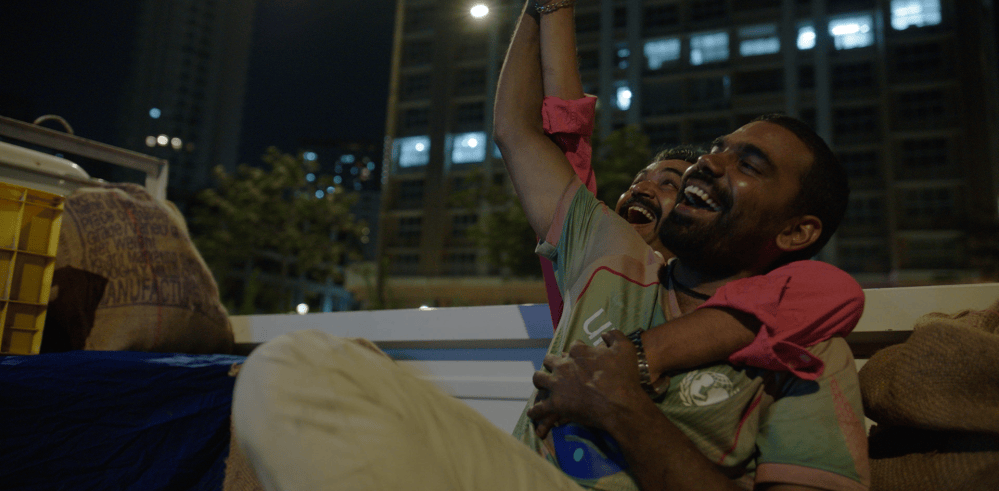
Everyone’s looking for a brighter future in Lovers in the Blue Night, Anuparna Roy’s second feature to premiere in Venice’s Orizzonti section after her debut feature, Songs of Forgotten Trees, won the category’s directing award last year. Like her first film, Lovers in the Blue Night captures an acute sense of urban loneliness and despair, albeit with a far more complex and richly layered narrative. The drama opens with turbulent imagery: monsoon rains and heavy winds tear through trees and prompt severe flooding, while a voice on a radio details instructions for those seeking shelter from the storm. That foreboding feeling established here permeates each of the four main characters’ storylines as we are subsequently gradually introduced to them: Karim (Pritam Pilania) marries Ameena (Neelima Sharma) after floods wash away their village, but it’s a relationship in name only; Karim is a closeted a gay man, while Ameena works as a phone sex operator in a Mumbai bar, providing a sort of comfort and companionship to her clients while yearning for real passion of her own. She believes she’s finally found that in the bar’s pimp, Omran (Jatin Sarin), who she thinks is the mystery person who has been sending her love letters addressed to someone named Usari. Meanwhile, Karim meets Sukka (Bhushan Shimpi), a small-time crook who lives with his pregnant girlfriend both outside of his caste and wedlock, and as the two begin to work together (Karim’s ability to dispense rat poison comes in handy in shadier lines of work, it turns out), they strike up a tentative romance of their own.
Far more ambitious than Songs of Forgotten Trees, which primarily took place in only a couple of locations and with a limited number of characters, Lovers in the Blue Night takes a little while to connect all these seemingly disparate people to each other, but when it does, it becomes a marvelously melancholy— albeit at times verging on overly melodramatic— rumination on living on the fringes of a society both dictated by class, and structured in a way that’s nearly impossible to break free of the circumstances fate lands you in. Some of these stories land more powerfully than others, based in part on the quality of the performances, which are inconsistent. Pilania imbues Karim with gentle vulnerability that deftly conveys his wounded nature, but Sukka’s intensity is sometimes overdone; the affair he begins with Karim, while more passionate in its physicality than any of other relationships in the film, feels harder to buy in to as a result, even though the circumstances they happen to meet in unite them in a shared, forbidden desire. Still, their desperate yearning and reaching toward some sort of connection is clear, and mirrored in the relationship that Ameena and Omran fumble toward, even though each knows the other isn’t the person they think they are. The moments in which the letters are read aloud in voiceover— Ameena struggles to understand Hindi, and asks a coworker to interpret— are the most overtly wistful scenes in the entire movie.
Cinematographer Debjit Samanta returns to work with Roy again, steeping the exterior scenes in dreamy shades of blue that frequently accompany scenes set by the coast, pointing to the characters’ fantasies of an escape. While her framing sometimes awkwardly cuts off parts of objects or characters, it often effectively illustrates the divisions between them, and their isolation. This is particularly evident in the scenes set in the phone stalls at the bar, where clients and works alike sit alone in tiny, garishly lit rooms adjoining each other, able to speak on the phone but not to see or touch. We’re first introduced to this setting by a stunning aerial shot that tracks over the top of the stalls, allowing us to peek into the various men and women who populate them; later, when the film cuts to a scene depicting an emotional conversation between Ameena and a client, we watch them straight on, the wall of the rooms serving as a natural split screen. Karan Gupta’s lived-in production design further illustrates the seedy, cramped environments that these characters largely exist in, serving as a stark contrast to the beauty and expansiveness of the natural exteriors. It all works in service of a piece that cements Roy as one of the great new Indian filmmakers, an artist who draws on personal experience to relay stories of dreams that are rarely able manifest themselves beyond the dreamer’s imagination.
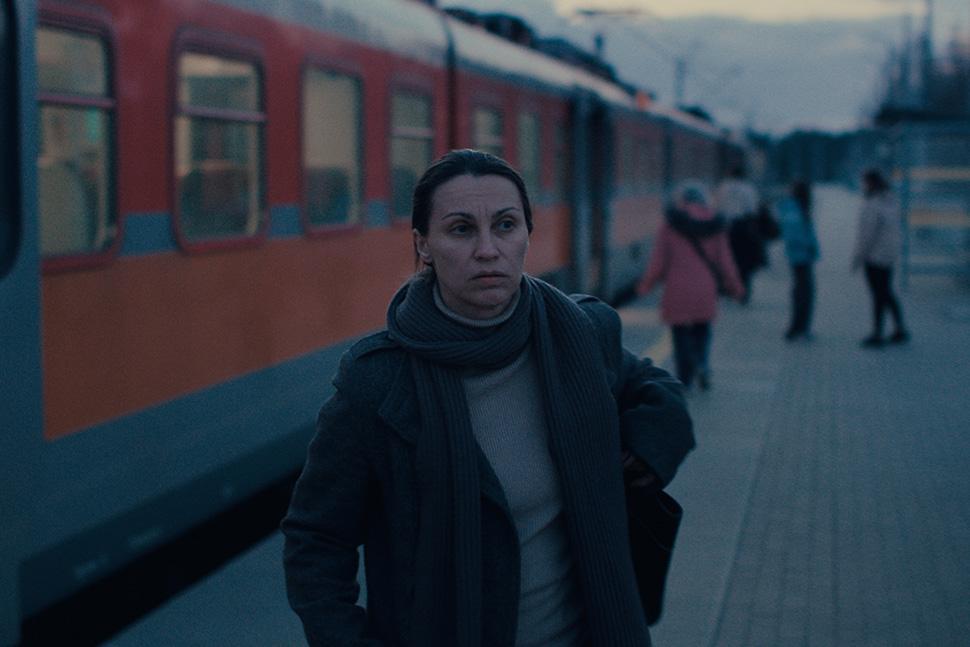
Grzegorz Dębowski’s What Belongs to Others turns on an irresistible premise: Kasia (Monika Sabina Kwiatkowska) makes a living breaking into other people’s homes with her boyfriend Darek (Robert Mania) and pawning off their stolen belongings at a local fence. One day, she enters an apartment, and finds its resident hanging from the ceiling of his room. The gruesome discovery shocks her, but while she takes advantage of being the person who found a man (who she learns is named Piotr) who seemingly has no close family or friends, and who none of his neighbors really knew, by moving into his apartment and posing as someone close to him so she can cash in on his insurance, she starts to become genuinely curious about his life. As she meets one-on-one with people connected to Piotr— his mother, his sister, his ex-wife— she begins to put together the pieces of his life in a sort of reverse whodunit that prompts her to take stock of her own life in turn.
The sincerity of the latter could have been a hard sell, but it largely works thanks to how thoroughly and efficiently the Polish filmmaker sets up his lead characters and their circumstances in the first act. The film begins with the literal opening of a door, as Kasia lets her landlords into the apartment she shares with Darek for a long-evaded meeting. They’re behind on the rent, of course, and while Darek hides on the balcony outside, Kasia makes promises to pay for broken tiles and other such maintenance in the building that Darek immediately berates her for. The film then adopts the guise of a low-key heist thriller, as DP Stanisław Horodecki’s prowling camera, favoring long takes that possess a documentary-like sensibility, follows the pair on their jobs, which are quite stunning in their audaciousness. Posing as cleaners, they enter apartments often while the owners are still at home, swiping any small items of apparent value and leaving as swiftly as they came in. This opening sequence establishes the precariousness of both their daily routine, and their relationship; while Kwiatkowska’s stoic expressions may leave something to be desired emotionally in some of the film’s more intense sequences, her performance speaks both to the way that Kasia constantly has to lay low, and her aimlessness, stuck in a relationship built more on mutual convenience rather than any actual affection, and scrummaging from place-to-place just to get by. She has no sense of belonging or identity beyond the immediacy of surviving. Her desperation eerily (and with a touch of dry humor) foreshadows the suicide she stumbles on when Darek is arrested and she’s kicked out of their apartment with no warning, and sarcastically asks her landlord over the phone, “What should I do now, kill myself?” The response? “Not in my apartment, please.”
But Debowski also illustrates how, in invading people’s homes, Kasia also becomes privy to the sentiments that they can only express behind closed doors, the detailed production design communicating brief, intimate details of lives through possessions and photographs and home decor framed by half-open doors. Everyone seems to be lonely; an elderly woman on the phone tells the person on the other end of the line that she has been thinking of getting another dog. Was the man whose live soon consumes Kasia also lonely? The portrait she starts to assemble of him in speaking to those who knew him, at least, holds a mirror up to her own circumstances. Implausible though they may be, there’s something gently affecting about how Kasia starts to get a grip on herself, not through any sort of grand epiphany or community she finds, but in just taking that first small step in a new direction.


