The burden of expectations- those of family, culture, and society- permeate these three films screening at this year’s Toronto International Film Festival, tackling the topic in very different stories across different continents. All first features, Katharina Rahl’s Memories of a Forest and Joaquín Ruano’s Nosotros, make their international and world premieres, respectively, in the festival’s often rich Discovery section, while Ang Geck Geck Priscilla’s Ah Girl finds its North American premiere as part of the Centrepiece category.
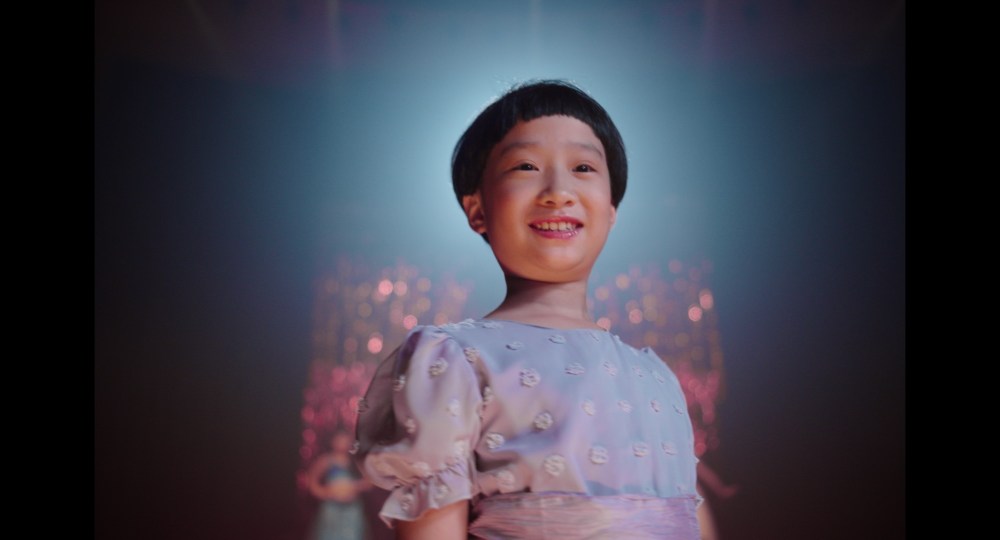
The personal origins of Ah Girl— writer and director Ang Geck Geck Priscilla’s feature-length debut drama extended from her series of short films— is evident in the specificity of its details. In 1994 Singapore, seven-year-old Swee Swee (Ong Xuan Jing) has just started school. “Precocious” isn’t a big enough word to describe her personality, which vacillates between charming and peculiar and obnoxious in the way that real children— not movie children, characters who frequently skew too heavily toward one extreme in a way that sketches more of a personality than a person— are charming and peculiar and obnoxious. She develops a crush on a boy in her class, and strains to get his attention. She starts up a business illegally selling chewing gum to her classmates, a nod to the country’s recent ban on the product. She has candy-coated fantasies of winning pageants, and smears lipstick all over her mouth in every little girl’s interpretation of glamor. She’s shrewd and jealous and selfish, and screams and cries when things aren’t going her way. She’s also incredibly caring toward her boyish younger sister Ah Tian (Sydney Wong), and vulnerable in the way that all young children are, especially when their lives are yanked around according to the actions of the adults taking care of them. Over the course of a year, we watch life come at Swee Swee in waves of pain and fear and anger punctuated by small moments of joy as her parents separate, divorce, and take on new partners.
The burdens placed on Swee Swee are evident early in the film, and run the gamut from broader cultural implications (the importance many Asians place on adopting English language and customs is clear when the strong-willed Swee Swee rejects her given English name, Eileen, and her mother, played by Carrie Wong, berates her for not having better grades in English) to those on a personal, family level (Ah Ma asks Swee Swee if she’d rather live with her or her Ah Pa, played by James Seah, and lashes out when her children, who are far too young to comprehend the nuances that accompany such a query, provide an answer she doesn’t like). Ah Girl’s greatest strength lies in its adherence to the child’s perspective, even if that means that the audience doesn’t receive all of the answers to questions that only the adult characters can provide, and that the parents are occasionally reduced to people who are defined by their tumultuous relationship to their children and each other, which means when they aren’t constantly shouting, they’re plying their kids with favors to keep them on their side. Real fear for the future starts to set in when Swee Swee becomes aware that Ah Tian may be sent away to live elsewhere, the adults’ drama encroaching on her otherwise mostly carefree existence of school friends and playtime. Lim Teck Siang gauzy cinematography contributes to the film’s nostalgic glow, and shots are often framed from the level and perspective of the children, further enhancing their point of view.
More concision could have worked in Ah Girl’s favor— the film feels rather longer than it needs to be, circling the same subjects over and over again— but Ong Xuan Jing’s remarkable performance as the title character, which admirably hits every emotional beat the story asks of her with earnestness and clarity, more than makes up for any faltering steps in this strong first feature.
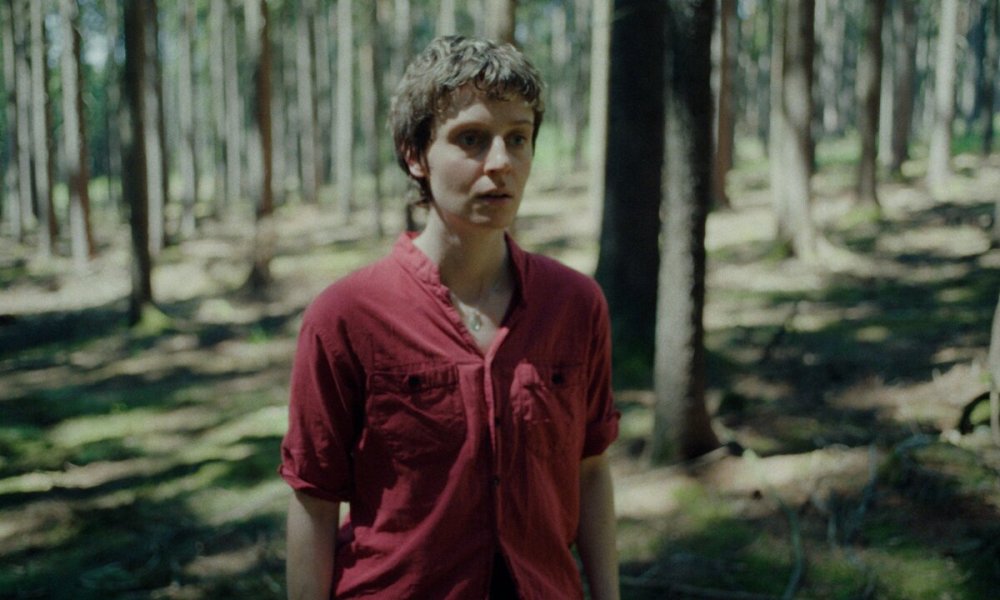
Late in Katharina Rabl’s debut feature Memories of a Forest, the protagonist, Frieda (Julia Windischbauer) states in VoiceOver while she is driving through the woods that she was witnessing as the “present slowly turned into the past.” That journey through time is quite literal for Frieda, who is about to complete her dissertation at the University of Vienna when she is suddenly called back to the rural Austrian village where she grew up after her grandmother passes away. Her trip there is far from a simple visit: it turns out that her grandmother left her nearly 40 acres of forest, and a lot of debt. Frieda’s financially-struggling parents Johanna (Johanna Orsini) and Alexander (Dominik Warta) can’t even afford to pay for her funeral, but sentiment prompts Johanna to dissuade Frieda from selling the land that meant so much to her mother altogether. It’s one of many brush-ups that indicate the tense relationship between mother and daughter, the former placing expectations on the latter that the latter has done her best, up to now, to both physically and mentally distance herself from.
Frieda ends up enlisting the aid of her childhood friend Friedrich (Lukas Walcher), who’s been managing the land for her family, to help her fell and sell the lumber from some of the trees in the forest to at least earn enough money to pay for the funeral, but that turns out to be a more frustrating task than anticipated when she learns that many of the trees are infested with bark beetles. Rabl observes Frieda at work with an almost documentarian-like precision, as she throws herself into the hard physical labor of driving tractors, loading trucks, and felling trees. That this work is far removed from the career in academia that Frieda has adopted is accentuated by the textured and soft color palette of Jacob Kohl’s cinematography, which gives the film the appearance of paging through a scrapbook. That journey into the past becomes even more prevalent in the film’s third act, when Frieda and her family make a discovery about her grandmother that clarifies some of her actions. Memories of a Forest is subtly performed and written, perhaps sometimes too much so to feel like it’s making much of an impact beyond the simmering intensity of Windischbauer’s performance, which effectively delivers the narrative’s core exploration of the tension between the desire to preserve what has been handed down to you versus desire to free yourself from it. Like the unexpected feelings that resurfaced memories can provoke, it sneaks up on you.
In writer and director Joaquín Ruano’s debut feature film, Nosotros, two people’s lives become passionately intertwined as they push against the stereotypes that society has labeled them. Romero (Jozef Coxaj) is an indigenous Guatemalan who lives with his mother, sister (Marya Salvador), and nephew she cares for, leaves his rural village for Guatemala City to find a job that will allow him to make more money to send to them. His intentions may sound noble on paper, but as we learn later, his sister’s husband left her for presumably the same reason and never returned. Bitter, she tells him, “If you don’t come back in six months, I’ll move on with my life.”
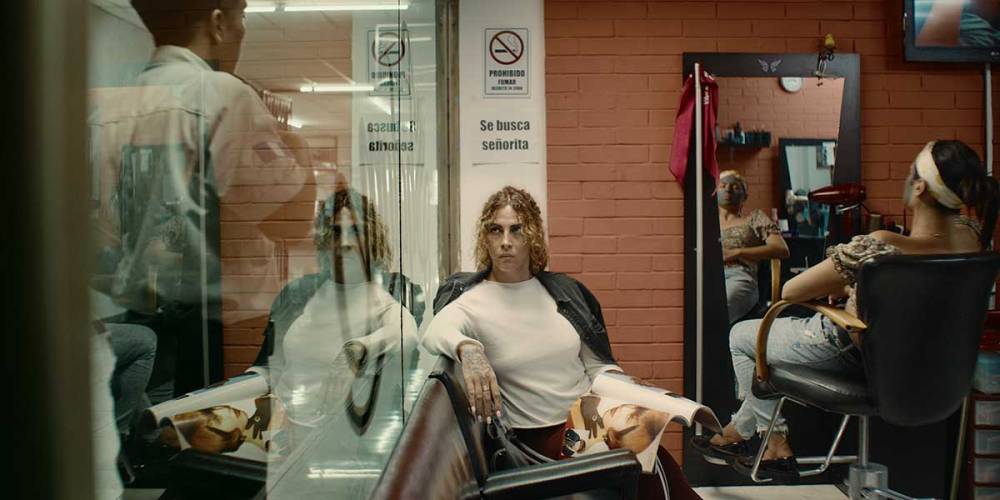
Romero gets work as a security guard and is dispatched to patrol a shopping mall, where he meets Nubia (Lola Vásquez), the owner of a phone store. She pursues him almost as soon as she spots him, paying for his game at an arcade, going on a drive together, and later asking him out on a proper dinner date, ordering a Nintendo along with snacks from the room service menu at the hotel where they ultimately hook up. It could be easy to dismiss their relationship as just being about sex, but Romero’s stiltedness soon gives way to Nubia’s amicable prodding; there’s an intimacy not just in their physicality, but in how they confide to each other. Romero tells Nubia about his family back home, and she expresses some envy that he has them. The film doesn’t make a blatant point about Nubia’s identity as a transgender woman, but homophobia soon surfaces in the teasing of Romero’s coworkers, with dire results.
Vásquez is quite remarkable here, conveying humor and confidence and pain and vulnerability in a way that makes her immediately endearing as she emerges as the primary protagonist over Romero. But Ruano’s script is too slight to really give the pair the space to sketch characters who feel like real people. The dialogue is often blunt, telling the audience what characters are thinking and feeling as opposed to allowing us to feel it. There are a few asides that don’t necessarily have anything to do with the romance that either needed to be trimmed or expanded upon to make their inclusion in the narrative make sense; namely, the pondering on the normalization of policing in Guatemala City (heavily armed guards in shopping centers are viewed as business as usual) and how masculine power is often tied to weapons and violence (while they are in training, the guards pose heroically, guns in hand). Paolo Girón’s cinematography adds a lot to this beautifully framed film, which is brimming with indelible images, like close-ups of feet nudging each other under dining tables that cut to the feet of an older couple singing and dancing on the dance floor. But it’s hard not to feel like these shots are in the film because they are aesthetically artistic, not because they contribute anything substantial to the narrative. There’s a lot to revel in here, making Nosotros a capable first feature, but— just as the camera keeps its distance during more intimate scenes— it feels too much like Ruano was holding back from doing more with his characters and their stories than he could have.


