Harnessing the traditionally masculine language of westerns and applying it to a fierce and funny tale of feminine rage and reckoning, writer/director duo Ann Sirot and Raphaël Balboni’s third feature Diane in the Loop opens with an image that feels immediately iconic: the back of their protagonist, Diane’s (Ninon Borsei), head as she dons a cowboy hat and strolls onto a crowded dance floor with all the swagger of an outlaw bursting into a dusty bar. She quickly pairs up with a man, and without relinquishing the movement of their dance, rhythmic jump cuts portray them disrobing and ending up naked in bed together, abstractly mimicking sexual positions with via staccato motions and deadpan expressions. It’s just one of a few arty flourishes that comprise Sirot and Balboni’s third feature, but their distinct style rarely obfuscates the intense emotional core and sense of humor that propels their quirky character study forward.
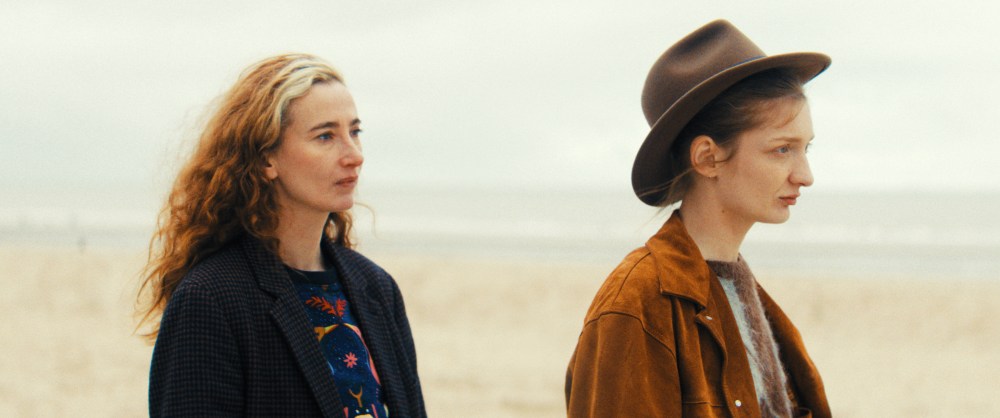
You see, that opening sequence also establishes Diane as a person who doesn’t take any guff from men. When see comes before her partner, she decides she doesn’t want to continue their encounter anymore just for his benefit; it’s just one of several instances of Diane flipping men’s misogyny back in their face throughout the narrative. She’s abrasive to the point of irritation, and the stoicism of Borsei’s face as she delivers sarcastic comments and makes dry observations makes her character a little too one-note in the first act of the film to grab on to. But then a conversation with her mother (Sandrine Blancke) leads to a startling revelation: mum admits that she was raped when she was in college, before she met the much-older man she had Diane with (played by Peter Van Den Begin, a dapper fellow who maintains an easy relationship with both Diane and her mother while living separately from them). She shows Diane a newspaper article about a man in a town by the coast who was struck and killed by lightning, a surreal act illustrated over the opening title card that— along with Diane’s frequent intimate conversations with her grandmother, who at first appears to be real until we learn later in passing dialogue that she passed away some years ago— launches Diane in the Loop into the realm of magical realism. Diane wants revenge, and in lieu of having a living victimizer to confront, travels to the town and desecrates his grave, setting off a hilariously bizarre series of events that force her to become a sort of temporary fixture in the town, while genuinely falling for a charming cyclist (Lucas Meister) she picks up on the side of the road, and who shares an unexpected and complicated connection with her family. Mum, meanwhile, sees the erasure of her rapist from the planet as a chance to reset, going back to finish university (which she apparently showed a lot of promise in before dropping out) and reconnecting with her former best friend and potential love interest (Naidra Ayadi).
Sirot and Balboni’s film may be titled Diane in the Loop, but it’s equally concerned with how both women break free of the cycles they’ve been boxed in to, whether due to their own choices or the circumstances dealt them. Had the mother not been raped, would she have finished school and had a successful medical career? Would she have had a child? Would she have recognized a different sexual identity? Diane, meanwhile, finds herself in a cycle of using men for pleasure, but failing to connect with them as people, and locate her own purpose in life beyond the immediacy of her emotions. This is also a film about reckoning with the actions of those you thought you knew, as the cyclist is dealt with the shock of inherited trauma while still reeling with his own grief.
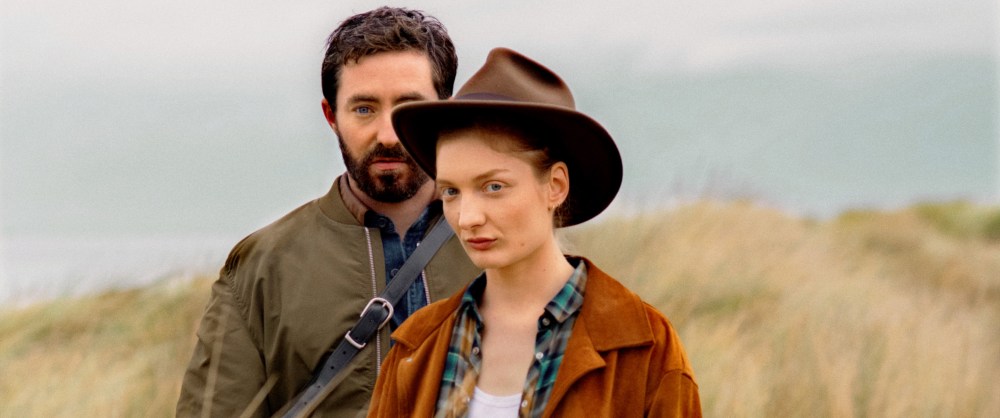
Diane in the Loop deals with all these topics rather unevenly, both in terms of the merging of fantasy with reality, and the character beats, which aren’t flushed out to their fullest potential. It’s difficult to escape the notion that we’re merely watching colorful personalities parroting clever dialogue, not real people. However, you can’t deny the immediate, boiling chemistry between Diane and the cyclist, however, and the warmth that seeps into her (and in Borsei’s performance as she plays opposite him), as well as the offbeat sort of family that all these characters form as the filmmakers play with gender stereotypes both in costuming (Diane frequently wears baggy pants and wide-brimmed hats and drives a pick-up truck, all commonly masculine associations) and action (the dad’s back quite literally gives out when confronted with the truth of male violence enacted against women). The mom mostly disappears for a hefty chunk of screen time in the middle of the movie, but when she reconnects with her daughter— and the location of her rape— toward the end, sound-mixing and performance powerfully combine to illustrate the lingering impact of such trauma. Diane may be the main character, and a remarkably compelling one, but the story’s real resonance sits with her. Like an Old West hero preparing to take back his town from evildoers, she takes back control of her own narrative.
Diane in the Loop had its world premiere in the Orizzonti section of the 2026 Venice Film Festival. Runtime: 92 minutes.


