Kris (Hannah Einbinder) has just settled into her room in a sleepy hotel in a rural town, bordering a forest that’s blanketed with snow. If that remote environment sounds rather too quaint for a seemingly savvy young person, know that this trip isn’t purely for pleasure. At 29 years old, Kris is a Sundance wunderkind (she self-describes her first feature as “Psycho from the perspective of the shower curtain”) who’s recently been tapped by a major Hollywood studio to reboot the Camp Miasma franchise. The actress who played protagonist in the first film, Billy Presley (Gillian Anderson), turned down appearing in the sequel and soon disappeared from the public eye, but she’s agreed to meet with Kris about a small role in her remake. Thumbing through the rack of bargain DVDs at the gas station on her way into town, she’s delighted to find a copy of one of the once-iconic slasher franchise’s numerous sequels, and eagerly asks the disaffected front desk clerk (Kevin McDonald, whose mere appearance instigates giggles) if he has any rooms with a DVD player available. With a dramatic flourish that indicates the sharp meta-commentary on the current state of Hollywood and media that shapes writer and director Jane Schoenbrun’s Teenage Sex and Death at Camp Miasma, the clerk blows a thick layer of dust off the top of the player he digs out of the closet. When Kris, popcorn in hand, presses play on the menu later, the movie-within-a-movie hilariously lampoons all the trademarks of a cheap 80s/90s made slasher in which horny teens go to camp and are murdered by a mysterious killer dubbed “Little Death” who emerges from the lake sporting what resembles an air vent on his head: pushy guys, gratuitous female nudity, the blood-spattered final girl. There’s nothing funny about what Kris jots down in her notebook while watching this, one word in all capital letters, underlined twice: “Desire.”

That’s the key word in this lusty send-up of vintage slashers, a genre which Billy later succinctly boils down to being only about two things: “flesh and fluids.” That’s her response to Kris’ grand plans to revision the Camp Miasma franchise, the history of which we witness in a reference-chocked opening credits sequence that tells about the first film’s blockbuster success, its numerous sequels of diminishing returns, and its struggle to remain relevant in the present day through newspaper clippings and merch and VHS tapes. Many horror movies of that ilk, you see, are not only grossly misogynistic and homophobic, but also employed transness as their big twist, the reveal of a person presenting as a woman actually being a man (or vice versa) intended to elicit shock and terror. Camp Miasma was no exception, but Kris— who acknowledges that the studio’s choosing of her, a queer person, as director was a performative act allowing them to paper over the series’ problematic aspects while continuing to cash in on the existing popular IP— wants to flip it on its head, beat the studios at their own game.
Teenage Sex and Death at Camp Miasma could have been merely about that, a clever send-up of current nostalgia-driven mainstream Hollywood filmmaking and performative diversity hires, and an affectionate tribute to and reckoning with the troublesome tropes prevalent in the films that remain endearing to fans to this day (touching on everything from Friday the 13th to Sleepaway Camp). But Schoenbrun accomplishes that while building off of their explorations of the intersection of media and sexual and gender identity present in their first two films (the internet and creepypasta in We’re All Going to the World’s Fair, 90s television in I Saw the TV Glow). Billy (who Anderson portrays with a savory gusto that leaves no doubt as to her movie star status), with her exaggerated Southern drawl and wardrobe that exudes old-school glamor, is initially positioned as an eccentric, Norma Desmond-like recluse. The film even explicitly calls out Gloria Swanson’s former silent movie star obsessed with her glory days in 1950’s Sunset Boulevard; she watches Camp Miasma on repeat, and actually lives on the site of the former camp. But Teenage Sex and Death repeatedly cuts to a pivotal scene from Camp Miasma involving the younger Billy (played by Amanda Fix), and every time it reads as another step in a transformation, a recognition of the experience of not feeling at home in your own body. It’s an experience that Kris— who uncomfortably dodges questions about her romantic partners and sex— soon realizes is akin to her own.
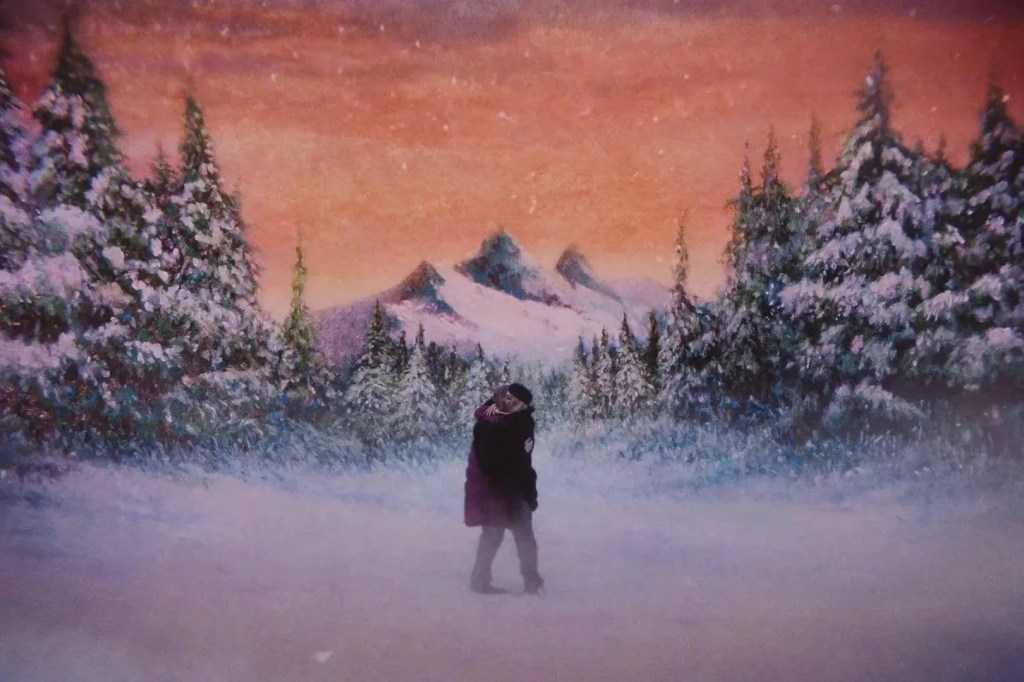
Schoenbrun conveys all of this with a winking sense of humor that aims straight cinephiles and horror junkies, even if much of the meta-commentary delivered by Kris blunts tells us nothing that savvy filmgoers don’t already know. Along with cinematographer Eric Yue’s 35 mm photography, they faithfully replicate the aesthetics of the era— from grainy VHS footage to early-aughts interactive DVD menus— while having some fun with the theatricality that such a heightened genre affords. In the Camp Miasma movies within the movie, blood spurts from Little Death’s victims in towering fountains; vibrant matte paintings fill in the scenery surrounding Billy’s woodsy estate. Unlike Schoenbrun’s previous two features, there isn’t anything especially disturbing or frightening about Camp Miasma, but it does dial back the humor somewhat in the third act in exchange for something still deeply strange, yet surprisingly tender, pulled forth in no small part by Einbinder’s vulnerability. Teenage Sex and Death isn’t very tightly paced, which works against the finale’s emotional crescendo. Still, there’s no one in Hollywood right now working at the level of Schoenbrun, crafting stories that are personal and universal, that both entertain and warrant deeper analysis. And Teenage Sex and Death at Camp Miasma is a blood-soaked queer comedy/love story/horror film for the ages.
Teenage Sex and Death at Camp Miasma screened in the Afterhours section at the 2026 Karlovy Vary International Film Festival, and will be released in theaters in the United States on August 7. Runtime: 113 minutes. Rated R.


