This year marks my first time attending the Karlovy Vary International Film Festival, and I’ve been amazed not only by the beauty of the Czech spa town where it takes place, but the diversity of its programming, which has been exciting to experience whether I’ve gelled with a film or not. The three films reviewed below, all representing a different section of the festival’s programming, exemplify that: Tycoon (from the experimentally-minded Imagina section), Five Years, Four Months (competing for the Crystal Globe), and Against Nature (screening in the Proxima competition).

Charlotte Zhang’s inventive dystopian feature debut Tycoon is the epitome of “you’ll either love it or hate it” cinema. Set in the not-so-distant future of 2028 Los Angeles just prior to the Summer Olympics, it imagines a world existing under the tight control of a corporation called Ootheca Inc., which produces packages of powdered insects, the world’s primary source of protein following a global ban on meat production as a result of a far-reaching livestock disease. At the same time, a cockroach infestation has taken over several LA neighborhoods, bringing Ootheca’s greed and dominance a little closer to home.
This deeply strange premise is anchored by Lito (Miguel Padilla-Juarez) and Jay (Jon Lawrence Reyes), two young men who try to game the system by stealing from Ootheca. It’s a system that’s built against them, economically and racially, although some of that trenchant social and political commentary slips through the cracks in the improvised feel of the performances and Zhang’s loose filmmaking, a collision of styles and formats that ranges from handheld video camerawork to collage art to the poetic intertitles that break up the action. Those provide rare moments to catch your breathe in a film that exists in a constant state of motion, but there remains amidst the chaos an intentionality and grace in Zhang’s compositions as she captures snippets of beauty in a city otherwise plagued by fear and paranoia, backed by a bevy of energizing (if lyrically too on-the-nose for so frequently abstract a film) needle drops, including Earth, Wind & Fire’s “That’s the Way of the World” and Dinah Washington’s “This Bitter Earth.” The latter, a soulful ballad about finding hope in the world’s harsh realities, helps you feel what Tycoon is saying, even if you don’t understand it.
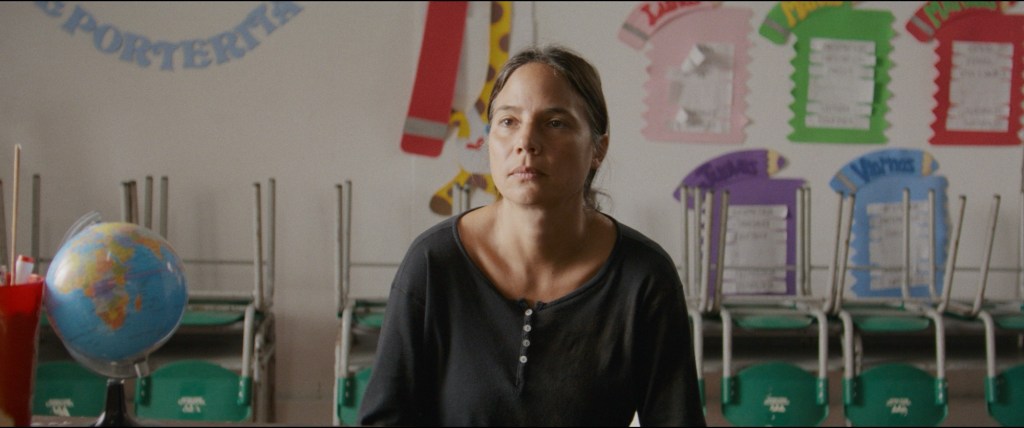
Juan Miguel Gelacio and Esteban Hoyes Garcia’s hypnotic drama Five Years, Four Months opens with a distressing revelation: Martha (Jenny Nava), who has been searching for her son Fabian for years, learns that there was no bone match for him in the latest exhumation of bodies murdered at the hands of the Colombian Army. Desperate for any sort of closure, she joins a group of women in similar circumstances and meets Sandra (Carmiña Martinez), who tells her about a rumor she heard: that in a remote part of the country, there’s a place where you can ask a dead person for a favor.
Paula Moreno Vergara’s photography primarily hones in on two things: faces, and darkness. The characters’ environments visually mirror their emotional state; in one moment of terrifying beauty, the women venture off into the night to make their meeting, their bodies consumed by unfathomably deep, inky blackness. Meanwhile, the emotive close-ups, particularly of Nava’s lead, do a lot of the heavy lifting in what’s ultimately a rather thinly-drawn narrative. The film doesn’t express much interest in who these people are beyond their grief, a choice made all the more frustrating by the fact that it circles some intriguing conflicts around not only what the mother of the missing is experiencing, but what those around her are going through in turn. Martha’s mother, for instance, chastises her for wanting to leave, accusing her of neglecting her younger son who is still here in favor of perpetually searching for the one who isn’t. Five Years, Four Months doesn’t explore that any deeper, however, and those characters remain on the periphery of the story, so much so that they don’t feel real. Perhaps you could say that’s in keeping with the film’s meditation on hauntings. It did immediately recall to me a documentary I covered out of True/False earlier this year, A Place of Absence, which follows the Caravan of Mothers of Missing Migrants as they journey by bus across Mexico searching for their children who disappeared trying to cross the border. Could a documentary about the tragedy in Colombia been more effective? Possibly; Five Years, Four Months unfurls at too dreamlike a pace to effectively convey the incendiary politics and impossible-to-navigate bureaucracies that instigated it. Yet with its simple but moving final scene, it is an affectionate tribute to the mothers who continue to fight all the same.
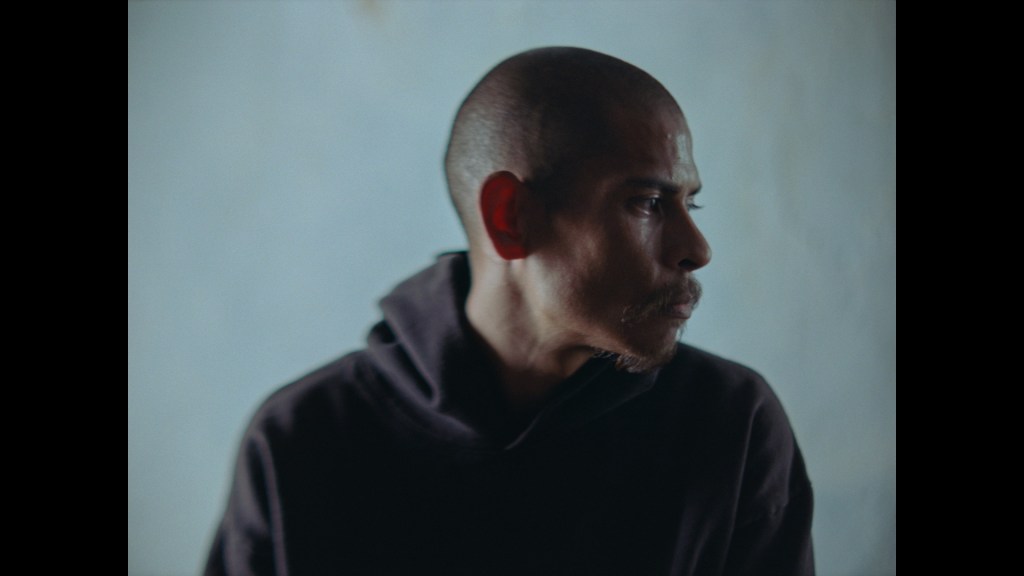
At the start of Axel Bertha’s debut feature Against Nature, sound comes before image. The clanging of rocks breaking and tumbling against each other play against a blank screen for what feels like an interminable amount of time before its source comes into focus: workers on a quarry in San Luis Potosi, a town in Central Mexico with a rich mining history. Soon, the film cuts to a police report dated 2029 and centered on a man who disappeared after killing his family, effectively setting the narrative in the near future, but Against Nature’s slippery, dreamlike tone— punctuated briefly but sharply by jarring bursts of violence— situates it somewhere out of time and space.
Bertha’s cast of largely non-actors is led by Jonathan Zarate as Jonás, who has recently returned to his home to work as a stonemason. He’s an enigmatic figure who rarely speaks. Rather, the other characters in the film project their thoughts and feelings on to him. These long takes are framed as static close-ups on Jonás’ sharp-featured face (he rarely looks directly at the camera, more often off to the side, further compounding his own elusiveness) as someone off-camera monologues in hushed tones— his wife speaking about his behavior and attitude toward their daughter, for instance. It’s mesmerizing, if perhaps too emotionally distant. Bertha circles the intersections between humanity, nature, and violence via repetitive motions (Jonás’ work alone closely ties him to the surrounding environment), but never fully connects the dots. The violence that occurs off-screen in the film’s final act plays less as an emotional crescendo and feels provocative more than anything else; a tribute to the effectiveness of the sound design, which conveys the horrors of the event more potently than explicit imagery ever could.
But Bertha studied under renowned filmmaker Werner Herzog, and the latter’s influence manifested itself in the former’s carefully observed studies of people and their environments. Shot on location, chronologically over a two year span, and on 35 mm film, Against Nature is remarkably textured, from its naturalistic palette to its rich soundscape. Lengthy interludes in which the audio plays over a nearly blank screen continue throughout the film, forcing the audience to really sit in Jonás’ space and parse through their own thoughts and feelings, giving shape to something so abstract.


