These two dramas premiering in this year’s San Sebastián International Film Festival‘s New Directors category both tackle relationships, albeit in very different shades: Lu Po-Shun’s Will You Still Be My Friend, a safe but tender portrayal of adolescent male friendship crumbling under outside influence, and Marlene Emilie Lyngstad’s bold and controversial Cute, which deals both with the fetishization of a childlike aesthetic and children themselves.
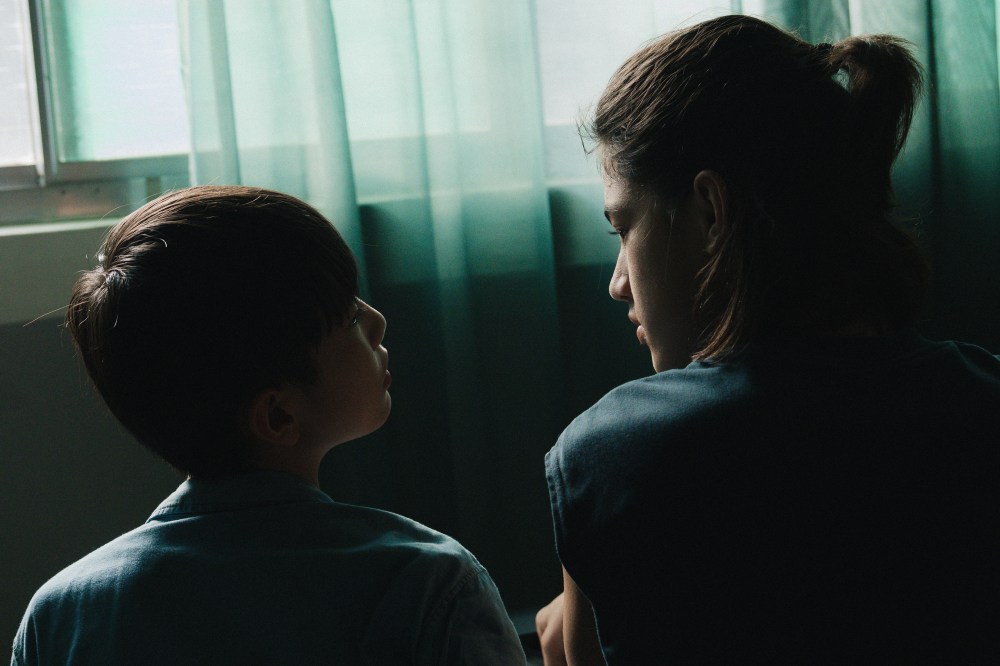
Friendship can be a fickle thing, no more so than when you are a child. It’s something that Lu Po-Shun mines with great insight and tenderness in his debut feature, Will You Still Be My Friend. Set in a rural Taiwanese fishing village, the story centers around the friendship between two 13-year-old boys, Jun (Jaden Wang) and Jasper (Aloysius Looi). Jun has lived in the village his whole life; his grandfather is the local chief. Jasper was raised in Singapore and recently moved there with his parents, who intend to expand their business by buying up the surrounding land to turn into solar farms. Their vastly different backgrounds are effectively contrasted in two scenes in the first three minutes of the film, Jasper’s father choosing to move their lovely grand piano with them so the family can continue to teach and play music, and Jun fishing with his family, exuberantly tossing nets into the water.
Initially, Jasper’s parents prod him into befriending Jun, hoping that a good relationship with his grandfather will help ingratiate them with the village’s inhabitants, the majority of who vehemently oppose the destruction of their home’s natural landscape that the solar panel installation will necessitate. But the boys, while seemingly different— Jasper is a sensitive artist type, Jun is more strong-willed, even leading his lion dance troupe— legitimately grow close quite quickly, Jun even going so far as to defend Jasper from bullying by the rest of his friend group. Outwardly, they project the stereotypical boyishness of pals their age— rough-housing, playing pranks— but when they’re alone, their interactions become more intimate. There’s a delicacy in one scene where they lie next to each other and talk softly, bodies just barely touching. It gestures toward something more, something that Jun in particular comes close to voicing, but that the film itself circles around without really touching.
What the movie does quite adeptly address, however, are the ways in which adults can influence the feelings and experiences of children, often wrongly. It takes a few mishaps for Jasper’s parents to pivot on their position on Jun, believing him to be a harmful influence on their son, and begin to push him toward making other friends. Jun’s grandparents, in the meantime, start to suspect that Jasper’s parents may be trying to sabotage them. As vibrantly as Lu renders the town’s culture and environment, the broader political, social, economic, and environmental implications the solar panel issue holds aren’t explored in depth, or made especially explicit. The trickle-down effect of the larger conflict on the boys’ friendship, however, is quite piercing, enough so that they begin challenging each others’ words and actions to each others’ faces. Their dialogue may be rather on the nose, but it’s also refreshing to see two kids on the cusp of great change— believably embodied by two talented young performers— be so forthcoming with their feelings as they learn to think and feel for themselves and attempt to forge their own path, free of outside influences.
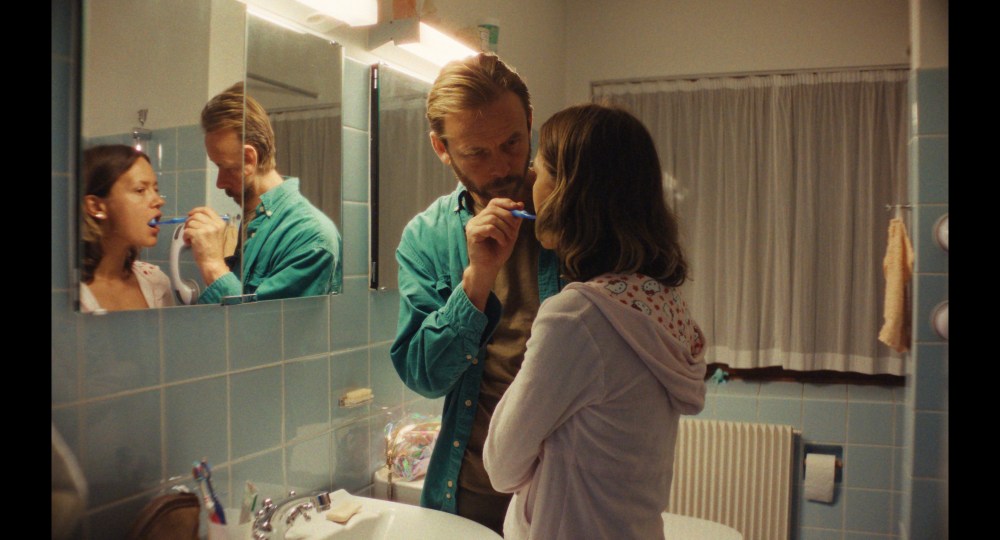
Swinging around to a very different type of relationship is Norwegian writer and director Marlene Emilie Lyngstad’s daring debut feature Cute, a film tackling the sort of taboo topic that a lot of viewers will likely find icky before even giving the movie a chance. Cute centers around two lead characters: Stella (Gina Jacqueline) and Richard (Jan Gunnar Røise). Stella has a side hustle as a Lolita camgirl, employing a childlike appearance and demeanor for her clients’ sexual pleasure. Richard’s girlfriend has a seven-year-old daughter, and he becomes increasingly disturbed by his fascination with her, which (thankfully) never manifests itself toward her physically, but does so in other, deeply uncomfortable ways: sniffing her socks and underthings, masturbating to her voice on the phone. Richard knows this behavior is wrong, and breaks up with his girlfriend as a result, throwing himself into renovating his gravely ill mother’s home. Stella’s day job is working as the mom’s caregiver, which brings these two people into each other’s orbit and into their own warped, pseudo-father/daughter sexual relationship. But while Stella is clearly playing a childlike character, she soon becomes cognizant of the fact that Richard’s longing for childlike innocence is literal, a fact that becomes even more tangled when his stepdaughter reemerges in his life.
Cute— which attempts to distinguish between the fetishization of a childlike aesthetic and pedophiliac behavior— is quick to portray Richard’s own recognition of the wrongness of his feelings. Røise’s performance brims with the requisite self-loathing; he sees a therapist, hoping to obtain medication that will cut off his libido entirely, but refuses to admit to his reasoning for wanting this, or to talk about his feelings further. His character is Cute’s trickiest balancing act. We don’t really hate him— he’s too much of an ashamed sad sack who seems like he’s really trying to outrun his demons— but we also need to. Lyngstad doesn’t exactly pass judgement on him, her ambivalence pressing the audience to instead sit with their own feelings. Perhaps that’s why Cute feels like a particular difficult film to critique; the desire to witness some sort of retribution, or judgement, explicitly passed for this sort of behavior on screen goes unrequited. Richard is, at least, balanced out by the presence of Stella, who admittedly would have made for a fascinating film subject on her own, and who perhaps gets a bit of the short shrift here. She’s engaged in a similar sort of thorny act, distinguishing between her real self and the persona she projects for others. Even when she isn’t working, her childishness arises unbidden; she gets ice-cream all of her face as she messiness eats it, and needs help figuring out what clothes to buy, or how to properly brush her teeth. She’s someone Richard can care for, ostensibly satisfying his desires without doing anything really illicit. It all comes together via Thomas Dyrholm’s woozy camerawork (at times, the footage distorts itself, a perhaps too literal illustration of these characters’ off-kilter reality) and the gauzy lighting, which frequently does make it feel as if we are peering through a veil at something forbidden, as well as Lyngstad’s staging of the film’s few more sexually explicit scenes as decidedly unerotic encounters. Cute is a film that I admittedly still am not sure what to make of, but kudos to Lyngstad for announcing herself with a project that, for better or for worse, will certainly get everyone who sees it talking.


