I generally enter biographical documentaries— especially ones centered on Hollywood figures— with arms crossed and an eyebrow raised, but I thought both of the industry docs I watched at the Karlovy Vary International Film Festival this week, programmed as part of the festival’s Special Screenings sections— Robert Richardson: The White Devil (the thrice Academy Award-winning cinematographer of such films as Platoon and JFK was also honored with a Crystal Globe acknowledging his lifetime achievements) and The Hanging of Stuart Cornfeld— were quite good, with the filmmakers actively engaging with their subjects in front of the camera in a way that leads to a more intimate, warm, and personal portrayal of them without drawing attention from them.
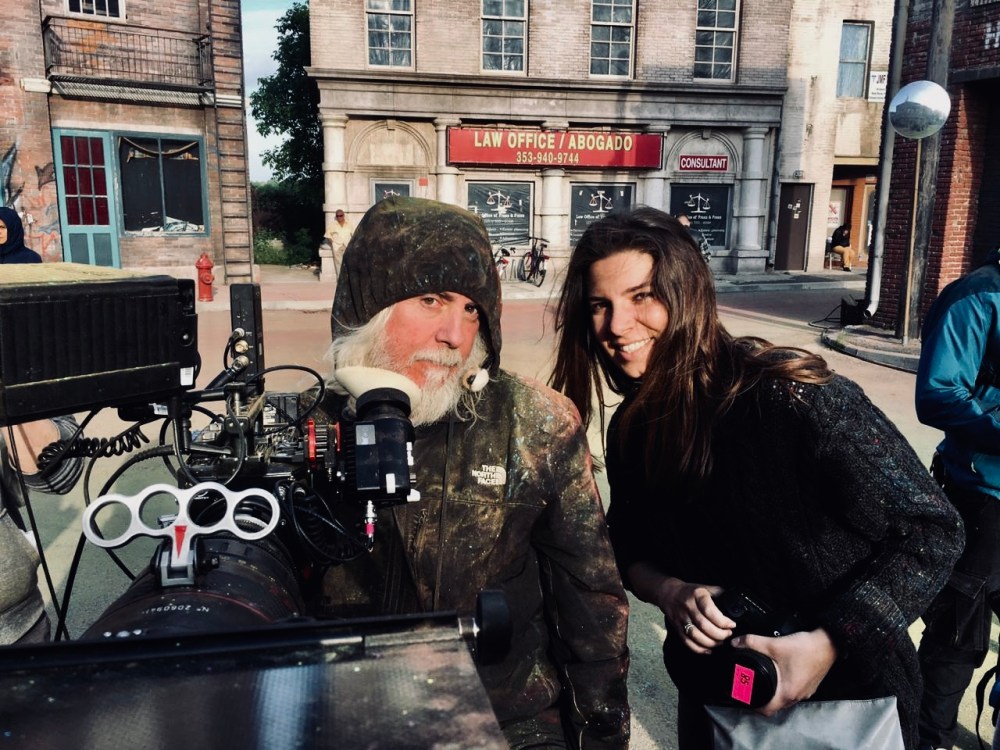
One thing you should know about me is that I’m very, very bad at recognizing people when I’m not expressly looking out for them. I have been known to stroll straight past good friends and being none the wiser. So it speaks to the noteworthiness of his eye-catching appearance— namely, a gleaming mane of snow white hair— that as I happened to glance over at the red carpet outside the festival’s headquarters at the Hotel Thermal while leaving the screening, I clocked Robert Richardson immediately, even from many feet away. I attended a KVIFF Talk with him in the festival lounge later that afternoon, where over the course of nearly 90 minutes Richardson spoke with journalist Scott Weinberg about his life, career, and colleagues with great candor, thoughtfulness, and warmth. It was an immensely special and rewarding experience to walk away from KVIFF with.
Those personality traits are also pulled forth in Jana Hojdová’s piercing documentary about Richardson, Robert Richardson: The White Devil. In 2016, Hojdová— then a cinematography student at Prague’s Academy of Performing Arts— emailed the American Society of Cinematographers, hoping they could put her in touch with Richardson. She was so moved by his work, you see— Richardson is most noted for his longstanding collaborations with directors Oliver Stone, Quentin Tarantino, and Martin Scorsese— that she wanted to make him the subject of her thesis. She was surprised when Richardson wrote back. She was even more surprised by his lengthy responses to her questions, which skewed more ideologically than technologically, and later by how their email correspondence morphed into a real world relationship built on creativity and trust— Richardson left Hojdová the keys to his LA apartment for her to stay in when she first visited America while he was abroad shooting, before they’d even actually met.
Over the course of the decade between their first meeting and the release of The White Devil, Hojdová accompanied Richardson to work on numerous films all over the world, and interviewed many of his famous colleagues, friends, and family members. Quentin Tarantino, for instance (his interview was shot on 16 mm film at his home, a subtle nod to his love of that medium), speaks in that irrepressibly enthusiastic way of his about the energetic manner in which Richardson moves the camera (he loves a crane), remembering that upon first working with the renowned cinematographer (on 2004’s Kill Bill), he was prepared to place towels monogrammed with their initials in his bathroom. Their recollections, alongside Richardson’s, paint a portrait of a man who is incredibly talented, but whose work ethic got in the way of relationships over the years, whether that be marriages that fell apart or driving his staff too hard.
That frankness goes a long way toward preventing The White Devil from playing like overly-laudatory, mass-appealing fodder, but the personal nature of Hojdová’s filmmaking also accomplishes that. Over the years, she shot over 650 hours of footage with Richardson, and she breaks up the predictable talking heads/clip reel structure that handicaps so many biographical documentaries with candid videos that capture Richardson’s personality behind closed doors: brash, curious, self-aware. She goes with him to his home in Cape Cod; he’s been away working for so long that he had to label what was in every kitchen drawer so he knew where to find things. The COVID-19 lockdown gave Hojdová further time to delve into Richardson’s archives, and she balances her own footage with his. The two of them share a wonderful rapport; in came through in the KVIFF Talk, and it comes through in the film, imbuing it with a unique voice that works in service of the subject’s story, rather than against it.
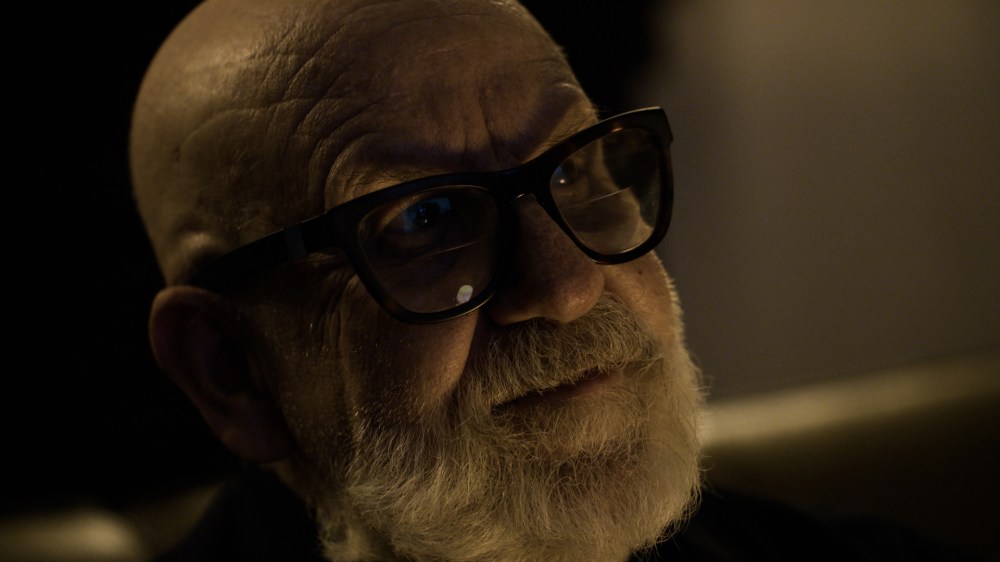
In the case of the long-gestating The Hanging of Stuart Cornfeld (the subject passed away in 2020), I think a teensy bit more of just why Spanish director Joan Bofill Amargós (a painter who sketches his interview subjects while he chats with them, with the ultimate goal of creating an art exhibit in tandem with the film; his watercolor paintings inform the documentary’s visual aesthetic) wanted to make this movie or what it means to him is necessary if he’s going to bother inserting himself into the film at all. Apparently, Amargós met Cornfeld— the producer behind such famous films as The Elephant Man, The Fly (1986), and Zoolander— by chance while working on his previous feature documentary about pre-Surrealist French writer and artist Raymond Roussel. That history doesn’t come through in the film itself, however, and the occasional video calls the director shares with his subject don’t exactly convey their rapport.
Where the documentary does succeed, however, is in its expounding on Cornfeld as an iconoclast in his field. The film opens by defining that titular verb, providing some early clarity regarding its no-holds-barred, yet artistically minded, approach to dressing down its subject: “A method of execution whereby the person is dropped and suspended from a rope around the neck, resulting in death,” and “An object, such as a painting or tapestry, that is suspended for public display.” The interviews with his colleagues confirm that he’s less a management guy, and more a creative spirit. In other words, he may not have been great at his job on paper, but he certainly had an eye for talent, even as his outsized personality led some creatives to part ways with him (that’s something David Cronenberg discusses in his interview). Cornfeld, meanwhile, often speaks to the camera about his own experiences with a refreshing candor. As time passes and the film continues, it becomes less a career retrospective and more a melancholic rumination on life, as Cornfeld grapples with a terminal cancer diagnosis. The Hanging of Stuart Cornfeld never achieves a consistent rhythm, either tonally or thematically or stylistically, but there’s still something quite lovely about the scrabbled-together nature of it, and of seeing the numerous people Cornfeld touched in some way— from Guillermo Del Toro to Ben Stiller— come together to celebrate him. His aura is perhaps most movingly conveyed in a brief but lovely conversation with David Lynch (who Cornfeld is generally credited with “discovering” after attending a midnight screening of Eraserhead) that’s a highlight:
“And I came home one day, Mary said, ‘A man named Stuart Cornfeld called.’ And for some reason, that name filled me with happiness. So I went around in a little circle saying, ‘Stuart Cornfeld called. Stuart Cornfeld called. Stuart Cornfeld called.’ And it made me very happy.”

 Katie at the Movies