In communist Czechoslovakia, the state encroached on its citizens’ lives in the most horrifying way imaginable: coerced sterilizations and abortion control was exerted over thousands of women, particularly Romani women. Abortions would only be approved after the women laid bare the intimate details of their lives and relationships before a committee, while other women were offered financial compensation in exchange undergoing sterilization. The latter often took place without the participants being made fully aware of the consequences, or forced to make the decision under extreme pressure; in some cases, they were assured the procedure would be reversible, when in fact it wasn’t.
That political environment— the effects of which ripple throughout the Czech Republic and Slovak Republic to this day— comprises the background of Ivan Ostrochovský’s frequently infuriating drama Only Beautiful Things to Look At. Set in 1980s Czechoslovakia, the story opens on Ingrid (Aňa Geislerová), one of the few female doctors at a rural hospital. Her daily tasks involve delivering babies, as well as performing abortions and sterilizations. It isn’t long before it becomes apparent that Ingrid— approaching middle age— isn’t particularly happy with her career (which demands a lot of her while simultaneously ostracizing her) or her marriage (which feels driven more by obligation than passion). The introduction of Agáta (Simona Boledovičová), a 19-year-old orderly, provides an unexpected shot of adrenaline to her stagnant life. Her life is a stark contrast for Ingrid, filled with zest; she’s in love with a soldier, and talks about seeing her boyfriend often. She’s also Romani, and the intimate friendship she forges with Ingrid spurs a closer connection to the women she’s been working on. Finally, she feels a sense of guilt for carrying out the whims of the state.
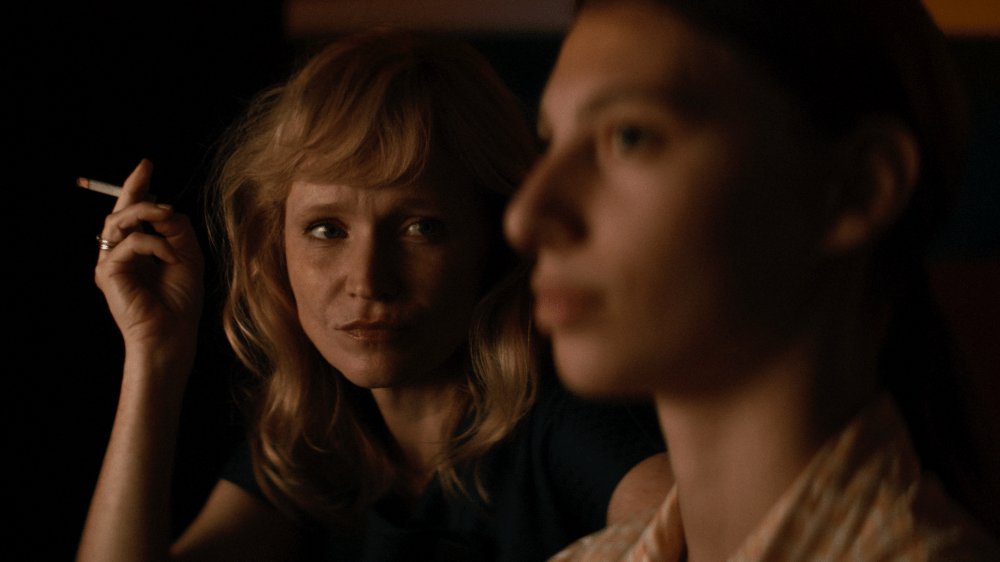
Only Beautiful Things to Look At is a handsomely mounted period piece, cinematographer Juraj Chlpík casting a warm light over the characters that highlights them against the cold hospital environment. Ostrochovsky communicates a lot through his careful framing, which often centers on the faces of the Romani women whenever they are on screen. The film introduces us to its central conflict that way, in fact: face after uncomprehending face of women stare back at us as they are lectured, an off-screen voice intoning that “Sterilization allows Gypsy women to improve their family’s quality of life.” Not long afterwards, another woman asking about the scar below her navel— a souvenir from the procedure that all the women share— is shooed away in confusion, thanks to both a language barrier and the dismissive treatment of the physicians. Later, another woman is subtly coerced into sterilization, the camera again holding on her face as we hear an offscreen voice tell her how she already has a few children, how much money she’ll be paid if she undergoes the operation and how that could really elevate her family’s way of life, and that it will be reversible later (a lie). Most distressingly, when we watch one the procedure unfold, Ostrochovsky bisects the frame, the woman’s face staring toward the camera on one side, the doctors working on her on the other, laughing as one of them recounts how he messed up a sterilization before, and the woman came back pregnant a year later.
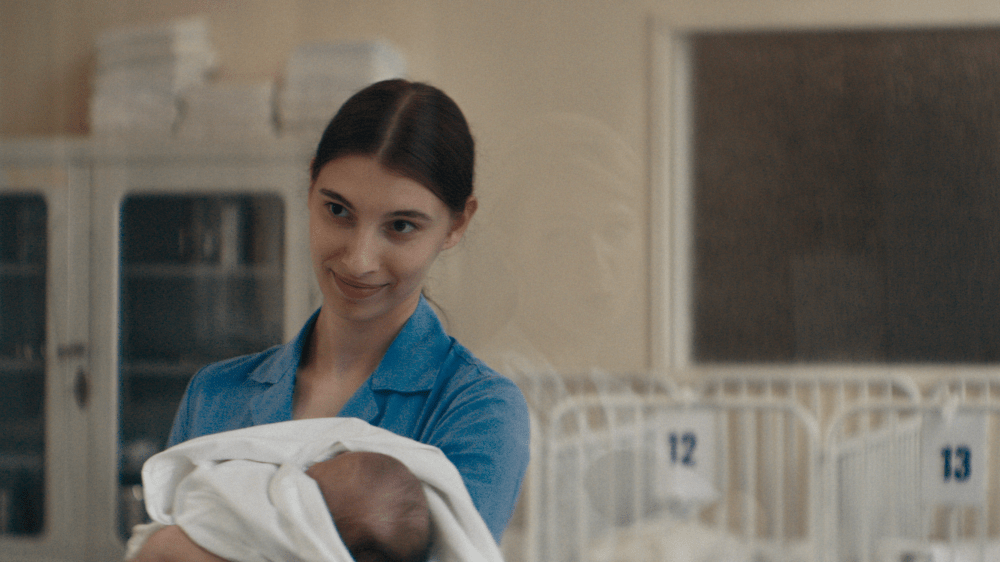
All of that is intensely alarming, but these women merely compose the backdrop of the film. Most of the time, they don’t even speak. Ostrochovsky may assemble his movie so that it visually aligns the audience with the Romani women’s plight, but narratively it is more concerned with Ingrid. It’s a classic case of attempting to tell a story about a marginalized group, but needing to employ a white protagonist as an entry point. And while Ingrid faces her own female-centric struggles in the misogyny she experiences at work, it’s not really equivalent. She, with her comfortable life, simply isn’t the most interesting character in the film. There’s far more intrigue surrounding Agáta— luminously portrayed by Boledovičová— who has recently reunited and begun a tentative reconciliation with Jula (Eva Mores), the sister from whom she was separated as a child, who has two children and is pregnant with a third she doesn’t want. It’s here that we really see the intersection of race and social and economic privilege come into play, with Jula (who married a Roma man) offering Agáta a bit of backhanded praise for managing to land a white boyfriend. It’s enough to make me wonder if Only Beautiful Things to Look At could have worked— and served as a more incisive examination of a painful part of the Czech Republic’s past, a past that despite this film’s period trappings persevered well into the 21st century— had the Ingrid character been excised from the narrative entirely. I think it would have; what we get is well-intentioned, but far too safe and restrained to really get under the skin of the ugliness of this world. Only beautiful things to look at, indeed.
Only Beautiful Things to Look At had its world premiere in the Crystal Globe Competition at the 2026 Karlovy Vary International Film Festival. Runtime: 88 minutes.


