“You know, children bring a house to life.” Josette (Josette Kwanya) utters those words to her son Benoît on one of their many Zoom calls, the only method by which she ever sees or speaks to her adult children, who long since left their native Cameroon in search of better opportunities in Western countries. House of the Wind, the immensely personal and patiently realized feature debut of writer and director Auguste Bernard Kouemo Yanghu, establishes the context for this with almost haunting imagery; as 80-year-old Josette passes through the rooms of her immense Yaoundé home, its walls and shelves decorated with photos of her children, preparing for bed and tucking herself in under a mosquito net, a news report on TV in the background details how there is so little support for young people’s future in Cameroon. The rhythms of this sequence repeat themselves throughout Yang’s film: the meticulously put-together house that exhibits relics of the past in every corner and crevice countered with the news reports about how life seems so perfect abroad in America and Europe, how there is no educational or financial stability in Cameroon, no jobs, no opportunities. Even so, Josette busies herself with building a new home for Benoît to move back to, even as her working children either have no time to talk to her at length, or make vague promises to come visit her sometime in the future, or express concern that she lives alone, wishing she could go to a nursing home. On her birthday, Josette sits at a table in front of a laptop and a cake, and says as she blows out the candles that her only wish is that they can all be together in person next year. The notes of Michel Duprez and Blick Bassy’s score soar with melancholy, accentuating Josette’s loneliness along with the precise framing of this small woman dwarfed within otherwise unpopulated interiors.
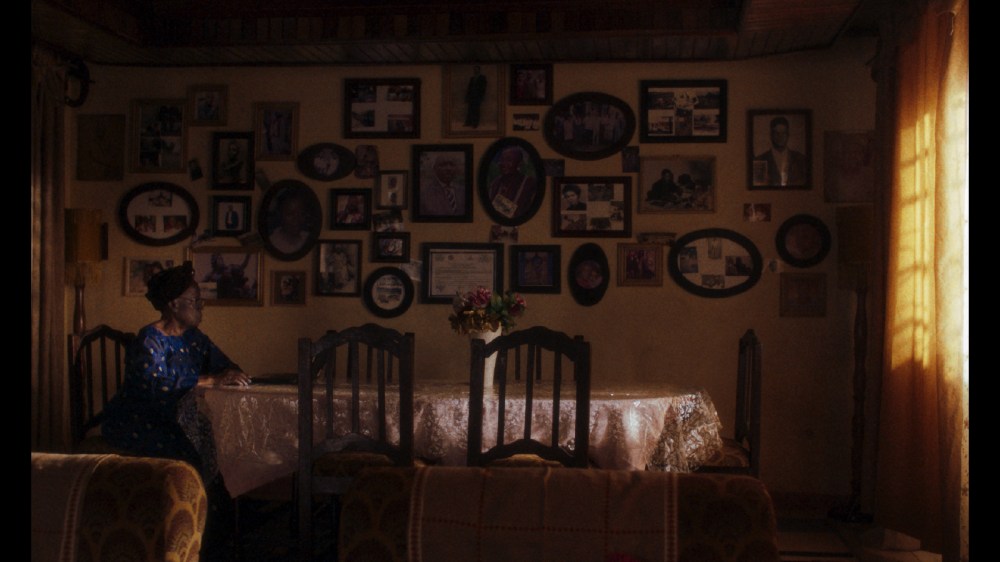
Josette’s life is shaken up when she meets Sarah (Moudjeu Pouadeu), a young woman who assists her when Josette struggles to navigate an issue with her ID card. Sarah then asks Josette for a favor in return: knowing that her strict parents disapprove of her engagement to a white French man, she wants her to pose as her mother when Adrien (Adrien Jolivet) visits. The pair soon form a close yet tentative bond, united in their search for a loving parent and a loving child, but pulled apart by their conflicting views on family, relationships, culture, and tradition.
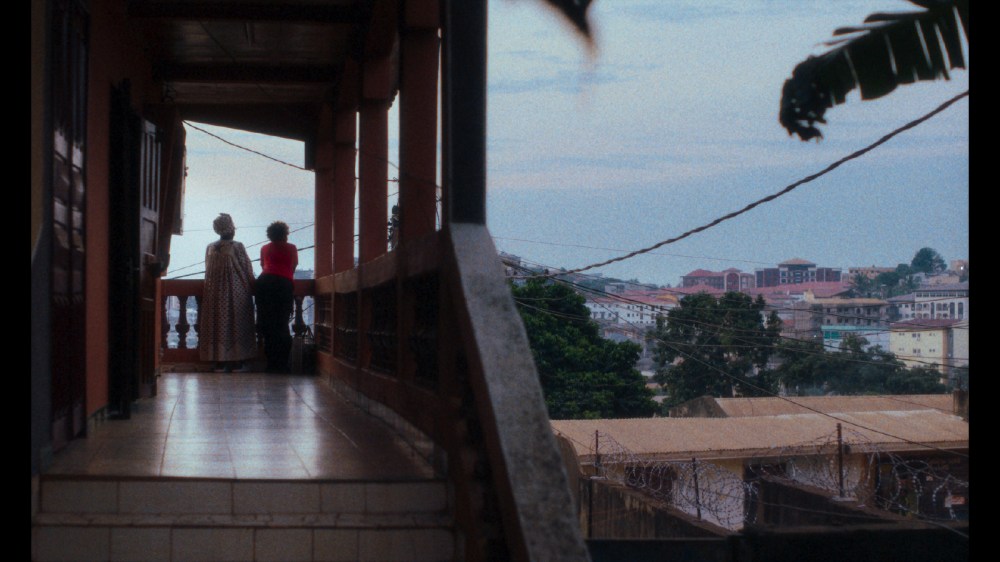
Himself a Cameroonian native who left his home country for France and subsequently grappled with his mother remaining behind alone, Yanghu wraps his narrative around almost documentary-like observations of the city of Yaoundé and its traditions and rules, from the women’s community meetings Josette frequents to her bidding on a loan to finish building the house to weddings and funerals. It’s a place of both grandeur and decay; as Josette stands on her balcony and gazes over the city, the colorful tops of buildings stacked one after the other provide a touch of whimsy, while the sparseness of other sets and frequency blackouts point to how difficult it is for most who stay there to get by. And yet, even in the latter, Yanghu, along with cinematographer Eva Sehets, who imbues the film with gorgeous warm tones, illustrates the almost romantic beauty of the place and its community, as brilliant flashlights held up by lines of people in the street cut through the darkness.
The naturalism of the lead actors is perfectly in step with the film’s tone, which is tender without being saccharine, and incisive without being harsh. Both Josette and Sarah maneuver through the hardships life has thrown at them with a dignity that doesn’t eclipse their emotional vulnerability, with Kwanya sometimes playing Josette’s no-nonsense attitude for humor, and Yanghu employing her piercing gaze to its maximum potential, granting her a bevy of emotive close-ups. It’s when the film makes occasional detours from the realm of reality that House of the Wind‘s narrative cohesion loosens, as in the heightened drama of some third-act turns, or the segues into fantastical imagery of a vine-draped white house through which the wind bellows about billowing, gauzy curtains. Yet, Yanghu’s sense of place and character is so finely attuned, particularly for a debut feature, that those squabbles are minor at worst. House of the Wind remains an engrossing and deeply-felt portrait of parents and children that ponders questions of the nature of found family, what makes a home, and the potential futures of those who leave, those who stay, and those who come back.
House of the Wind had its world premiere in the Orizzonti section of the 2026 Venice Film Festival. Runtime: 102 minutes.


