When describing his proposed Experimental Prototype Community of Tomorrow— later to be known as EPCOT, one of Walt Disney World’s handful of unique theme parks— Walt Disney stated that he envisioned that it “will always be in a state of becoming.” It’s surprising to learn, therefore, that even as outwardly Disney Parks adhere to that concept of perpetual evolution— adding and subtracting and altering attractions as time and technology progress— inwardly, defunct areas are left abandoned to rot, not only taking up prime real estate but serving as haunting reminders of the past. That occurred with EPCOT’s own Wonders of Life pavilion, which housed educational exhibits on healthcare and the human body, theatrical shows like Cranium Command, and the simulator ride Body Wars. It opened in 1989, and after a gradual decline over several years, closed entirely in 2007. But rather than being torn down and something new erected in its place, the attraction was left as it was: closed off and vacant, but entirely preserved.
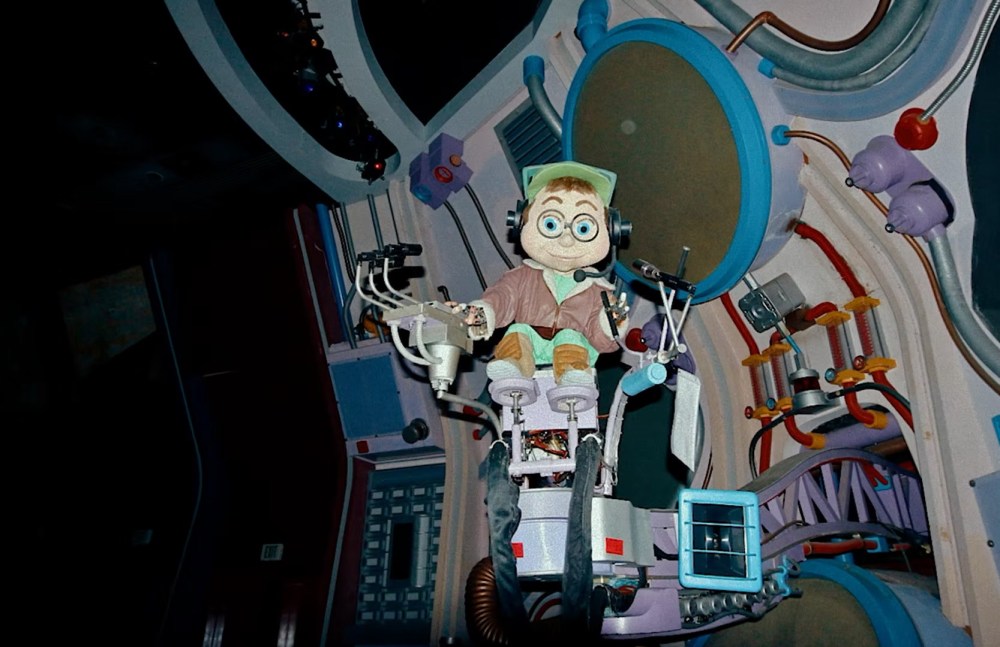
The 2018 theft of Buzzy— Cranium Command’s goggle-eyed pilot animatronic— is the most publicly well-documented transgression of its kind across Disney Parks. But in his documentary Stolen Kingdom, director Joshua Bailey employs it as the focal point through which he unravels a tangled web of break-ins by urban explorers, rule-breaking by Disney employees, and black market dealings involving Disney props, costumes, and other paraphernalia that was never intended to land in private citizens’ hands stretching back years. It’s a project engineered to titillate both Disney obsessives and those with a casual interest in what happens at the family-friendly park’s notoriously secretive backstage. But what appears to be reaching for a celebration of anarchic spirit devolves into a frustratingly inert portrait of a handful of obnoxious and entitled individuals, one that glances toward more profound themes of discovery and rebellion and friendship and ethics but ultimately fails to draw any conclusions from them.
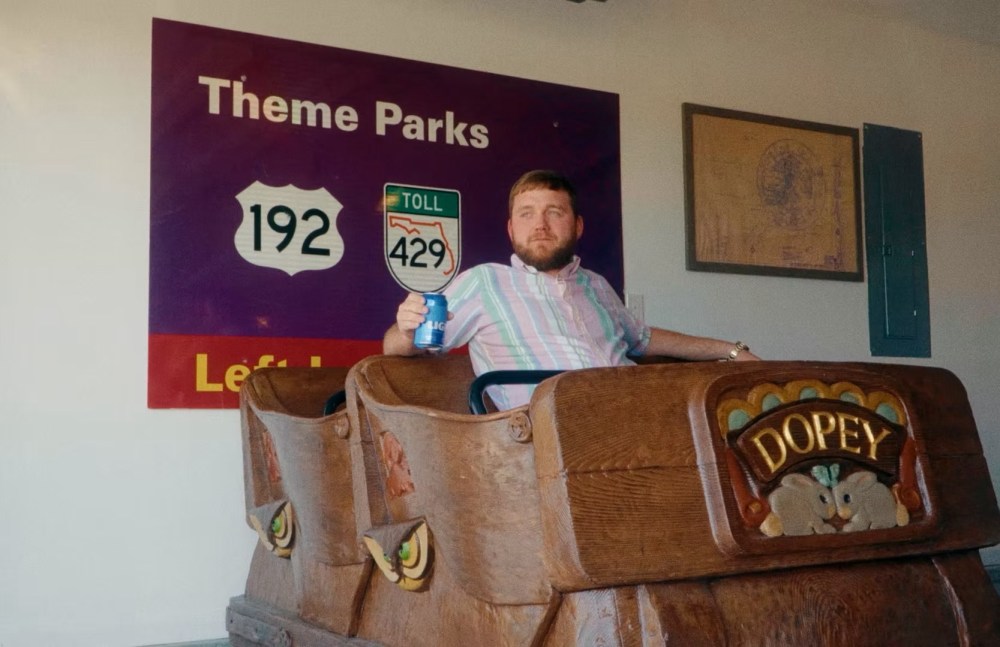
Bailey, who himself has some familiarity with the world of urban exploration— a phrase that applies to a sort of spelunking of man-made dwellings, typically abandoned, typically involving trespassing— provides a light overview of its history as it applies to Disney theme parks specifically. A couple of these subjects either aren’t around anymore or declined to participate in the documentary— like Adam the Woo, one of the first urban explorer vloggers on YouTube— but several of them are interviewed over the course of the movie, their conversations both guiding the narrative and complicating it, particularly as the mystery surrounding Buzzy’s disappearance and other alleged illegal activity that one or all of them may have been complicit in ramps up in the third act. Bailey’s existing connections pay off in spades here. It’s remarkable the amount of activity his interviewees admit to doing on camera, whether that be breaking and entering, messing around on operating attractions (two explorers, Dave Ensign and Ed Barlow, who operated under the pseudonyms “Hoot” and “Chief,” made a checklist of every scene and animatronic character to explore in EPCOT’s Horizons, a dark ride that envisioned life in the future that closed in 1999), or stealing and reselling backstage items ranging from Haunted Mansion costumes to ride manuals. Some of these individuals, including Hoot, Chief, and Matt Sonswa (a vlogger banned for life from Disney parks and noted for his dangerous illegal activities like scaling roller coaster tracks and infiltrating Disney’s long overgrown and abandoned park Discovery Island) express a sincere interest in figuring out how attractions work that they claim is the main impetus for their actions. Others, like Patrick Spikes— a former Disney World cast member and the proprietor of the Backdoor Disney social media account who quickly emerges as Stolen Kingdom’s main character— seek more tangible profits, especially once they realize how easily they can get away with it.
In that regard, Stolen Kingdom is catnip for die-hard Disney fans (“pixie-dusters,” as they are referred to by one of the documentary’s subjects) and true crime enthusiasts alike. It’s never not entertaining, if only because the audacity of the explorers’ actions— demonstrated visually via archival photos, phone videos, and social media content that supplement the interviews— makes it so. But it also always feels like it’s missing an essential ingredient to transform it into a piece that isn’t just engrossing, but also enlightening. It dispenses fast facts about urban exploration as it relates to Disney Parks and the key figures in that movement, but we glean little sense of who these people are beyond that, or why we should care about them. Almost every featured figure is obnoxiously insufferable. It’s maybe a bad sign when a film about rebellious characters ultimately has you rooting for them to be stopped, or when the few sincere beats it strains to hit— like Hoot scattering Chief’s ashes at Disneyland after the latter passed away from cancer— come off as cloying and overly manufactured. Stolen Kingdom moves at a quick clip and its subject matter is as bonkers as the most thrilling attraction, but it’s one ride you’ll soon want to get off.
Stolen Kingdom kicks off a nationwide theatrical roadshow on May 21, and screens locally at the Arkadin Cinema & Bar on May 23. Runtime: 74 minutes.


