The history of America is the history of its Black citizens. It was true before the country even established its independence, when Black Africans were forcibly shipped across an ocean in droves as part of the then-legal slave trade, and it’s true today, as systemic racism trickles through bureaucracy and law enforcement in a steady stream, fostering an atmosphere of oppression and fear. This concept is particularly exemplified in Black Americans’ participation in the Vietnam War through the 1960s and early 1970s, and the subject of Joseph Puleo’s absorbing documentary Brothers in Blood: Black in Vietnam, which opens with this sobering quote: “Statistically the Black man in the Army is more likely than his white counterpart to be sent to Vietnam in the first place. Once there, more likely to wind up in the front line combat units and thus, within the combat unit, is more likely than the white to be killed or wounded.” If the near-universal failure of the United States’ involvement in the Vietnam War had devastating consequences for white soldiers both during and after the conflict, the impact of those consequences could be multiplied tenfold for Black soldiers.
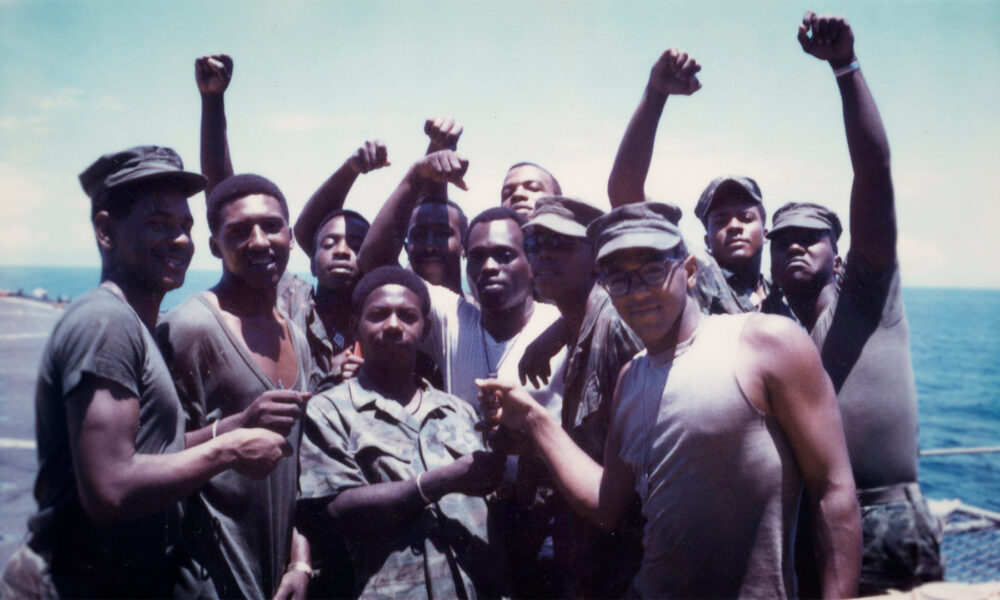
The hypocrisy, of course, stems from the fact that Black soldiers were placing their lives on the line in service of a country that routinely stripped them of their rights; stateside, the civil rights movement crested in the late 1960s at the same time the Vietnam War was escalating. Essentially, they were simultaneously fighting on two front lines, as large numbers of Black men were drafted into the military, the racism they faced at home following them overseas. President Truman may have desegregated the U.S. military during his Presidency in the 1950s— making the Vietnam War the first time the troops were, at least technically, totally integrated— but it fast became clear that that was an act in name only. Black and white soldiers broke off into separate cliques; even though they were there to fight as equals working toward the same goal, their enmity extended from the clubs where they’d wind down, warring over the types of music they’d play on the jukebox, to the actual war, where Black soldiers were regularly given jobs that were either incredibly menial, or very dangerous. White soldiers were permitted to fly Confederate flags; veterans recall seeing them hanging on the wall in the bunks, and billowing in the wind, right underneath the American flag.
Puleo, whose previous documentary work (including 2025’s Percy Green: Man of Action, a portrait of the St. Louis civil rights leader) has examined Black Americans’ fight for civil rights, is a St. Louis native whose genesis for the documentary has local origins: while waiting for his car at a South County Costco Tire Center, Puleo struck up a conversation with Vietnam veteran Edward Drew, who related his experiences as a Black man serving in the war. Puleo’s presentation of the material is straightforward, but effective: snappily edited, Brothers in Blood rifles through a treasure trove of rare archival photos and footage, the most compelling of which include contemporary on the ground conversations with Black soldiers, providing a tangible snapshot of the often dehumanizing discrimination they faced. One talks about how Army rules prohibited afros, but no one around knew how to properly cut their hair. “It’s not my culture,” he says of the close-cropped cuts sported by white soldiers.
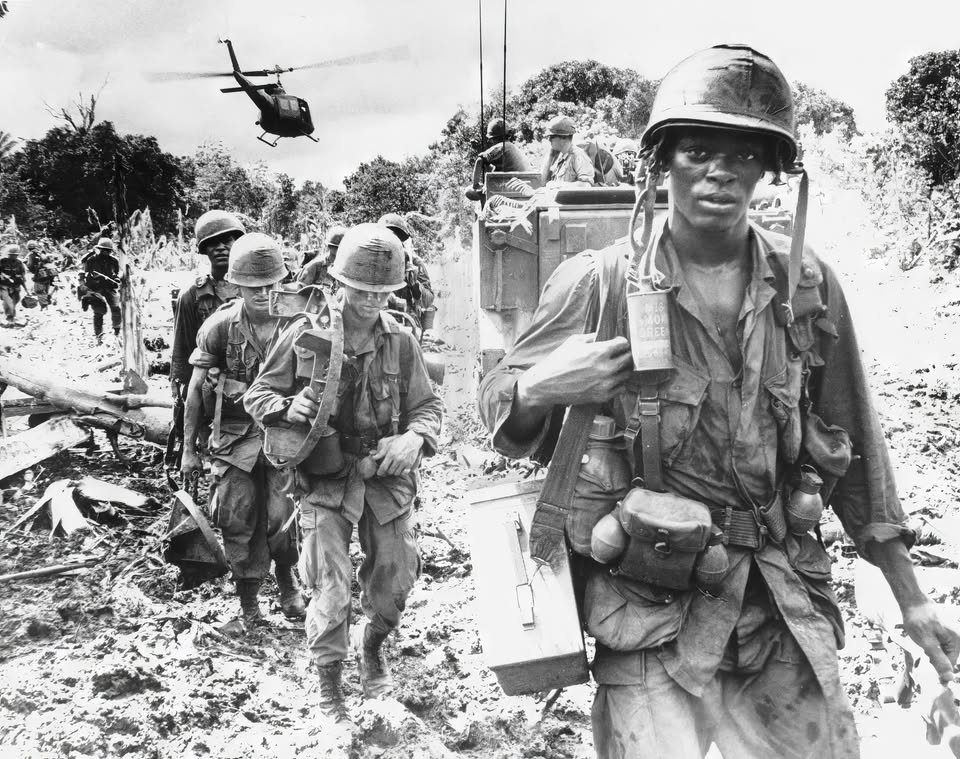
The documentary’s thoroughness extends to the comparable experiences of the Black soldiers with the Vietnamese, a subject that would make a fascinating study in and of itself, arguing that African Americans were far more likely to sympathize with the Vietnamese because they recognized their struggle for equality; the Vietnamese, in turn, would drop pamphlets and flyers urging Black soldiers to return home, saying that this wasn’t their fight. But it’s the new interviews with veterans providing firsthand accounts of their experiences that Puleo culls together that really pull forward the humanity in the material— the same humanity that clearly drew Puleo to the project in the first place. His subjects— including James “Protein” Williams, McKinley “Mac” Hubbard, John Shockley, John Scates, Clayvon Wesley, Freddie Drayton— tell their stories with at times aching vulnerability, intermittent humor, and the clarity of perception that time grants us. Distinct characters emerge through their conversations, as they touch on everything from their various reasons for serving to the struggles they faced coming home, but a common thread runs through all of them: lingering sadness and anger at what they experienced, and what they continue to experience. Their testimony is rounded out by interviews with scholars (including Gerard Early, Christopher Hinson, Priscilla Dowden-White, and Gerald Goodwin) who provide the requisite historical context for the personal narratives, and Gold Star family member Estella Shockley, whose husband Bobby was killed while serving in Vietnam at the age of 19.
At times, Brothers in Blood embarks on brief tangents that distract from these main characters and cause the film to feel like it’s trying to wrap its arms around too much; this includes a segue about Black actress and singer Eartha Kitt and how a statement she made about the dangers of the war for Black men to President Lyndon Johnson at a White House reception was blown out of proportion by the President and the media. The film also rushes through the impact the veterans’ combat experience had on them after they came home— from PTSD to illness brought about by exposure to the herbicide Agent Orange— in the last ten minutes or so, but the power of the provocative final question the movie asks before cutting to the credits compensates for any unevenness in the film’s attempt to wrap itself up, a question that appears to have plagued both participants in and observers of the war for decades and that no one seems to have an acceptable answer to: what was it all for?
Brothers in Blood: Black in Vietnam will have its St. Louis premiere at the 35th annual St. Louis International Film Festival at the Hi-Pointe Theatre on November 14 at 4:00 PM, followed by a Q&A with director Joseph Puleo, subject Estella Shockley, and veterans profiled in the film, moderated by Saint Louis University African American Studies professor Dr. Christopher Tinson. Runtime: 84 minutes. Tickets available here.


