The True/False Film Fest— the esteemed non-fiction film festival held annually in Columbia, Missouri— always excels at elevating global perspectives that most Americans (let alone Midwesterners) aren’t exposed to. The following three films— the world premieres Pinball and What Comes From Sitting in Silence in addition to the recent Sundance premiere To Hold a Mountain— bring viewers from Kentucky to Egypt to India to Montenegro as their subjects grapple with their identities, relationships, and future.
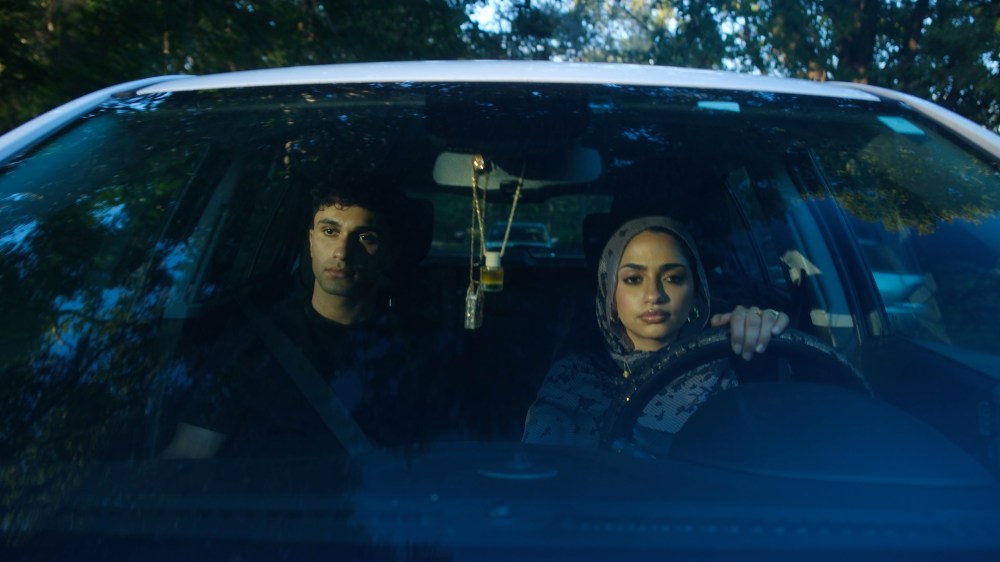
The Merriam-Webster dictionary defines the verb “pinball” as “to move abruptly from one place to another;” surely, it’s derived from the arcade game, in which small metal balls ricochet back and forth across their machine’s surface, slapping targets and being propelled by flippers. “Abrupt” isn’t necessarily the word I’d apply to director Naveen Chaubal’s Pinball,” a film that takes its time observing the rhythms of its subject’s daily life. It is, however, an apt metaphor for that subject’s state of mind as, teetering on the brink of adulthood and feeling the pressure to make big decisions about the next step in his life, he becomes increasingly addled about his heritage slipping away, questioning his identity and where he truly belongs.
Pinball centers on Yosef, who was four years old when the U.S. invaded Iraq in 2004. His family fled from Baghdad to Egypt, and were subsequently placed in about as radically different a place imaginable: Louisville, Kentucky. Yosef’s conversational voiceover narration at the start of the film, played as the camera tracks down the street of an unremarkable suburban neighborhood, reflects on the fact that his father likely chose Louisville because the cost of living was cheaper there. Yosef, however, expresses anger and frustration at ending up where he’s at. “I didn’t ask to be here,” he says, in a vehement tone that he employs almost every time he speaks. Yosef’s on-camera persona very much reflects the big emotions that most kids his age express, but he also wears those feelings too prominently on his sleeve. Chaubal’s focus is most often on Yosef explicitly voicing his thoughts and feelings, as opposed to allowing the camera’s gaze to absorb his experiences with more subtle profundity. In other words, there’s a lot more telling happening than showing, and some of the scenes Chaubal does show— Yosef, exasperated, climbing fully clothed into a bath at the film’s start— seem overly engineered for the camera.
That’s not to discount the validity of Yosef’s experiences and feelings, however. Chaubal makes an effort to show how Yosef engages in the same activities as any other American teenager (he has a part-time job, he is a committed athlete, he’s unsure what he wants to major in in college, he butts heads with his father, who has eked out a living as an auto mechanic), but he also widens his scope to encompass Yosef’s younger sister Azraa, whose trip to Egypt— where she reconnects with sights and smells and tastes that she’d all but forgotten about until she was re-exposed to them— and claim that she doesn’t want to come back to America prompts Yosef to more trenchantly contemplate his own future. Their conversations together contain a refreshing frankness, in addition to the expected sibling banter. Pinball intimately documents its subject, while it’s powerful ending, which leans into the individualistic language of the country’s Naturalization Oath of Allegiance (“I absolutely and entirely renounce and abjure all allegiance and fidelity to any foreign prince, potentate, state, or sovereignty, of whom or which I have heretofore been a subject or citizen”), conveys a broader sense of the immigrant experience in America: the push to conform to your new surroundings, while the pull of your homeland never really goes away.
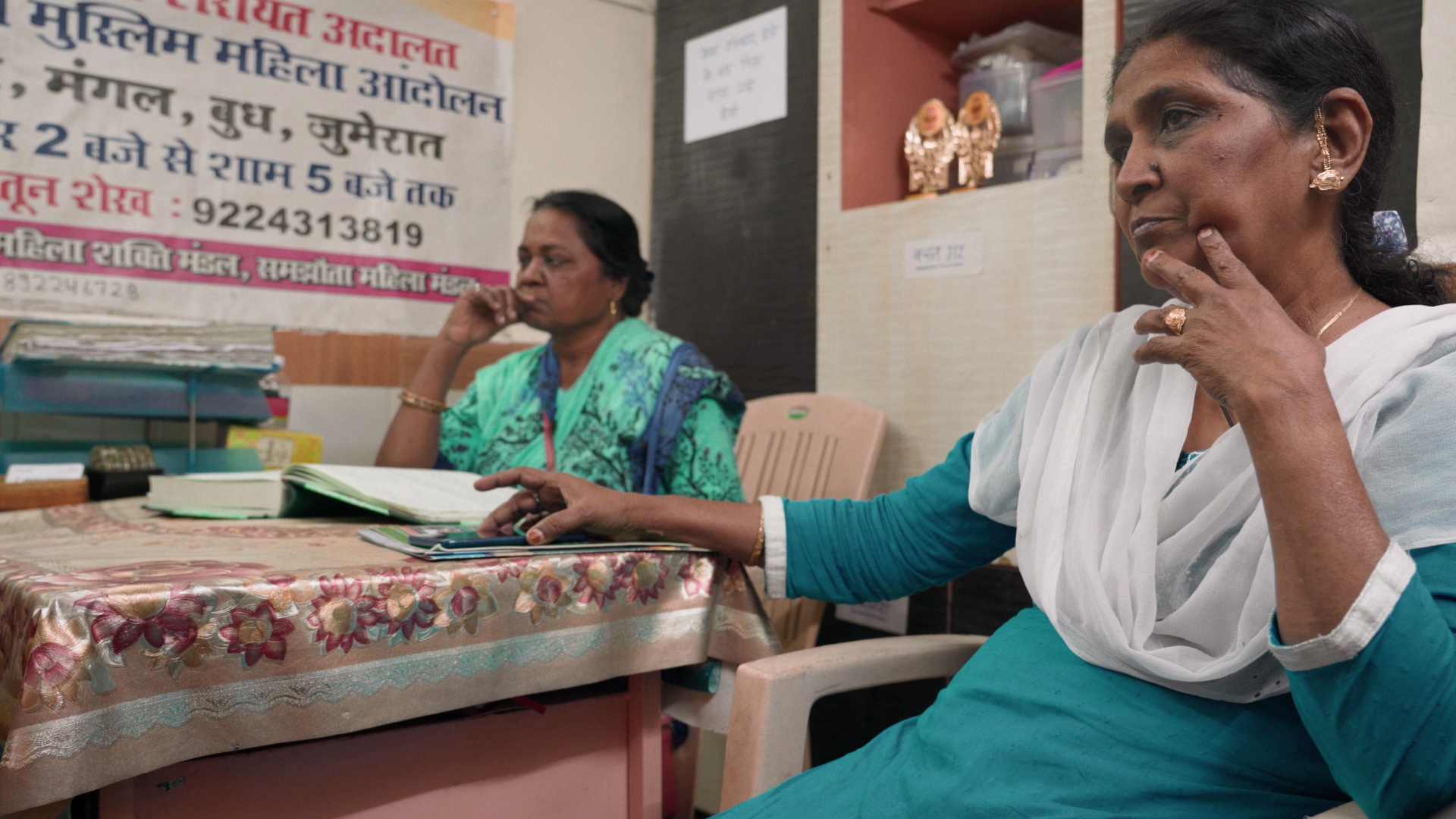
In her intimate and engrossing documentary What Comes from Sitting in Silence, director Sophie Schrago’s camera rarely leaves the confines of the tiny, unassuming law office that serves as her subject. The center of the room is a small table, at which Judge Khatoon sits with her colleagues on one sign, their clients on the other. The sign outside the door— always open to the bustle of the street— reads “Indian Muslim Women’s Movement. The Sharia court— the first run by and for women in Mumbai— gives the female residents of a country that historically devalues women the space and opportunity to defy and escape from their male oppressors and abusers.
Schargo’s film primarily unfolds via meetings in the courtroom, her mostly stationary camera encompassing each party. The bulk of the cases they contend with are filed by young women who are unhappy in their marriages. Their husbands beat them and belittle them, and already tense situations are often exacerbated by the fact that most couples in India live with their parents and in-laws. Khatoon and her court remain impartial, of course— and they typically encourage couples to take small steps that could lead to reconciliation as opposed to divorcing straight away— but in the various interactions with numerous families, it’s worth noting that she always asks the woman who initially filed the case to speak first. Some of them enter the court with conviction, but many are reluctant or nervous to speak, needing encouragement from other family members or— in the case of one woman, who refuses to say anything, particularly while her family is present in the room— Khatoon, who addresses her with a blend of firmness and compassion that demonstrates precisely why so may women come to her to resolve their problems. A board on the wall lists the statistics: cases resolved, mutual settlements achieved, divorces finalized.
That shot provides the sort of hard facts that What Comes from Sitting in Silence lacks in, and viewers who aren’t at least tangentially with Indian politics and how the system situates Muslim women as a minority within a minority may feel somewhat lost regarding the imperative nature of the mere existence of Khatoon’s court. But the men appear so horrifically comfortable when voicing their deeply misogynistic opinions of their wives, while— in the few but effectively employed asides in which Khatoon speaks directly to the camera— Khatoon addresses her personal experiences with men, as does Schargo, who inserts herself into the narrative from behind the camera. The emotions that those things stir are universal, but the most remarkable element about the intimacy of Schrago’s film is how it invites everyone to sit with them, and truly listen.
It can’t be easy living on the Sinjajevina mountain, located in northern Montenegro. Its rolling hills are frequently enveloped by dense fog. In the winter, the few homes and buildings in the region are almost entirely buried by snow. Not to mention, it’s remote. Its pastoral beauty is like someplace out of time, untouched by human hands— except for the select few herders who live and work on the land.
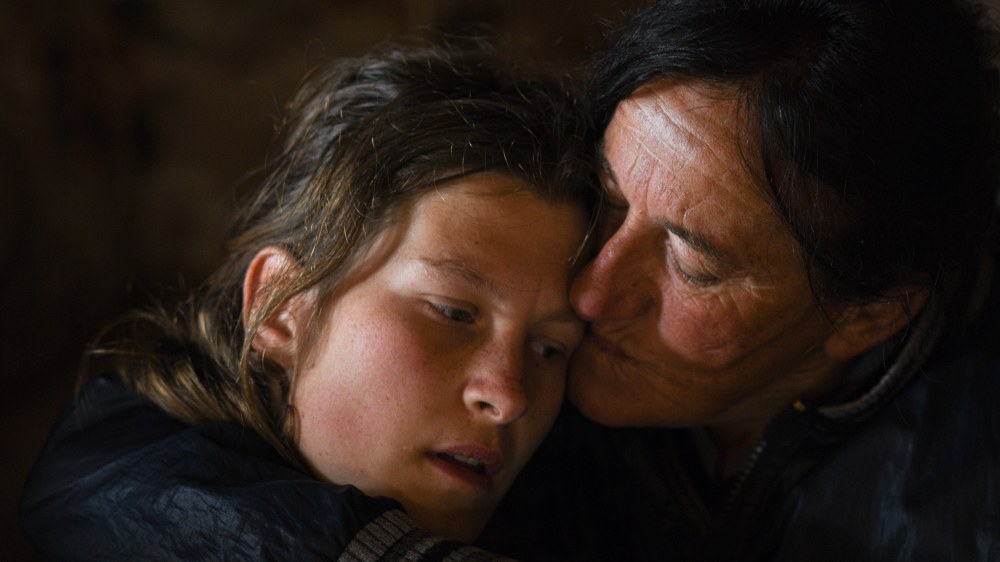
Directors Biljana Tutorov and Petar Glomazić’s gorgeous To Hold a Mountain intimately documents one such family: Gara and her teenage daughter, Nada. Their camera closely observes the pair as they go about their daily routines. Gara makes cheese, preparing the massive rolls in her barn by hand. Nada works a lot with the animals. They’re perpetually surrounded by goats and cows and sheep and kittens, who are cared for with both a firm hand and affection. But the greatest love of all is exhibited between mother and daughter, the former cuddling and expressing loving sentiments the latter with almost claustrophobic attachment. It comes as little surprise that— despite how pleasant they appear to coexist— Nada yearns for something beyond their quaint farm life: school, and friends, and trips to other locales.
To Hold a Mountain is neither tense nor transcendent, even though it wraps a lot of heavy topics up in its embrace. The history of Gara and Nada’s relationship gradually reveals itself through their conversations; Gara adopted Nada after her birth mother was killed by her husband (Nada’s father), who claimed that he shot her on accident. The danger and disappointment of relationships with men are echoed in other discussions Gara has with her female friends. The narrative is further complicated by environmental conflict, as Gara leads her community’s fight against NATO, who plans to install a military training facility on Sinjajevina, despite the area being a UNESCO World Heritage site. It was only a matter of time before the outside world encroached on this one.
That To Hold a Mountain doesn’t express sharp critiques on the latter may make it feel slight, but in its patient observations of this largely insular world, rendered in painterly tableaus that exhibit the filmmakers’ own adoration and respect for their subjects, emotions manifest themselves that are more deeply felt than explicitly explained: love, longing, determination, and grit.

 Katie at the Movies