Halfway through her lyrical documentary A Place of Absence, director Marialuisa Ernst claims that ambiguous loss is the worst kind of suffering. The void your missing loved one leaves behind weighs you down. It’s a weight that only becomes heavier by the lack of answers or closure. But it’s the admirable women who push through this paralyzing grief and take action to find their family members who have seemingly evaporated into thin air, who no one else is searching for, who form the backbone of A Place of Absence, as Ernst joins the Caravan of Mothers of Missing Migrants, a bus that transports Central American mothers hundreds of miles across Mexico as they look for their missing children, who disappeared while trying to migrate to the United States. Wearing gigantic photos of their loved ones that demand to be seen, these women take their quest to every plane imaginable and unabashedly make their presence known, from investigating mass graves and skeletal remains uncovered in the desert, to visiting government offices to demand justice from an often unsympathetic regime.
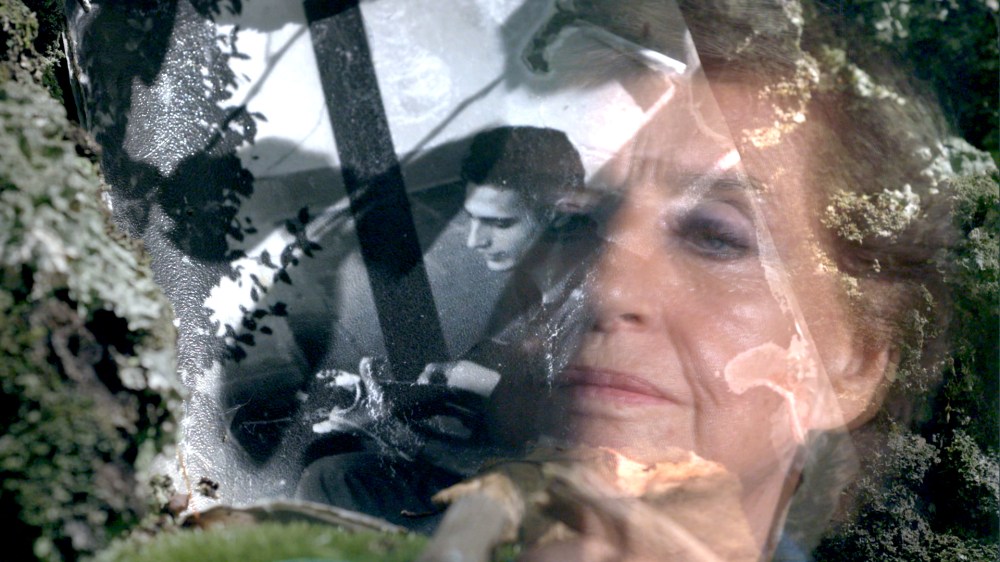
Ernst’s film isn’t your typical road movie, although they do track a select few figures on their journey, like Anita and Leticia, who have each been searching for their missing son and daughter, respectively, for approximately 15 years. While their stories follow a more traditional narrative arc, the film otherwise embraces the poetic rhythms of nature, whether its the arid landscape of Mexico or the verdant forests in southern Chile where Ernst and their mother would visit when they were a child, or the trees that populate the parks in New York where they live now, which the movie opens with and is accompanied by a lush soundscape of rustling leaves and chirruping insects. Evocative interludes allow the mothers to transform their grief into art, whether it’s shaping an outline of a body on the ground using gumballs, writing out the names of their absent family members with twigs or rocks, or showcasing the beauty and strength of the mothers, adorning them with flowers and leaves. These moments play as performance art that is somewhat tonally out of step with the on-the-ground footage of the mothers marching and meeting, but they also grant space for breath and reflection in a film that is otherwise entrenched in heavy emotions.
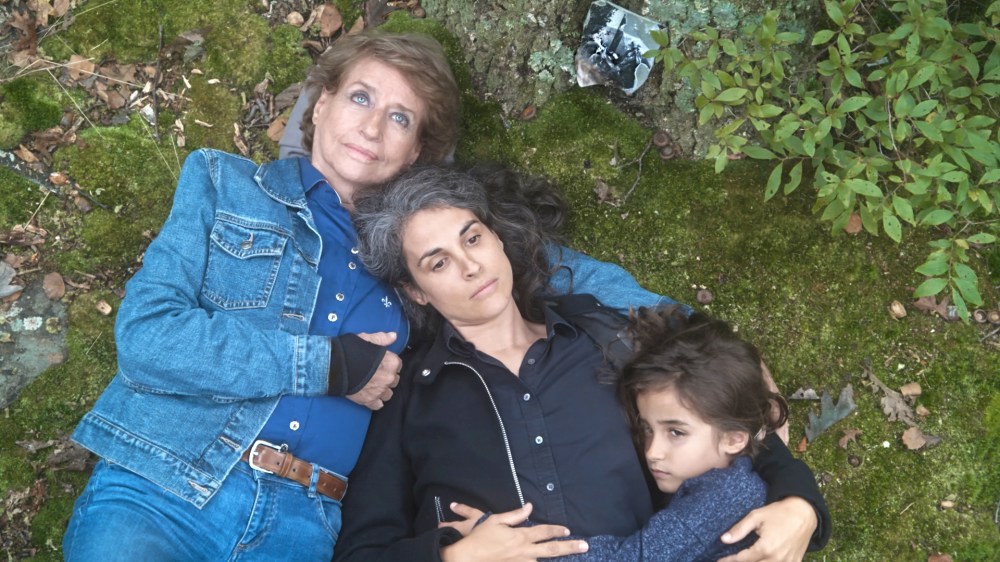
A Place of Absence also contains a deeply personal layer that runs parallel to the story of the caravan. Ernst is haunted by the absence of their uncle Guillermo— their mother’s brother— a resistance leader who opposed the military regime during Argentina’s Dirty Wars, and was kidnapped and disappeared without a trace. With their mother remaining largely silent about him, Ernst’s primary memory of this family member they barely knew are some black-and-white photos— freezing him in time as a young man strumming a guitar— and a cassette tape filled with him singing original songs he wrote. In one, his lyrics speak to his desire to become a seed after his death, and to grow into a tree, echoing Ernst’s opening statement of always feeling connected to the trees, and the film’s recurring use of natural landscapes and materials. Ernst often appears on camera in these scenes, creating an intergenerational narrative not only by filming their conversations with their mother, but also by including their young daughter, keeping Guillermo’s memory alive as they talk to her about him and listen to his cassette together. Ernst deftly balances both their family story and the caravan mothers’ stories, so one never dominates the other; rather, their journeys of discovery and closure work hand-in-hand. As such, A Place of Absence movingly and playfully pays tribute not only to those who are absent, but those who work tirelessly to ensure that the void they left behind is never forgotten.
A Place of Absence screened at the 2026 True/False Film Fest. Runtime: 87 minutes.

 Katie at the Movies