Image are an integral part of any movie, but particularly the following three films that screened at the True/False Film Festival in Columbia, Missouri this past week. The Wolves Always Come at Night blends documentary with fiction to craft a haunting and contemplative portrait of a Mongolian family’s past and present lives. The Silence of My Hands is a largely wordless portrayal of a deaf couple in Guadalajara. And Make It Look Real examines how image-making can make dreams a reality via a small portrait studio in a Pakistani bazaar.
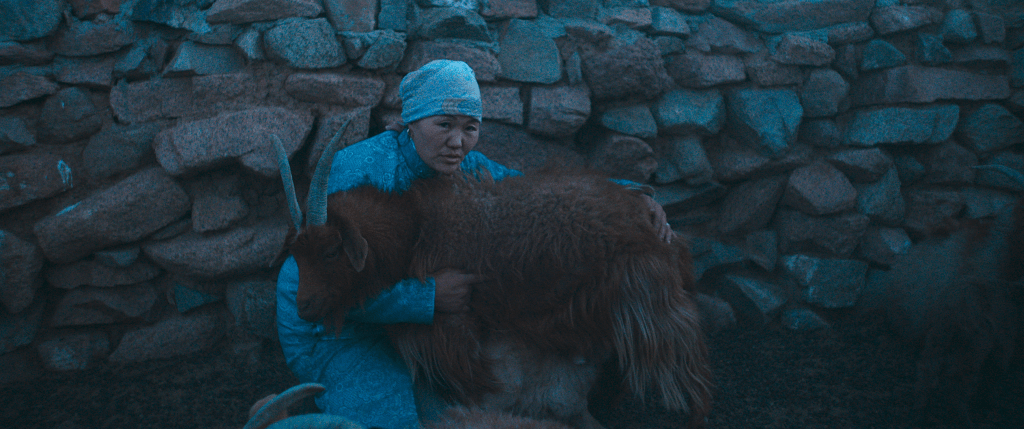
The double meaning behind director Gabrielle Brady’s film really only becomes apparent once the narrative shifts. The Wolves Always Come at Night follows Davaa and Zaya, a couple of Mongolian herders eking out a life for themselves, their four children, and their animals in the Gobi Desert. Their care for their livestock is apparent in the care they show them (Davaa tenderly assisting in the birth of a baby goat) and the long, contemplative shots of Davaa riding his horse across the vast landscapes, or the pair herding their cattle, that highlight the blissful (if not exactly easy) nature of their lifestyle. Their primary concern is the predators that may arrive in the middle of the night to hunt their animals. That is at least until a different sort of beast arrives: in a devastating example of climate change’s brutal effect on the Bayankhongor region, their herd is wiped out by a sudden sandstorm.
Brady didn’t meet Davaa and Zaya until after circumstances had already forced them and their family to move to the Ger district in Mongolia’s capital city, Ulaanbaatar. Davaa takes a job on a mining crew, riding mechanical beings instead of flesh and blood ones, but dreams of his former life frequently overtakes his mind. Therefore, to capture scenes of what their old life was like, Brady engages the couple (who are credited as co-writers on the film) in reenactments, imbuing the docudrama with a slippery, vaguely experimental slant where dreams exist side-by-side with reality. The intimate shots of the family that Brady also includes, whether its the children telling each other stories around the table, or Davaa and Zaya tightly holding each other in bed, go further toward stirring up empathy for these people and their plight. There’s a wistful and heavy sadness that runs throughout much of The Wolves Always Come at Night, but it’s accompanied by the assurance that regardless of how the world shifts around them, they will navigate it together.
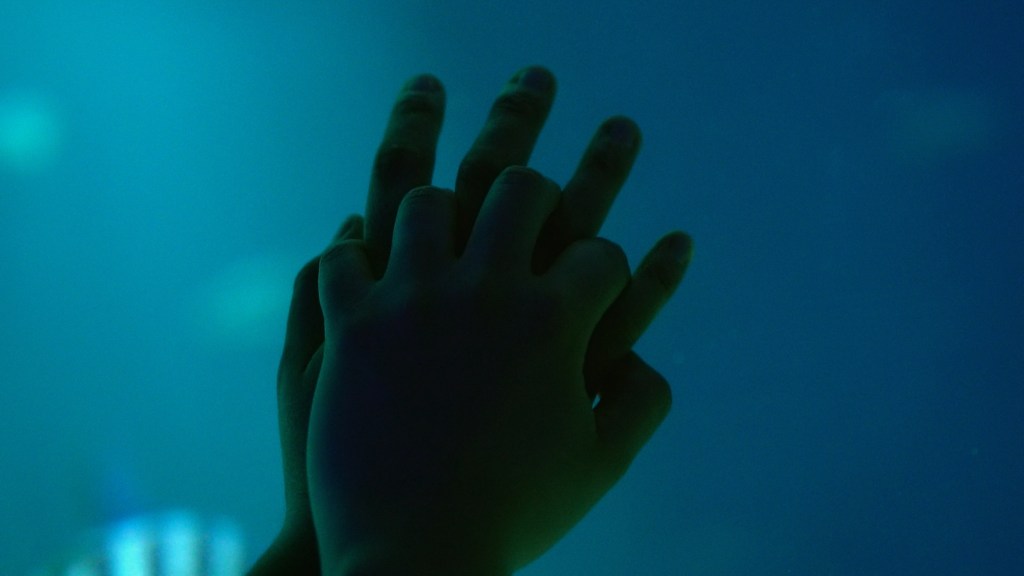
Rosa and Sai are in love. It’s the sort of passionate, all-consuming love that doesn’t need words to describe it. All you need is to watch them together, clasping hands, holding each other tight. But they share another unique bond: both are deaf.
Director Manuel Acuña A follows the couple over the course of seven years in his debut feature The Silence of My Hands (El silencio de mis manos), as Rosa and Sai’s relationship perseveres over their individual adversities. Rosa, a native of the Mexican state of Jalisco, is studying law at the University of Guadalajara— she would be the first deaf lawyer in Jalisco. Sai, a Mexican immigrant who grew up in California, moves back to the U.S. while wrestling with their gender identity, ultimately choosing to transition despite not having the support of some of their family, and knowing that transgender rights are virtually nonexistent in Mexico.
The Silence of My Hands’ only spoken dialogue comes from the smattering of hearing characters who don’t know sign language. As we see, sometimes that language barrier is hard to push through: even with a translator, some information gets muddled in a conversation between Sai and the doctor they’ve come to to remove their breasts; he has to draw pictures to help them understand. But otherwise, The Silence of My Hands is mostly, well, silent. Acuña loosely structures the film, gliding back and forth between Rosa and Sai in a manner that makes the time and place of the narrative almost too slippery. In other words, it’s mostly just vibes. Acuña also utilizes a lot of cell phone footage captured by Sai to illustrate their life in California while he remained in Guadalajara, but it’s mostly just filling in the gaps; with a few exceptions, like Sai proudly showing off the birthday poster they made for Rosa, these pieces aren’t particularly compelling narratively or aesthetically. This is especially true when comparing them to Acuña’s footage, in which he demonstrates a keen eye for capturing places and people in the throes of desire. An aquarium, for example, serves as a favorite meeting spot for Rosa and Sai; Acuña shoots lingering close-ups of their hands clasped against a cool tank of blue water.
The film’s immersive sound design goes even farther toward situating the audience in the subjects’ perspective. Sound cuts in and out of the film based on whether or not Rosa or Sai are wearing their hearing aids. In one scene, after swimming, Sai playfully splashes water on Rosa, soaking her hearing aid. The feedback reaches an unbearable screeching pitch until she removes it, and the noise cuts to a faint muffle. But there’s an even more impressive attention to detail here: the closer Sai and Rosa move toward each other, the louder the feedback from their respective hearing aids becomes. Acuña could have used this film as an opportunity to speak more plainly on issues like trans and disabled rights, but he doesn’t really need to. Through his intimate portrait of these two people, we witness all the struggles and the triumphs first hand.
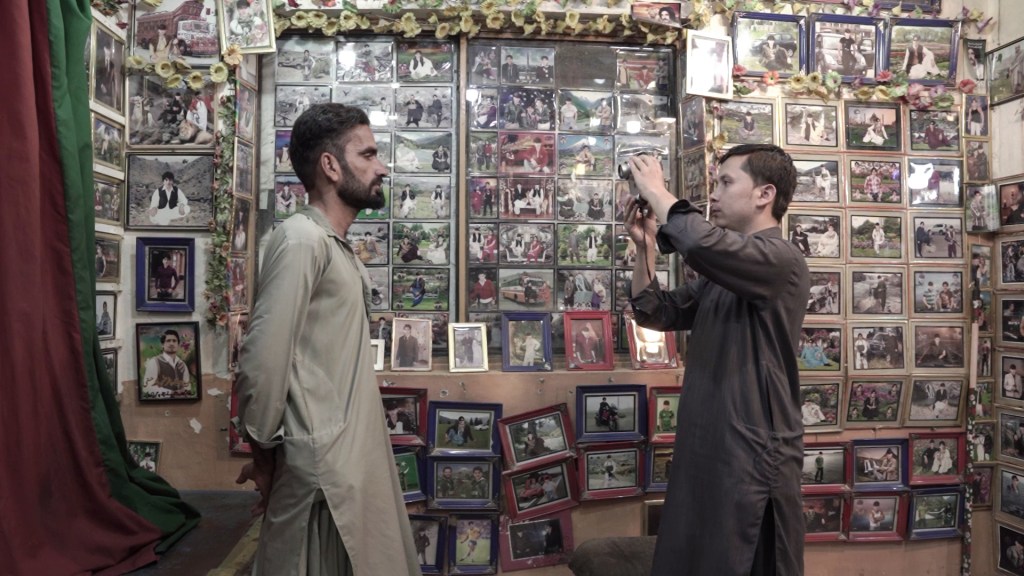
Sakhi is in the business of making peoples’ fantasies a reality, even as the outside world crumbles around him. The owner of a small portrait studio in a bazaar in Quetta, Pakistan, Sakhi uses a digital camera to take his clients’ photo, and subsequently photoshops their image into whatever body or background they desire. Because Pakistan has separate bazaars for male and female shoppers, all of his customers are male, and they largely have a shared interest in what they want their photos to contain: guns, women, cars. The walls of Sakhi’s studio are covered in examples of these over-the-top images that allow the average person to fulfill their aspirations in an environment where economic decline and the constant threat of terrorist attacks otherwise restricts them from doing so.
Director Danial Shah’s Make It Look Real runs a tight 68 minutes, but it’s no less thoughtful or compelling. There’s an appealing tactility to the montages that Shah uses to show the countless methods of image manipulation Sakhi employs, and a playfulness to his filmmaking and interview style. Occasionally, Shah and Sakhi will switch places, the former— himself a Pakistani native now living in Belgium— venturing in front of the camera and allowing Sakhi to question him about his life and work. Thanks to the evasiveness of his subject, Shah’s efforts to get to the heart of why Sakhi does certain things in his work don’t always lead to any profound epiphany. This is especially true of Shah’s questioning of why Sakhi lightens the dark skin of all his clients, Sakhi pointing to the fact that white is universally considered “pretty,” or the fact that so many customers want photos of them holding guns (one client who walks into Sakhi’s studio immediately comments on there being so many “violent things”). And yet, Sakhi is far from a cypher— if anything, Shah’s observations of him interestingly indicate that he possesses desires that are quite the opposite of most of his customers. When he has his own picture taken, he says that he prefers simple backgrounds, no props. He also expresses a wish to leave Quetta and move aboard, as Shah did. Make It Look Real never ventures outside the confines of the bazaar and the studio, making Sakhi’s entrapment that much more potent. But it also makes the desires of the people there sing that much louder, resulting in a crowd-pleasing and introspective portrait of the intersection between image-making, social and economic class, and wish fulfillment.

 Katie at the Movies