Gloomy atmosphere, haunted castles, grotesque characters, cursed families, doomed romances— these elements and more have come to define the gothic genre, the first entry into which is generally considered to be English writer Horace Walpole’s 1764 novel The Castle of Otranto. Walpole’s tale of the lord of a manor and his family was inspired by a nightmare he experienced in his own Gothic Revival home, Strawberry Hill House, but the writer was also frequent guest at Drayton House, a sprawling medieval mansion situated in Northamptonshire, construction on which was to have begun in the 1320s and has been passed down through the same family since the 1360s. Perhaps that’s why the home isn’t as well known or as recognizable as some of the country’s more famous country houses and castles, many of which have opened up to tourists over the years, making its use as the primary interior and exterior filming location in Emerald Fennell’s sophomore feature Saltburn— serving as the titular mansion— all the more exciting. Walpole himself once referred to the home as “a most venerable heap of ugliness, with many curious bits,” a statement that can appropriately also be applied to Fennell’s modern entry in the gothic genre.
Saltburn opens not at Saltburn, but at Oxford circa 2006, where working class student Oliver Quick (Barry Keoghan) struggles to fit in with his moneyed colleagues; even his advisor derides his effort to make an impression by reading all 50 books on the (not required) summer reading list, including the King James Bible. Once Oliver catches his first glimpse of Felix Catton (Jacob Elordi), a popular jock from a wealthy family, he latches on to everything this young man appears to represent: sex, money, power. The pair have a sort of meet-cute— Oliver lends Felix his bicycle so he can make it back to campus— that endears Oliver to Felix, who invites him into his fold out of a mixture of gratitude and pity for Oliver’s abusive, poverty-stricken upbringing. The sudden death of Oliver’s father and the unstable state of his mother prompts Felix to invite Oliver to spend the summer with him and his eccentric family at Saltburn. Oliver is a fish-out-of-water in this world too, the absurdity of what’s about to unfold evident in how he is immediately scolded by the butler for showing up early because the front gates weren’t open yet. And that’s when things get real messy, real fast.
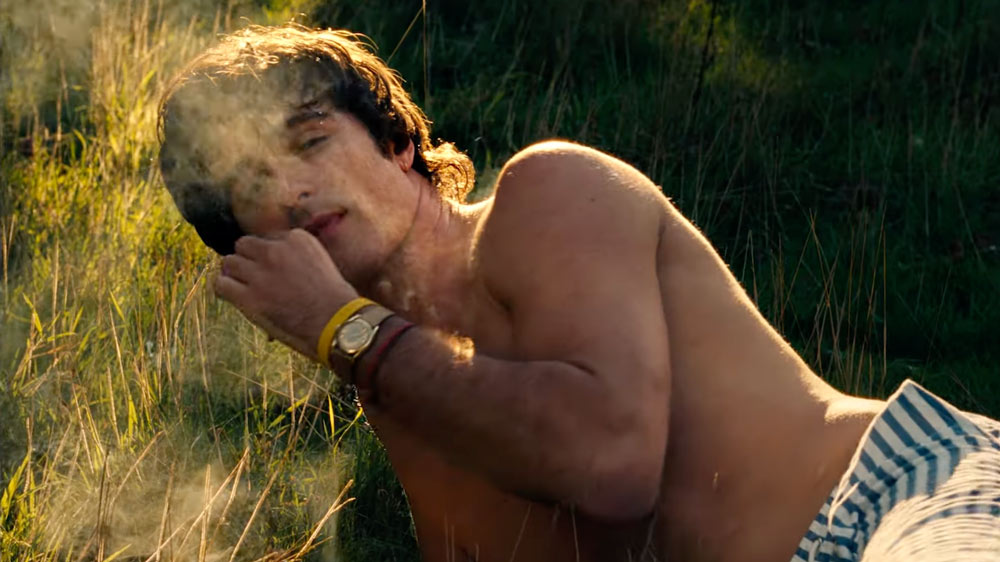
Fennell pulls from numerous inspirations for Saltburn: a traditional Gothic setting and forbidding mood merged with the excess of F. Scott Fitzgerald and her own personal memories of attending college in the mid-2000s and experiencing the intense passions and obsessions surrounding first love when you’re a young person. But those influences also make every inch of Saltburn painfully obvious. That Oliver is obsessed with Felix— perhaps dangerously so— is evident before the invitation to Saltburn is even extended. The notion that none of these people are who they truly are goes both ways: the first real air of menace is blown toward us when Felix’s sister Venetia (Alison Oliver) off-handedly remarks in reference to Oliver, “I think I like you more than last year’s one.” Meanwhile, the presence of Felix’s American cousin Farleigh (Archie Madekwe), who tortured Oliver at Oxford and continues to hound him at Saltburn, casts some suspicion on Oliver’s motivations. But even when the details are foggy, the general endgame is always clear. Perhaps that would be less of an issue if Fennell’s goals in telling this story were more lucid. Perhaps for some audiences, that doesn’t really matter; there is a witty line tossed here and there, some amusing nods to the aesthetically hideous, Abercrombie & Fitch-chic era the story is set in, from bad music (there’s a cringe karaoke scene in which one of the Cattons’ middle-aged white party guests provides a tone-deaf yet enthusiastic rendition of Flo Rida’s “Low”) to Livestrong bracelets to Harry Potter books, and a handful of really fun performances. Kudos for the latter primarily belongs to Rosamund Pike as Felix’s chilly mother Lady Elspeth, who clings to keep up appearances regardless of the gradual chaos unfolding around her, who is so out of touch with reality outside of her existence at Saltburn, an existence filled with lavish nightly gatherings, hungover breakfasts, and catty gossip, that almost every one of her delicious line readings drips with hilarity. Richard E. Grant is another standout as her husband and Felix’s father Sir James, who is sort of dotty, just sort of going with the flow. Paul Rhys as Saltburn’s stoic butler and Carey Mulligan (star of Fennell’s divisive first feature Promising Young Woman) as Elspeth’s shallow, attention-seeking friend Pamela (described by Fennell in an interview with Time as “human debris”) lend further color.

But for viewers searching for more than surface-level thrills in Saltburn, there’s little of note teased out over the film’s languidly-paced 130 minutes. Fennell established herself as a provocateur with Promising Young Woman, a twisty, feminist subversion of the rape/revenge fantasy. But while that film could be said to be single-minded in its “all men are terrible” messaging, at least it has a mind. If Saltburn was intended to serve as a skewering of the lifestyles of the rich and famous, it doesn’t really play like one, not when its so lacking in perceptiveness and its final stretch queasily vilifies the purportedly power-hungry working and middle class as represented by Oliver. It isn’t really a love story either, although the film initially boasts all the trappings of a queer gothic romance (disenfranchised youth gets swept away by a powerful, wealthy estate owner with his fair share of secrets), and opens with Oliver’s voiceover stating that he loved Felix, but wasn’t in love with him, his repetition of the words like an affirmation suggesting just the opposite. This narration plays over a montage of images of Felix in which Fennell frames him as an object of desire (something Elordi plays well into throughout the film, while imbuing his character with a touch of some deeper humanity). However, any queer themes in the film swirl less around love and sex and more around identity, confirmed by the mounting evidence that this is less a story about how Oliver wants to be with Felix (even though Oliver expresses jealousy at witnessing Felix cavorting with his girlfriends) and more about how he wants to be Felix. All of these characters lack the interiority necessary to pull all this together into something more scathing though, to make the abject predictability of the film’s “twists” less noticeable and to transform it more than just an amalgamation of its influences. Saltburn doesn’t work at all without the fearless lead performance of Keoghan (whose evergreen presence as cinema’s “that weirdo” is harnessed well here) or the gaudy decadence of the production design and Drayton House itself that is reflected in the narrative itself. But its scenes that are clearly engineered to make audiences squirm, serve little purpose beyond providing a whiff of eroticism to provoke faux outrage in this most sexless cinematic era imaginable, to nab as many “damn, that was crazy” reactions as possible to mask the fact that it actually has nothing to say at all. Saltburn is, ultimately, as empty as its characters, and no amount of bathwater-sipping, nude dancing, and grave-fucking can compensate for that.
Saltburn is now playing in theaters. Runtime: 127 minutes. Rated R.

 Katie at the Movies
What a great review, Katie! I love the “human debris” comment from Emerald, lol.
LikeLiked by 1 person
Thanks Louisa! I thought that comment was so funny too.
LikeLiked by 1 person