In Emanuele Crialese’s L’immensità, Andrew (Luana Giuliani) is a 12-year-old boy wresting with his gender identity. Born Adriana, his parents Felice (frequent Crialese collaborator Vincenzo Amato) and Clara (Penélope Cruz) still call him by that name, and address him as “young lady.” They aren’t exactly hostile, and yet, their inability to understand or, in the case of Felice particularly, refusal to even try to creates something of a rift between them. If this conflict, just one piece of Crialese’s family drama, sounds remarkably similar to ongoing conversations that have only ramped up of late, particularly in the United States as rights for citizens who identify as transgender only become more and more restrictive, you might be surprised to learn that this film is actually set in 1970s Rome. Crialese, who discussed his identity as a transgender man in conjunction with L’immensità’s premiere at the Venice Film Festival last year, rooted the story in his own experiences, and he creatively ties together the experiences of Andrew and Clara—a Spanish expat trapped in an abusive marriage—two outsiders struggling to find their place in the world, in ways that are, if not wholly cohesive by the time the film reaches its end, deeply moving.
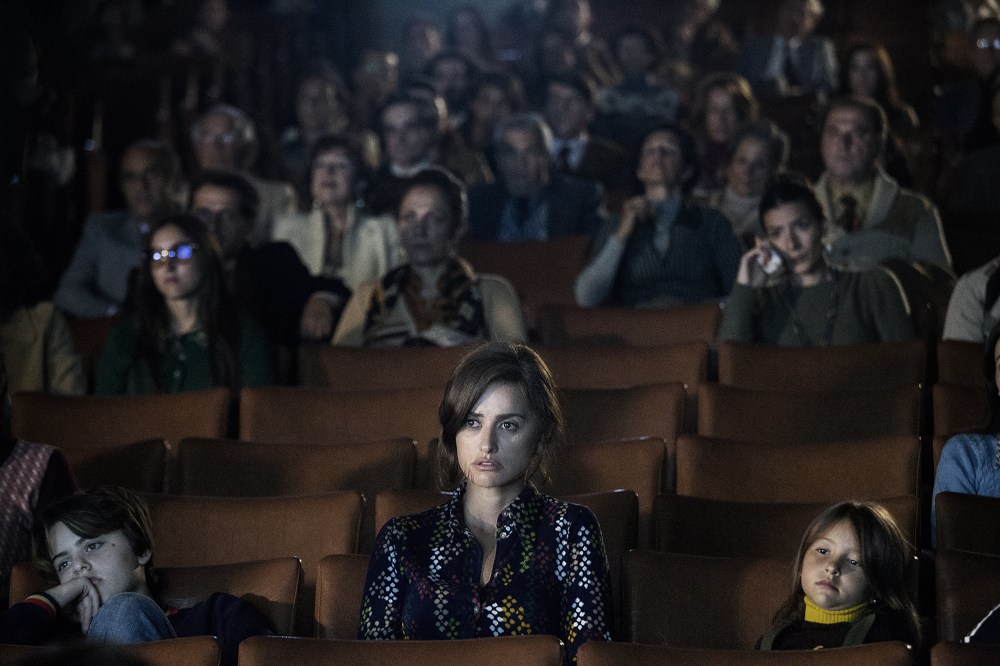
Music Box Films.
When we first meet Andrew and his family, the bond Clara shares with her children is evident. In what could easily be the start of a light-hearted routine in a musical, Clara, Andrew, and Andrew’s younger brother and sister Gino (Patrizio Francioni) and Diana (Maria Chiara Goretti) sing along to the chart-topping Italian pop hit “Si, ci sto!” as they bang pots and pans and turn draping the dining table with a cloth into a jaunty dance. But the darkness at the heart of this family becomes equally evident just a while later, when Felice comes home and tries to force himself on Clara, despite her protests (we later learn that he has been carrying on an affair with his secretary; every action he indulges in is something he feels entitled to, regardless of others’ feelings). Clara, adrift in her marriage and in a country that isn’t her home, frequently resorts to childish behavior to cope, to the confusion of the adults around her. After taking Andrew to a doctor appointment (where it becomes clear that she hasn’t bought in to her child’s male identity by correcting him when he is being introduced to the physician), she suggests they play a game, racing down the crowded street as quickly as possible while shouting at the top of their lungs. On a family trip, she is easy to let go after the kids are found messing around in underground tunnels where they shouldn’t be, and at dinner, she slides under the table with the other children, who are crawling around tapping the adults’ feet.
The children don’t really know what to make of this behavior either, especially Andrew; in the dinner scene, sitting crouched under the table, Andrew tries to tell her that she doesn’t belong there, that she needs to go back up and sit with the other adults. As fun and loving as their relationship is, Andrew needs a supportive parental figure, and it doesn’t seem like any of the adults in his life can give that to him. Lacking the proper language to describe how he feels about his gender identity, Andrew tells people that he’s an alien from outer space. The most accepting person in his life is Sara (Penelope Nieto Conti), a girl his age to lives in the worker camps beyond the reeds, similarly an outsider as the rest of the community derides her people for being gypsies. Something of a romance is drummed up between Andrew and Sara, who sees and accepts him as a boy.
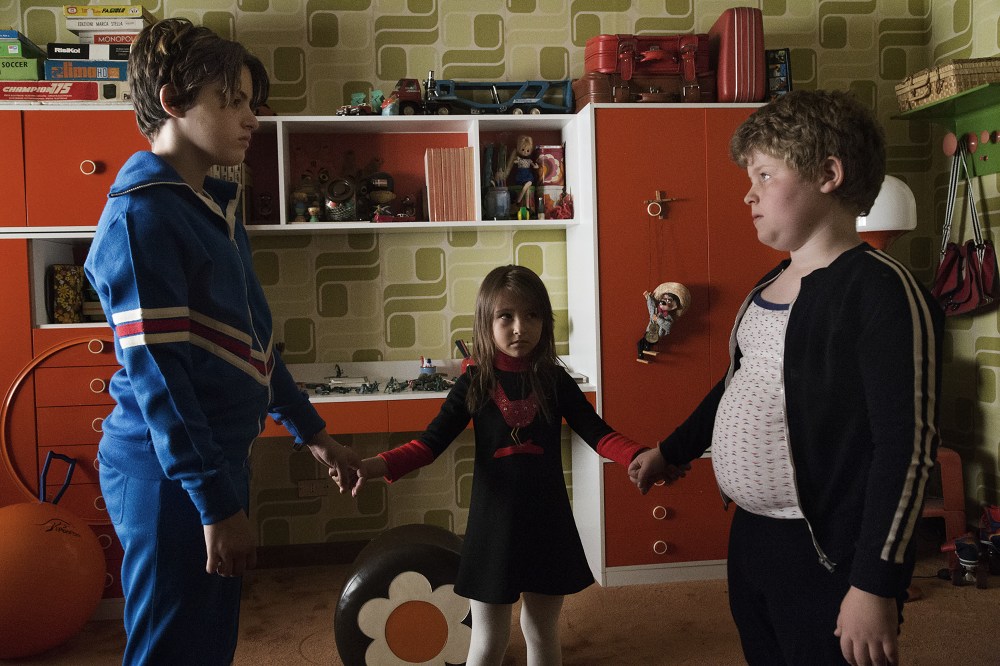
L’IMMENSITÀ. Courtesy of Music Box Films.
The attention to period detail in the sets, costumes, and music throughout L’immensità makes for a striking-looking film, particularly when Crialese has his characters escape the turmoil of their real lives through flights of fantasy that take the form of the black-and-white television variety shows of the time. The real world fades away and suddenly Clara will be wearing a blond wig and crooning as rows of dancers twirl around her, or Andrew will be dress in formal wear and lip-syncing to the singing of a deeper-voiced adult man. These segments add a little oomph to a movie that is otherwise lacking something to tie its characters’ stories together. The cast is excellent across the board, and Cruz in particular settles comfortably into the role of mother: devoted to her children, but struggling to hold the other pieces of her life together. Many of her scenes when she’s clearly trying to hold it together for the sake of her kids—putting on a brave front as the tears tremble in her eyes—are heart-breaking. But the final act feels like it is rushing to get where it is going, and neither Andrew nor Clara’s arcs are wrapped up satisfactorily as a result, Clara’s breakdown in particular not being handled with the delicacy it ought to have been. The script somewhat holds the viewer at arm’s length, and despite the quality of the performances the finale isn’t as wrenching as it ought to be. At the same time, Crialese does such great work rooting us in the perspective of the children that it makes sense that we, by extension, wouldn’t grasp the full breadth of what Clara is wrestling with and why. L’immensità translates to “the immensity,” and the weight of the characters’ actions— Andrew’s gender dysphoria, Clara’s reversion to childlike behavior— is felt despite some of the script mechanisms and pacing rendering them somewhat intangible. It ends up being a rather bleak film beneath its bright exterior, but despite some hiccups, this portrait of a family in flux is emotionally-involving thanks to its empathetic exploration of themes and issues that transcend time and location.
L’immensità will be available to watch on demand on all digital platforms on July 11. Runtime: 99 minutes.

 Katie at the Movies