The final minutes of I Play Rocky— director Peter Farrelly and writer Peter Gamble’s telling of the production of the now-storied 1976 boxing film Rocky— are set at the movie’s premiere at the Cinema II in New York City. As Sylvester Stallone (Anthony Ippolito), the film’s fledging star and screenwriter, paces the theatre’s corridor, far too jittery to sit in on the screening itself, I Play Rocky cuts to the movie-within-a-movie, with entire remade scenes from the source material playing out onscreen. These include some of the classic’s most crowd-pleasing moments (the after-hours ice-rink date between Rocky and Adrian; Rocky’s emotional confrontation with his manager), during which the scene occasionally cuts to reaction shots of the audience, bathed in the glow from the screen, watching the movie adoringly. When Rocky, at the climax of his training montage set to Bill Conti’s rousing score, races to the top of the Philadelphia Art Museum’s steps, the camera rotating around him to take in the view, a smattering of people in the theater stand up and cheer. It’s all very nice, and we get it: these images that are now burned into our pop culture consciousness were almost immediately iconic, and are every bit as captivating today as they were 50 years ago. It also made me wonder: why am I watching this overly-laudatory imitation, when I could just be watching Rocky?
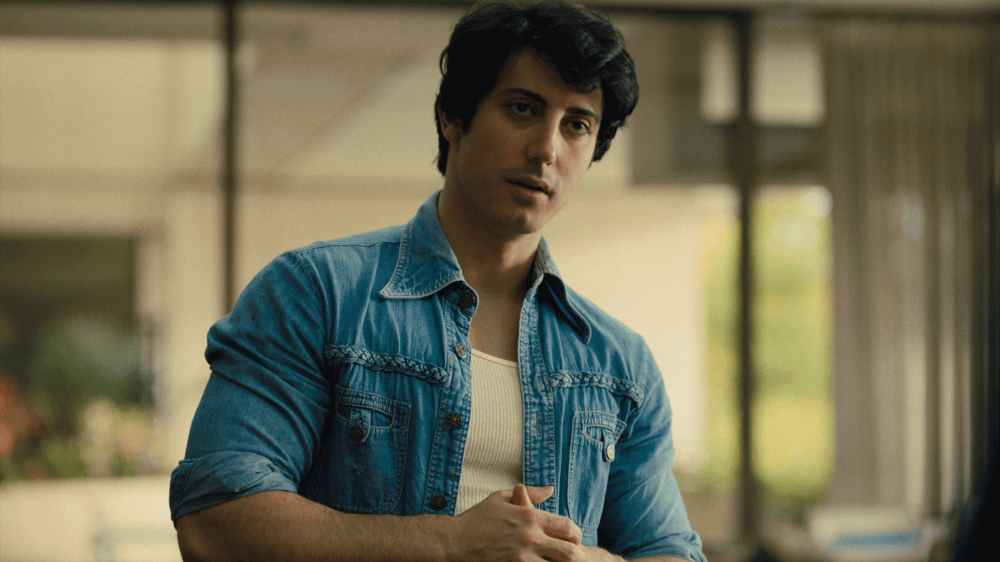
That the creation of Rocky is its own special sort of underdog story is undeniable. The opening scenes of Farrelly’s film paint a portrait of Stallone (going by Mike instead of Sylvester, in an effort to sound like a more bankable name) as a New York City actor struggling to book jobs; he fails an audition for a nondescript thug (despite his deep, tough voice and hulking physique), and gets hired for a softcore porn film based on looks alone. While miring through the muck of low-paying gigs, he begins dating Sasha (AnnaSophia Robb), his coworker at a movie theatre and a photographer. The action picks up again after they have married and moved to Los Angeles, with Stallone penning script after script in between parking cars. Navigating Hollywood really is a networking game; his screenplays catch the eyes of producers Irwin Winkler (P.J. Byrne) and Robert Chartoff (Toby Kebbell), who are especially enthusiastic about Rocky, which Stallone wrote in three days, inspired by a fight he catches at a bar between champion Muhammad Ali and underdog Chuck Wepner. Stallone nets an unheard of script fee for a newcomer, but the studio bristles at his one, non-negotiable condition: that he also star in the movie as Rocky.
Several years ago, Ippolito played Al Pacino in The Offer, a Paramount+ miniseries chronicling the development and production of The Godfather. Suffice it to say, the actor definitely is a type, but his interpretation of Stallone— in voice, appearance, and manner— contains a soulfulness that transcends mere imitation. Filled out by an impressively deep ensemble that includes everyone from Matt Dillon (playing Stallone’s hard-nosed father) to Tracy Letts (as despicable studio executive Sandy Maddox) acting out a script that’s alternately inspiring and amusing and brimming with jabs at Hollywood’s often-hypocritical inner workings and the intersection of artistry and commercial viability, I Play Rocky rarely isn’t entertaining. That’s part of its problem. Despite its scrappy lead, the film quickly falls into the trap that so many of these movies-about-movies do. Overly concerned about creating crowd-pleasing moments from touchstones familiar to the audience (That famous run up the steps? It was achieved via one of cinema’s first uses of Steadicam. The scene in the meat-packing plant where Rocky pounds raw meat as part of his training regimen? It was almost shut down by the surprise appearance of a union leader sniffing out the producers’ attempts to avoid the costs of union labor), it fails to really interrogate the film’s humanity, and the clear parallels it possesses with the real-life narrative. Obviously, much of this film is predicated on the assumption that its audience has seen (and moreover, likes), Rocky. I can’t imagine why you would watch it otherwise. But I don’t believe stories should be written based on assumptions, and I don’t think this film provides a clear sense of what made Rocky— an underdog whose perseverance translated to a win even when he didn’t actually win— so transcendent and inspiring.
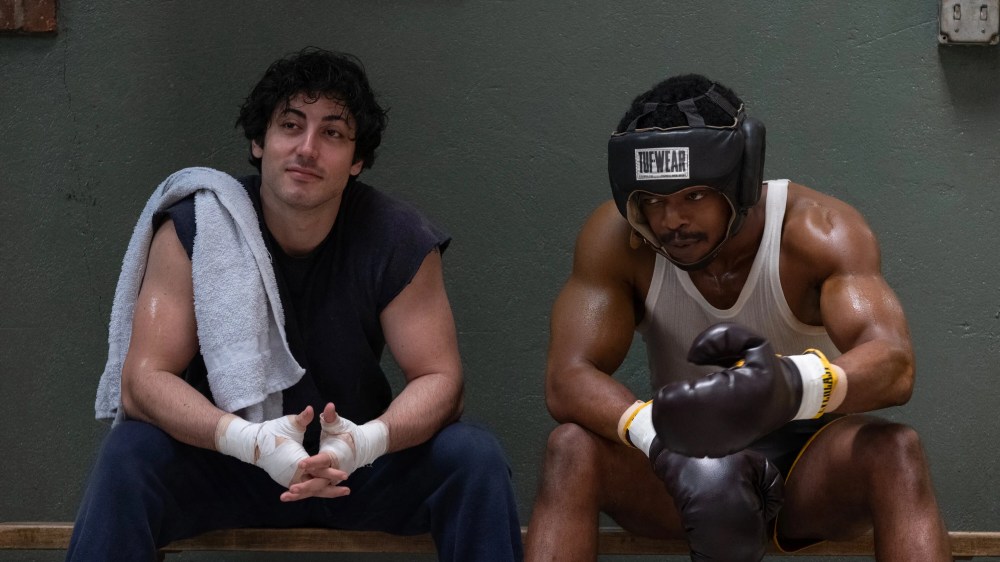
What I Play Rocky does largely accomplish, however, is its portrayal of Stallone as an actor/auteur. So many people possess an image of him as the brawny star of 80s and 90s action movies, from First Blood to Cobra to Demolition Man, but aren’t as aware of his extensive screenwriting credits. I Play Rocky portrays him as a creator with such a clear vision of his project, he isn’t willing to compromise on it (the negotiations regarding him starring in Rocky serve as the backbone of the film’s primary conflict, mores than the numerous production issues that occurred later, like his numerous on-set injuries that are mostly superficially written off). The film even goes so far as to compare him with Citizen Kane director and star Orson Welles, and as bluntly as that point is hammered home, it’s apt: Stallone was only the third person to receive simultaneously Best Actor and Best Screenplay Academy Award nominations, behind Charlie Chaplin and Welles. A couple days after seeing I Play Rocky, I sat at a bar for dinner, and overheard a family who had just watched it breaking it down, the son scrolling through Stallone’s writing credits and reading them off to his parents, to their apparent amazement. They all admitted, as I suspected, that it mostly just made them want to watch Rocky. But any film, however shallow it may be, that can prompt its audience to consider its subject further after they’ve left the theater isn’t entirely devoid of merit.
I Play Rocky is now playing in theaters. Runtime: 128 minutes. Rated PG-13.


