It’s like something out of a fairy tale: in 1998, in search of better opportunities, Beatriz Valencia immigrated to the United States from her home country of Colombia. She took on a job as a domestic worker in Florida, cleaning the absurdly spacious homes of the wealthy, sending most of her income to her husband and two young children back home, her exhaustion from the near-constant physical labor at one point causing her to fall asleep behind the wheel while driving on the highway, her car spinning across multiple lanes of traffic until it slammed into the wall of the median. On the brief breaks she got at work, she’d write, filling up journal after journal with the tales of her struggles being alone in a strange country, missing her family, and the nature of her job. One day, one of her employers found one of her notebooks and was impressed by Beatriz’s writing skills. Her connection with a publisher helped Beatriz publish her first book, an account of her life and work as an immigrant in America titled How to Clean a House in 10 Easy Steps. The book was met with acclaim across the country, with readers lining up at book signings to relay how strongly they felt Beatriz’s experiences reflected their own— as immigrants, or as individuals working in a criminally undervalued profession.
Like most fairy tales, Beatriz’s life story, as relayed in Carolina González Valencia’s playful if overly-stylized documentary How to Clean a House in 10 Easy Steps, is rooted in fact, but embellished with fantastical flourishes. It’s a way for Valencia— Beatriz’s daughter— to not only allow Beatriz to tell her own story in her own words (when asked what sort of career she would want if she weren’t a domestic worker, Beatriz responded “writer,” and thus her author alter ego was born), but for her to really grapple with the hurt she experienced when her mother moved to the U.S., and to have those tough conversations about absence and displacement that are often much easier to navigate under the guise of fiction.
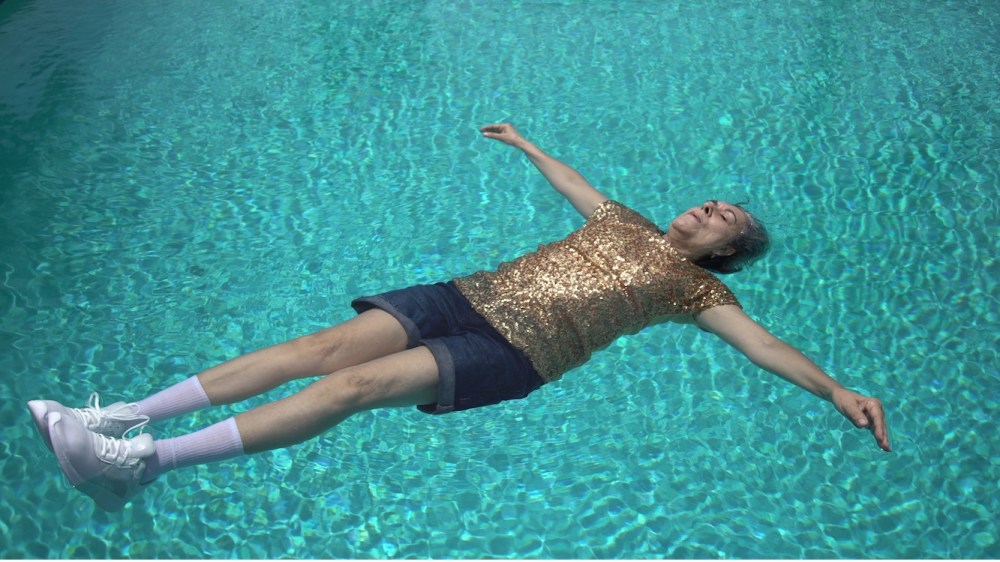
As the title suggests, Valencia plays with the typical structure of a self-help book in formatting her film, with each “step” serving as chapters that gradually tighten their focus as the film pushes further inward into its characters’ psyches. She begins broadly, keeping herself and Beatriz’s stories separate— although as the opening shot, in which Beatriz and Valencia, dressed identically in short-sleeved shirts and shorts (the preferred uniform of a cleaner for both comfort and utility, according to Beatriz’s voiceover narration) and appearing as mirror images to each other indicates, they will meet soon enough. Beatriz’s upbringing in Colombia and subsequent immigration is told partially in her own words, but is heavily accented by contributions from Valencia, whose rather impersonal phrasing leans in to the narrative’s fable-like tone and structure. When she begins talking about herself later in the film, she switches to the first person, her narration becoming much more personal. In describing the time after her mother’s departure, she repeatedly states, “I don’t remember the day she left.” But she remembers the time before she did (when her mother taught her things she may need to know to help herself and her family) and she remembers her absence— her father filling up their grocery cart with all manner of junk that he failed to cook well, and her using her allowance to purchase sanitary pads, an errand she— in the absence of a female parental figure— embarked on on her own.
Valencia illustrates these tales with a plethora of memorabilia that make the film remarkably tactile. She swipes through photos on a smartphone, or flips through stacks of old photographs, depicting the source of her materials in the frame in a manner that accentuates the memory piece aspect of the film. She also remixes this media, cutting people out of photos as visualizations of their absence, or adding other elements to them, while sketchy animations breathe life into moments or memories that there are no photos or videos for.
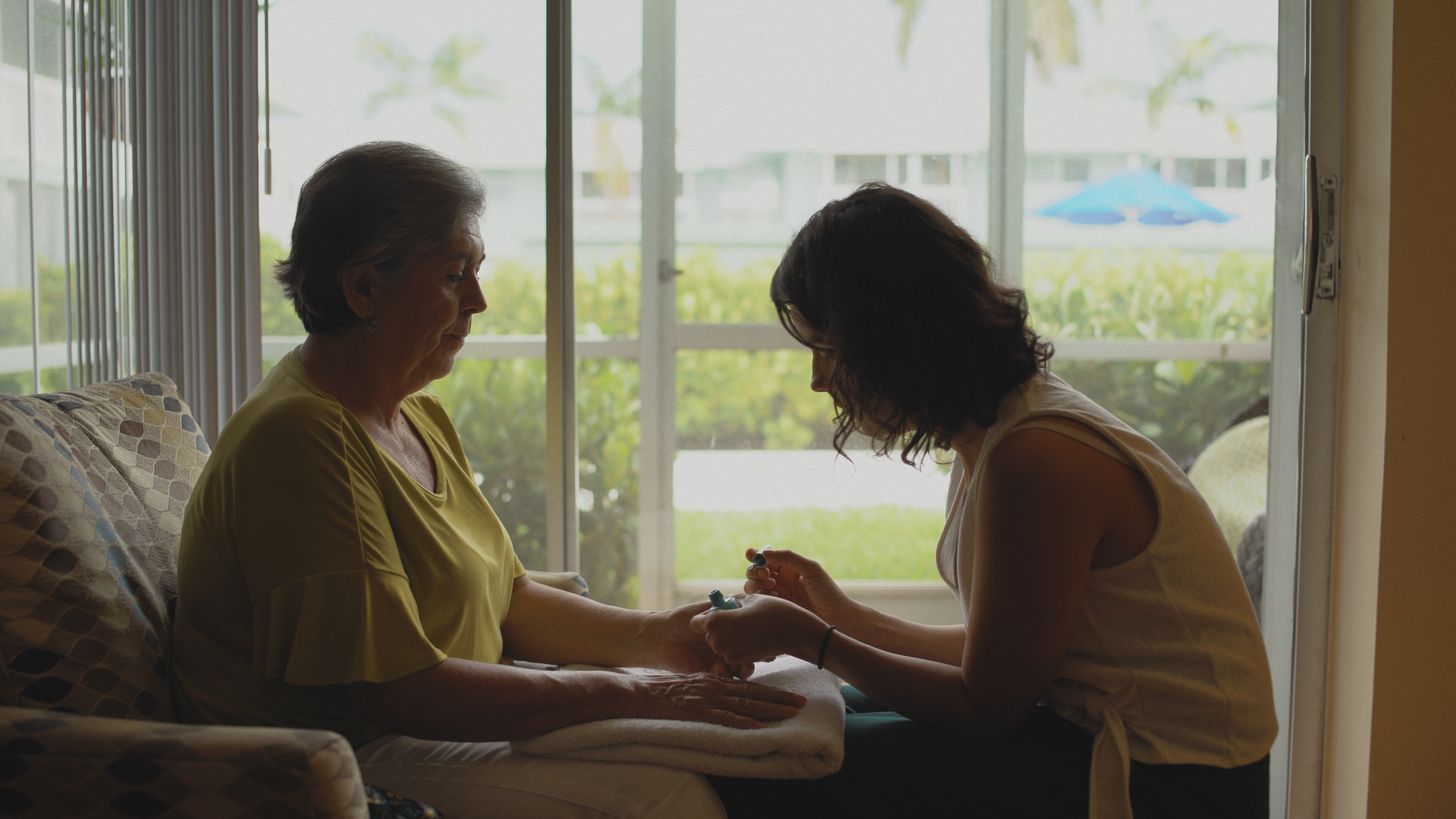
The added complication of the film’s fabricated bits, however, start to overwhelm the moving mother/daughter story at its center, particularly in its final act. How to Clean a House in 10 Easy Steps initially presents itself as a more grounded movie, one entrenched in a detailed examination of immigrant life and the ritualistic nature of Beatriz’s job. But it’s broken up by faux interviews with those who claim to have been affected by Beatriz’s book, culminating in a surreal music number in which they— and Beatriz— dance around the interior of a home they are cleaning, clad in sparkly blouses and feathers. It’s a wonderfully clever way for Beatriz and Valencia to bond through collaboration (we get some glimpses of them trying things out, assembling copies of Beatriz’s “book,” and so on), but I don’t know that I actually get an emotional sense of that from the film itself. The narration, which does as much telling as the film does showing, along with its fictional asides, sometimes strain to accomplish what a more stripped-down approach might have done with ease. There is something rather lovely, however, about Valencia’s acknowledgment at the end of the movie of the transitory nature of documentary filmmaking, which plays not so much as an excuse for the film’s lack of an overly tidy conclusion, but a recognition of the beauty and pain inherent in all familial relationships, as her and her mother’s paths reverse: Valencia migrated (reluctantly, initially), to the U.S. as a young adult, and she will stay while Beatriz prepares to return to Colombia, where she can secure more affordable care for her ailing husband. In cleaning her metaphorical house, Valencia’s talent for personal storytelling— her own, but also the space she grants for others like Beatriz to relate their experiences— gleams.
How to Clean a House in 10 Easy Steps had its world premiere at the 2026 True/False Film Fest, and is the recipient of this year’s True Life Fund. Runtime: 80 minutes.

 Katie at the Movies