It’s difficult to rate a film that dramatizes a real life event that is so recent and raw, and the product of a conflict that is still ongoing. It’s also difficult to deny the daring nature and beating heart of The Voice of Hind Rajab, which opens with the following title card: “The film is based on real events and emergency calls recorded by the Palestine Red Crescent. The voices on the phone are real.”
Director Kaouther Ben Hania’s film depicts the events of January 29, 2024, when Palestine Red Crescent volunteers received an emergency call: a six-year-old Palestinian girl, Hind Rajab, was trapped in a car that was under fire from Israel Defense Forces, the vehicle having already been bombed, killing the uncle, aunt, and little cousins she was riding with. On paper, it ought to have been a simple extraction; the closest Red Crescent ambulance was a mere eight minutes away. In reality, there was a seemingly endless amount of bureaucratic red tape the aid workers needed to navigate, coordinating with the Israeli Army through the Red Cross and then the Ministry of Health to ensure safe passage for their ambulance through the war zone. This back and forth takes precious hours, hours that a frightened child spent trapped in a car with the corpses of her family members. Chances are, if you’re watching this movie, you’re familiar with the story’s outcome. The ambulance is finally dispatched, but is bombed just before it reaches Hind, killing the two first responders— Youssef Zeino and Ahmed Madhoun— inside. Hind, ultimately, unfortunately, and needlessly, was killed as well.
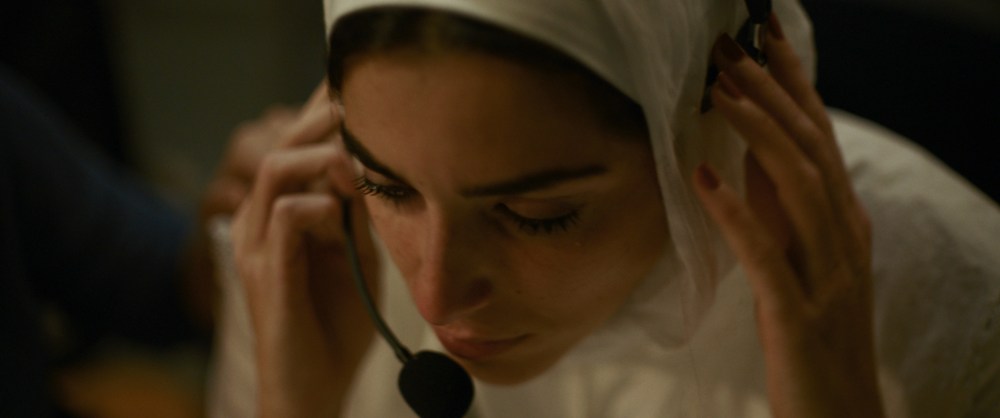
Much of Tunisian filmmaker Ben Hania’s previous work— including her previous feature, 2024’s Four Daughters, the story of a family grappling with two missing daughters who left to join Daesh fighters in Libya which was nominated for Best Documentary Feature Oscar—seamlessly blends reality with fiction. The Voice of Hind Rajab, which won the Silver Lion at this year’s Venice International Film Festival, is no different. Working with Hind’s family and the Red Crescent, Ben Hania uses the 70 minutes worth of audio from the actual emergency calls in conjunction with actors portraying the aid workers who were on call, the transcripts of their phone conversations and emotional testimonials after the fact informing their performances on screen. Some may call that exploitative. And they may be right, if Ben Hania’s camera ever ventured beyond the Red Crescent offices. But it doesn’t, maintaining focus on the four main individuals involved: Omar (Motaz Malhees), the responder who first intercepts Hind’s family’s call and attempts to circumvent the system in his eagerness to help her; Rana (Saja Kilani), the gentle worker who has the most success in connecting with Hind and gaining her trust; Nisreen (Clara Khoury), their steadfast manager; and Mahdi (Amer Hlehel), the pragmatic coordinator in charge of organizing the ambulance dispatch. Ben Hania frequently cuts between reactive close-ups and wide shots that encompass the entire cast, illustrating both their individual desperation as they grasp at whatever straws they can to help Hind, and the collaborative nature of their efforts. The result is two-fold: the film avoids sensationalizing the deaths of Hind and her family (only some photos of the bombing’s aftermath appear at the very end of the film), while fully immersing the audience in the spectacle of their own helplessness. It’s not unlike another recently-released Palestinian film, director Sepideh Farsi’s documentary Put Your Soul on Your Hand and Walk, in which Farsi— an outsider— records WhatsApp video calls she has with Gaza resident and photojournalist Fatima Hassouna, bearing witness to the life or death day-to-day of her subject but remaining incapable of taking any action to help her. In The Voice of Hind Rajab, the audience is kept firmly in the perspective of the aid workers, who do what they can, but can only do so much, removed as they are physically from the center of the conflict, their one tenuous connection to Hind existing in the shaky audio of their phone calls, which sometimes drop out, leaving periods where Hind’s fate is uncertain. We’re forced to sit with the violence— not just the tangible, physical violence, but the violence inflicted by systems that weren’t built in a way that takes the individual into account.
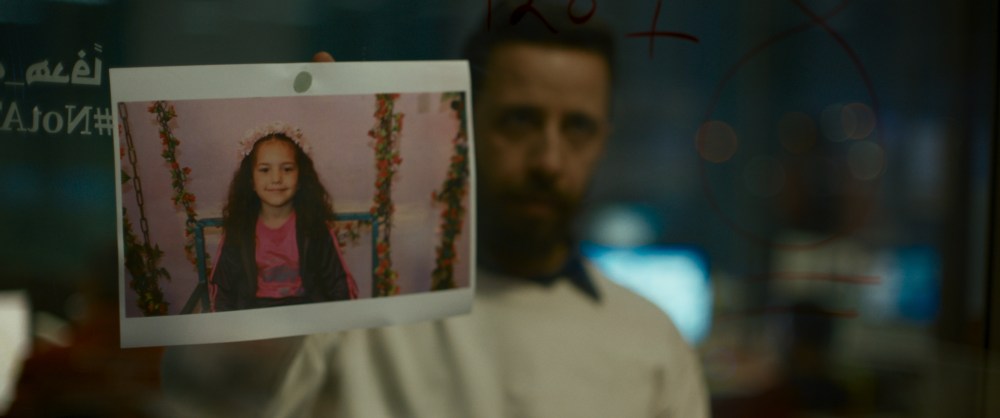
Each performance throughout The Voice of Hind Rajab is heart-wrenching and deeply felt, in no small part because the Palestinian cast are listening and reacting to Hind’s real voice, which is occasionally visualized as little blips in the lines of sound waves on a computer screen. The movie’s final act also integrates some actual video taken of the responders trying to coordinate the rescue on a cell phone— recorded to post on social media to raise awareness of the desperate nature of their plea, to hopefully get the green light faster— within the narrative framework staggeringly well. At one point later in the film, the responders receive photos of Hind from a family member, allowing them— and the audience— to put a face to the voice. Rana shows Omar the wall of photos in the office, all pictures of the lives they lost, so they’ll always remember them. Ben Hania’s film serves a similar purpose, preserving Hind’s voice and her memory, while the mere recreation of the events of January 29, 2024 serves as a call to action to never allow something like this to ever happen again.
The Voice of Hind Rajab is now playing in select theaters in New York and Los Angeles, with a nationwide expansion to follow. Runtime: 89 minutes.

 Katie at the Movies