You won’t hear a word of spoken dialogue in Darlene Naponse’s Aki, an observational documentary depicting life in the indigenous Atikameksheng Anishnawbek territory of Northern Ontario. But the movie is far from silent. Naponse— a native of the region— uses her connection with the community to craft a sonically and visually rich story of the land and its people from the inside.
To call Aki— the Anishinaabemowin word for “earth” or “land”— immersive is an understatement. It’s divided into segments based on the Anishinaabe seasons, providing the film with its sole tangible framework. These seasons aren’t marked by a fixed date on the calendar, as they are in Western cultures; rather, they fluctuate based on cues from the land, whether that be the changing color of the leaves or the migrations of birds. Aki opens on the blinding white snowscapes of Biboon (winter) before proceeding through the entire cycle, which includes transitional seasons such as late spring and one called Gashkadino-Giizis (“freeze-up”). Lush, textured nature photography paired with ambient sounds of the land speaking smoothly shifts from ice to close-ups of the first tiny buds of spring to the warm green meadows of summer to the vivid foliage of autumn, the transitions marked more clearly by the occasional inclusion of Cree cellist Cris Derksen’s score, a stirring string-based piece whose repetitive refrains lend the otherwise loosely assembled scenes some structure. Occasionally, Naponse breaks from still, observational takes, employing techniques like split screens and time lapse photography to more clearly portray life and growth— colorful flowers blooming before our eyes in seconds.

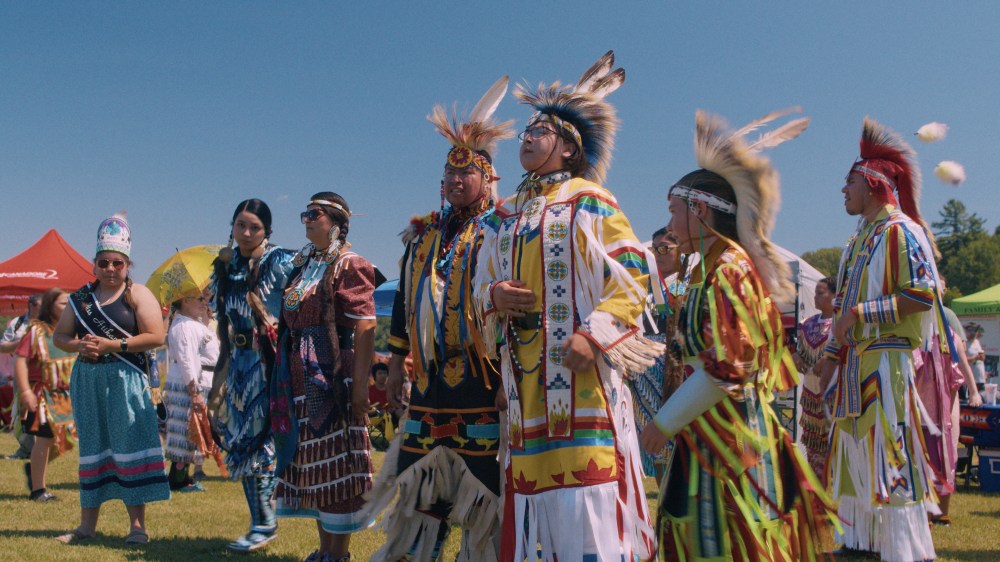
But Aki isn’t wholly focused on the land itself. Naponse includes ample scenes of the people in her community, observing everything from intimate domestic tasks (a woman skinning and preparing a rabbit in her kitchen) to large group activities (kids playing ice hockey, community meetings, and a joyous powwow brimming with music and dance), many of which possess a vibrantly rendered cultural specificity. The delicate method of cutting between these scenes and shots sans people helps point to the Atikameksheng’s land-based way of living; they hunt and gather, but with intention. Naponse spends so much time here that when she does integrate shots of the cold, industrial facilities that have encroached on native land, or man-made objects’ impact on the animals in the area (at one point, we watch a black bear attempt to climb into a dumpster), the contrast is not only visually startling, but it also makes the threats to the beautiful environment and way of living with the land that we’ve been watching for over an hour that much more pressing. Some more specific information may have made the issue of land exploitation hit with more urgency, however. Sometimes some context is not only nice, but necessary, and without following any specific characters, certain viewers may find it difficult to grasp on to. There’s a lot to admire about Aki’s purely poetic approach to filmmaking, however. It’s a film that invites us to listen and look, educating and generating empathy not by throwing out dull facts and figures, but via the uniquely cinematic sharing of images that invite us into a world that we otherwise aren’t privy to.
Aki had its world premiere in the TIFF Docs section of the 2025 Toronto International Film Festival. Runtime: 83 minutes.

 Katie at the Movies