At the start of Seemab Gul’s debut feature film Ghost School (Pakistan’s sole entry in this year’s Toronto International Film Festival), curious 10-year-old Rabia (Nazualiya Arsalan), backpack slung over her shoulders, sets off for school like any other day. But what awaits her there is a far from average sight: a guard standing outside the front of the building, declaring the school closed, the teachers and principal vanished, unable to provide any more specifics to the gathered crowd of angry and confused parents and students. Rabia, however, isn’t one to accept explanations at face value, as evidenced by the film’s opening scene, in which she questions her weary mother (Samina Seher) as to why the boy outside their window is beating the donkey pulling his cart. Following whispers that the school is haunted and that her teacher was possessed by Jinn, Rabia journeys across her rural Pakistani village, engaging with adults whose evasive responses to her queries reflect the knotty tangle of political red tape and local superstition that has resulted in so many educational institutions across the country shutting down.
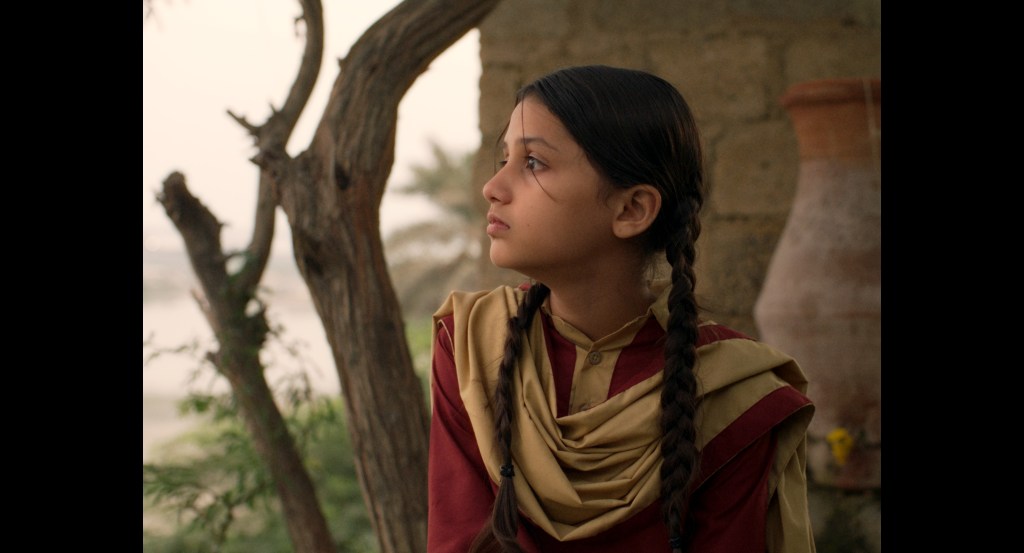
Borne out of the stalled production of her planned debut feature and the very real “ghost school” phenomenon in Pakistan— approximately 30,000 abandoned schools have left over 22 million children without access to education while their teachers frequently don’t show up for work yet remain on the payroll, the result of a complex cross-section of systemic corruption and bureaucratic indifference that places a heavy burden on the government’s already limited resources— Gul’s background in documentary filmmaking is evident in her exploratory method of tracking Rabia’s movements, the investigative backbone of the narrative unfolding with workmanlike precision (up to a point). But Gul’s technique, largely consisting of sustained shots of the conversations Rabia has with the adults she encounters, strongly recalls the work of Iranian director Abbas Kiarostami, specifically the first installment of his acclaimed Koker trilogy, 1987’s Where Is the Friend’s House? That film follows a young schoolboy’s efforts to locate a friend’s house in a neighboring village in order to return a notebook to him before class the next morning, thus preventing his expulsion. While the stakes are technically minimal, Kiarostami so firmly situates the viewer in the child’s perspective that they feel almost impossibly dire, the circuitous conversations he engages in with unsympathetic adults lending his journey its mounting tension as he ventures further from home and deeper into unfamiliar territory.
In Ghost School, Gul zooms out, broadening the scope of the stakes to encompass not only Rabia’s personal quest to discover what happened to her teachers and her school, but its impact on her community and the country at large. That her protagonist is a girl is no coincidence. Education is a difficult pursuit in a culture that expects women to marry and obey their husbands. It’s a fate that Rabia noticeably balks against in a key early scene, when a neighbor girl not too much older than Rabia asks if she will come to her pending wedding, then claims that it won’t be much longer before it’s her turn. And she finds little sympathy for her plight from her working single mother. In mere seconds, Gul imparts an implicit understanding of why Rabia is so determined, verging on desperate, to find a solution to her ghost school problem. For her, education isn’t just a break from the labor she may otherwise be doing at home, or a chance to spend time with friends. It’s an opportunity— perhaps her only opportunity— to alter her predetermined fate.
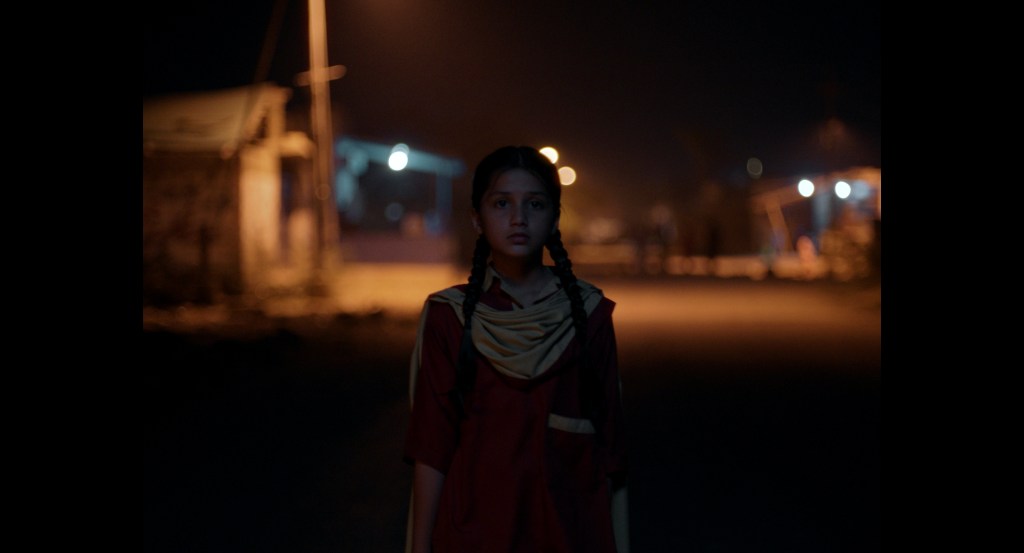
Ghost School successfully replicates the Where Is the Friend’s House? formula for the bulk of its runtime, its introspective approach to storytelling and patient pacing naturally generating empathy for Rabia as she traverses the sun-kissed landscape. It doesn’t hurt that Arsalan strikes just the right note with her performance, exuding a blend of childlike inquisitiveness and maturity without ever appearing overly precocious or treacly. It’s when the film begins to layer in its elements of magical realism more heavily— making the flip from discussions of characters from Islamic folklore to surreal visual segues— that it begins to crumble a bit, deviating a little too far outside the intimate perspective that grounded the story up to its final act and failing to clearly underline the parallel between fable and real-world misinformation it’s trying to make. But it’s also those flourishes that set Ghost School apart as an exploratory dive into both old customs and ancient stories and contemporary systemic problems, and how those seemingly disparate things can inform and influence each other. It also sets Gul, with her strong grasp on visual storytelling and eye for stories about people and places that exist on the margins, apart as a director to look out for.
Ghost School had its world premiere at the 2025 Toronto International Film Festival in the Discovery section. Runtime: 88 minutes.

 Katie at the Movies