I’ve reached the end of my time covering the Venice Film Festival (and sitting on the beach on the Lido), my first visit not only to that event, but to Italy. As exciting as it is to experience the big, buzzy premieres at the kickoff to awards season, I tend to find discovering movies in the festival’s smaller sidebars to be even more rewarding. Below, I’ve written about four very different films I enjoyed in almost equal measure, two from the Venice Spotlight section (Stephan Komandarev’s Made in EU and Marie-Elsa Sgualdo’s Silent Rebellion) and two from Venice’s Orizzonti section (Anuparna Roy’s Songs of Forgotten Trees and Ali Asgari’s Divine Comedy).

Few of us likely want to revisit those early weeks of the COVID-19 pandemic at the start of 2020. Rather than a cringe skewering of the absurdities that ballooned out of uncertainty, Stephan Komandarev’s anti-capitalist drama Made in EU, at least, smartly uses the onset of the highly contagious virus to dissect harmful and exploitative labor practices.
It all starts when Iva (Gergana Pletnyova) can’t shake a persistent illness. Unable to take sick leave for fear of losing her job as a seamstress in a clothing factory, she accepts painkillers from her doctor to suppress her fever and bypass the medical checks at the entrance to her workplace. But when Iva takes a Covid test that comes back positive— making her the first documented case in her small Bulgarian town— her community turns against her. She’s barred from entering stores, even after she’s completed her quarantine. She’s faced with resentment from her adult son Misho (Todor Kotsev), who not only is prevented from taking a planned trip to Germany with his girlfriend, but also takes the brunt of the wrath for what’s perceived as his mother’s negligence. She faces not only the loss of her job, but a lawsuit to reimburse the company for loss of income incurred when the factory had to shut down immediately following her diagnosis. She finds no sympathy from her brother, the foreman, placing profit over family, or her coworkers, who blame her for spreading the illness to them and their families, despite the fact that they face the same poor working conditions: tight quarters, no masks, long shifts that last well into the night, and little pay to show for it.
Komandarev and Simeon Ventsislalov’s script lacks the nuance requisite for a conflict that ventures down so many morally and ethically gray avenues. This is a story with clear good guys (like Ivaylo Hristov’s Dr. Rusev, who comes out of retirement to assist at the pandemic’s height and is the one person to remains sympathetic to Iva’s plight) and bad guys. The ebb and flow of the narrative, the fall and rise of the protagonist, illustrated so stoically by Pletnyova’s pressure cooker of a performance, holds little surprises. But it’s gripping because it lays out the injustice of Iva’s position so plainly. In unsettled circumstances, it can be nice to have someone to root for.

A devastating plunge into the downward spiral set off by one horrid incident that’s reminiscent of Old Hollywood women’s pictures, Marie-Elsa Sgualdo’s first feature film, Silent Rebellion, is a bit too muted to feel really revolutionary. But it’s an incisive feminist drama all the same, anchored by Lila Gueneau’s impressive lead performance, which carries her protagonist from timid teen to a woman capable of forcefully realizing her desires.
That protagonist is 15-year-old Emma, so noted for being a good kid in her rural Protestant community that local leaders— including a doctor and the pastor’a wife— nominate her for the town’s virtue award. Emma, who devotes most of her time to working as a maid to support her family and helping her father care for her sisters, is more interested in the prize money than the title, wanting to apply it toward her dream of attending nursing school. And then, she is raped by a charming bourgeois gentleman (Cyril Metzger), visiting from the city, her guilt and shame following the incident only amplifying once she discovers she’s pregnant.
Silent Rebellion hums with the buzz of revolution. Set in neutral Switzerland in 1943, Emma— along with Pastor Robert (Grégoire Colin), her closest confidant— is nonetheless enraged to witness the apathetic reaction of her fellow citizens toward the country’s repatriation of Jewish refugees. And the subject matter adopts shades of intergenerational strife when Emma seeks to reconnect with her estranged mother Alice (Sandrine Blancke), who she always believed left her family to pursue her ambitions in the city of her own accord; in actually, she was banished by her husband Jean, facing intense pressure from the community. Any kinship Emma was hoping to find there is nonexistent.
Emma’s life quickly becomes a series of dead ends, from a failed abortion attempt to a loveless marriage to border guard Paul (Thomas Doret) to try and cover up the scandal. Emma internalizes the seemingly endless pile-on of mistreatment until she can’t stand it anymore. It’s maybe too internalized. Silent Rebellion settles for restraint instead of explosion, and Emma’s ultimately recalcitrant turn lacks force because of it. But Sgualdo’s eye for detail enriches her film even when it lacks narrative momentum. Shots of flora and fauna and the chirruping of bugs and birds are inserted within the difficult rape scene, firmly placing us in Emma’s perspective as she attempts to divert her focus elsewhere. And the film’s final shot, a defiant fourth wall break, is as potent as anything preceding it, proving that sometimes the mightiest acts of insurgency require no words at all.
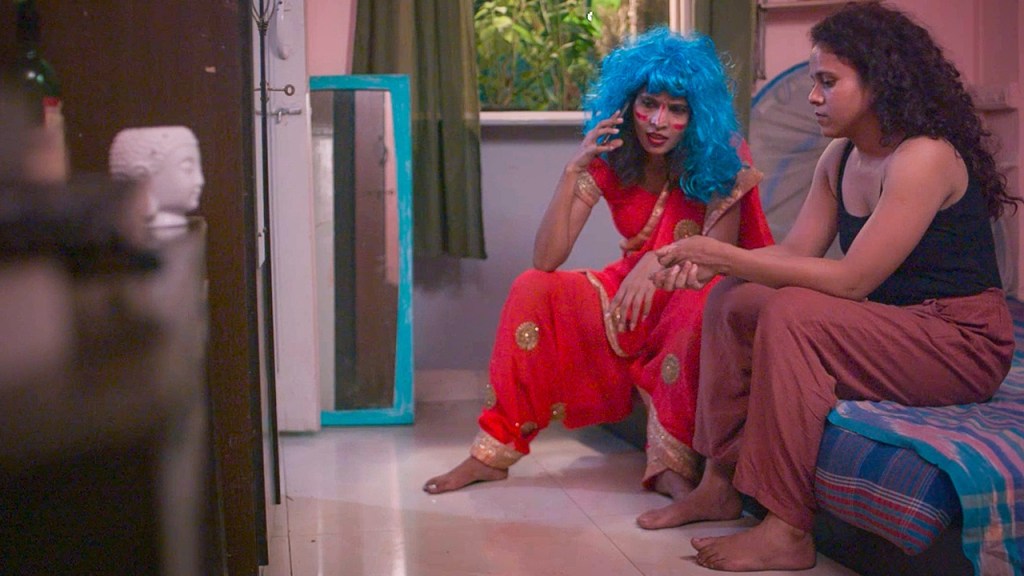
Swetha (Sumi Baghel) and Thooya’s (Naaz Shaikh) lives couldn’t seem more different. The former works in tech support, assisting patience-trying customers remotely from behind her computer and headset. The latter is an aspiring actress, but in between persistently running lines she half-heartedly entertains the sugar daddy who’s given her a leg up in the crowd of citizens trying to make their way in bustle of Mumbai. This includes the upscale apartment where she lives, part of which she’s just sublet to the new-to-the-city Swetha. But they’re united in their struggles in love and work, both searching for something more than what they have, even if they aren’t entirely certain what that is.
With her debut feature, Songs of Forgotten Trees, Mumbai-based writer and director Anupama Roy vividly conjures the feeling of urban loneliness— and what it’s like for women, specifically. The film boasts a rich soundscape; every scene is backed by the chirping of birds and the screech of vehicular traffic, rural and urban colliding. It’s granted a certain meta-textual element when Swetha— meeting with a potential suitor at an outdoor café— comments on how noisy their surroundings are. Roy’s meticulous blocking further illustrates how even as the two women slowly get closer, their paths appearing as though they may intersect beyond sharing an apartment, they’re still separate. One long take toward the end of the film sees Swetha and Thooya cleaning bathrooms, one positioned on each side of the frame, the wall between the rooms creating an organic split screen even as they converse through it.
That division works against the film, however, holding the audience as aloof from the characters as they are from each other. It doesn’t help that the big emotional scenes are undercut by performances that times feel limited. Still, the potent melancholy of the film’s final act, connecting the opening scene in which Swetha watches Thooya fight with her brother over attending her father’s funeral to the ending where she details how someone who was once close to her now no longer remembers her, is hard to deny, as Swetha and Thooya explain the meaning of the story behind the movie’s title: if you venture to the place known as the forgotten trees with loved ones, they’ll soon forget you. Songs of Forgotten Trees may lack narrative momentum, but it’s an impressively crafted feature debut all the same.

In his breezy, dead-pan descent into Iranian bureaucracy, Ali Asgari’s Divine Comedy follows one director’s absurd quest to get his movie— banned by the government, who wants to censor it before issuing a certificate for its release— screened. Over the course of a single day, the director meets with numerous people whose efforts to assist are almost universally tamped down by red tape: a local theater owner whose establishment is almost fully booked with retrospectives of the Rocky and Saw franchises, a coke-addicted actor (Hossein Soleimani), a vaguely sketchy man who asserts that he has the power and influence to sell out a screening, a wealthy woman who’s willing to open her home to them in support of her animal rights causes. It may be farcical to the point where it strains credulity, but not unlike the Dante poem it shares its name with, its sardonic stylings operate in service of more profound subject matter— in this case, oppression and lack of artistic freedom in contemporary Iran.
Divine Comedy unfolds at an almost laid-back pace accentuated by a lilting jazz score, almost every scene consisting of long takes and uncut wide shots that encompass all of the performers in the frame, the rigidity of the camera reflected in the stillness of the characters as their conversations are allowed to play out uninterrupted. But its provocative casting lends it political urgency. The director at the center of Divine Comedy is portrayed by Bahram Ark, an Iranian filmmaker playing a fictionalized version of himself here. His horror within the film is played by his brother and collaborator in real life, Bahman Ark; in Divine Comedy, Bahman is a filmmaker who has found some success selling out by making shallow, crowd-pleasing comedies with titles like “Women Are Amazing,” while Bahram has continued to chip away at the art house game, his steadfast refusal to censor his work holding him back from tangible success. Bahram’s partner in the film is played by Sadaf Asgari, the director’s niece who has acted in most of his movie’s including his 2023 satire about life under authoritarian rule in Iran, Terrestrial Verses. That film premiered at the Cannes Film Festival; its highly political nature resulted in Asgari being banned by Iranian authorities from leaving the country and making more movies. That Divine Comedy exists at all is a gift to audiences, as well as a radical act of rebellion in the face of suppression.

 Katie at the Movies