Summer is a dream rendered in warm and hazy tones by writer and director Narya Ilic Garcia in her sophomore feature Cuerpo Celeste. It’s Chile circa 1990, and Celeste (Helen Mrugalski) is 15 years old. In a collage of scenes that deftly convey the slippery nature of that lazy, in-between time, Celeste spends the holidays with her family on a quiet beach near the Atacama Desert in the western region of the country. They lay in the sand and snack during the day, Celeste’s father Alonso (Néstor Cantillana) contentedly smoking, strip off their clothes and dart into the chilly ocean water at dusk, and stargaze in the evening. There’s some friction, the typical sort that comes with being a teenager— Celeste bristles at the fact that her parents, both archaeologists who spend part of their vacation flagging fossils in the rock formations, apparently never tell her anything— but even that is short-lived. The echoes of their voices bouncing off the rock walls only further illustrates that in this moment, they may as well be the only people in the world.
But that world soon shatters, as fast and as thunderously as a crashing wave, when one day Alonso collapses on the beach. He never wakes up, and the ramifications of his sudden loss ripple across Celeste’s life and the lives her family, particularly her mother Consuelo (Daniela Ramírez), with whom she butts heads over decisions from selling their house to donating some of the artifacts from his office to a museum.
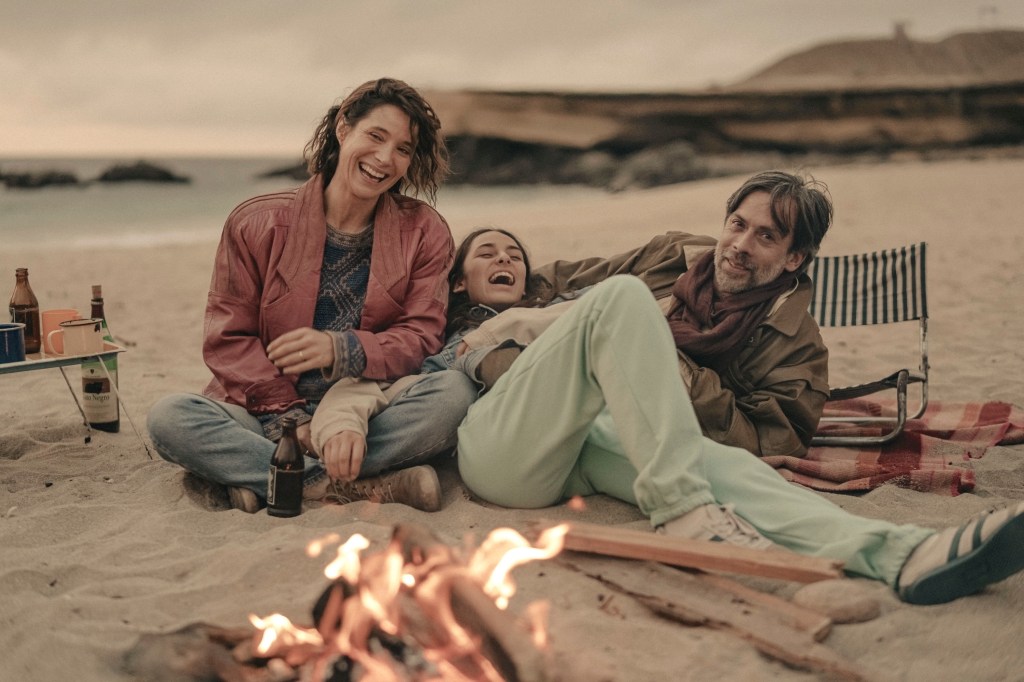
Cuerpo Celeste may easiest be described as a coming-of-age drama, and it certainly contains the requisite elements of that genre (Celeste rubs up against friends, rivals, and potential lovers as she gradually spirals in the fallout from her father’s death), but it’s more a film about place and memory, and the ties that bind those things together. An impending solar eclipse hangs over the film from the beginning, and it’s that one-of-kind event that draws Celeste back to that same beach months after losing her father there. Yet, while nothing physically about the location has changed— Celeste can still let loose carefree screams that echo throughout the towering rock formations, an act that reeks strongly of struggling to recapture past joys that simply can’t be recreated— it’s completely different, the previous pleasures of being cut off from the outside world replaced by abject isolation. We catch this both through Garcia and director of photography Sergio Armstrong’s long still takes, accentuated by the desert’s natural soundscape, but also in Mrugalski’s eyes. Her performance is largely reserved, but she expresses a wisdom beyond her years how she carries herself, capably walking the line between child and adult— especially after life thrusts her into mature situations she oughtn’t need to confront yet. This is an incredibly sensory film, and we often watch Celeste looking at photos, touching her father’s belongings, and smelling his clothes in an effort to retain some piece of him as it feels like he slips further away with each passing day.
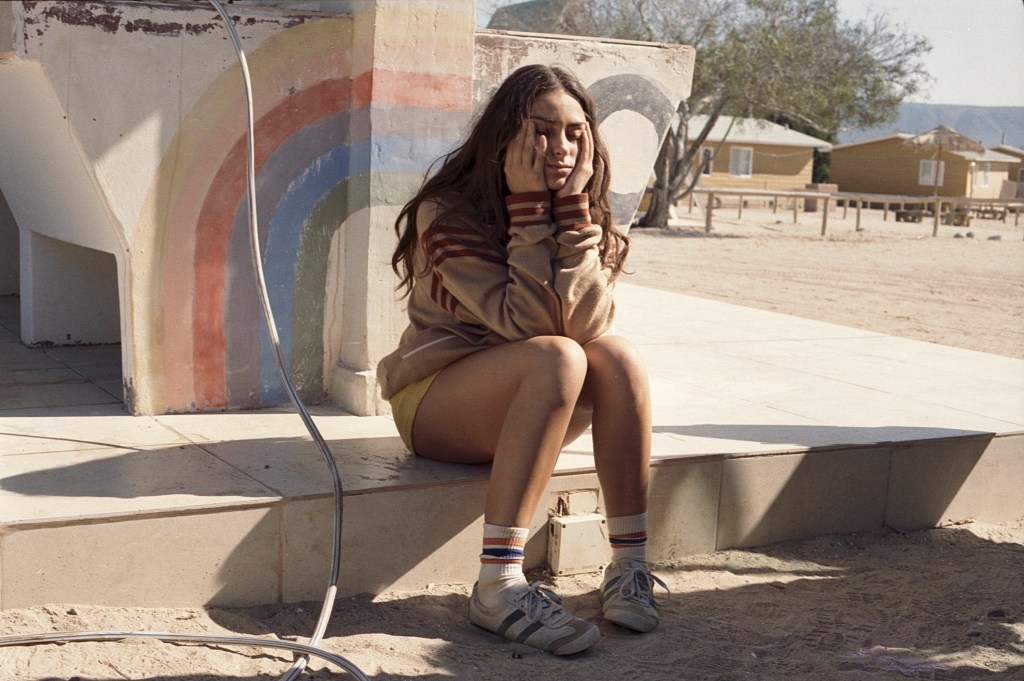
At times, audio or television broadcasts discussing Pinochet’s dictatorship— which in 1990 was nearly its end— provide reminders of the outside world, imbuing the film with an even deeper sense of its characters’ place in the world and state of transition, and making their summer getaway appear even more bucolic. Garcia rounds out her film with other unique touches, some tangible— like the grainy home movies that serve as interludes providing simultaneously mournful and cheerful memories of happier times— others surreal, like the scene where Celeste bids her father one final farewell before his body is taken away. For one brief moment, he’s alive again, and turns his head to her and smiles. Cuerpo Celeste’s loose and patient narrative may not appeal to everyone, and at times it feels like there are intriguing threads that are presented but not followed through on— the politics of the time, for one, the thorny nature of mother/daughter relationships, and Alonso’s research job, which offers another tangible connection to the land. But it’s a movie built on feelings, feelings that sing strongly through Cuerpo Celeste’s textured images.
Cuerpo Celeste had its world premiere at the 2025 Tribeca Film Festival. Runtime: 97 minutes.

 Katie at the Movies