As I stretch my fingers in preparation for typing up a response to Deadpool & Wolverine, I almost feel guilty about how badly I plan to savage it. The 34th entry into the Marvel Cinematic Universe, and the first appearance for the raunchy Deadpool character there following Disney’s purchase of 20th Century Fox in 2019, is a soulless, fan-service smorgasbord of cameos, connected universes, and overcooked meta commentary on the entities behind its creation, but not only is the film clearly aware of that, it’s unashamed, something that the previous, similarly cash-grab driven MCU movies embrace without explicitly acknowledging. Perhaps a lot about Deadpool & Wolverine, a film that exists not to push along some larger MCU agenda, but to simply have a good time playing in the sandbox,could be forgiven if it wasn’t so shoddily made. Every exterior possesses the phony sheen of being shot on the Volume, the technology pioneered on the set of the first season of Disney’s The Mandalorian that allows filmmakers and actors to work directly in computer-generated environments (a fact that I have been unable to confirm, but would not be surprised to learn if it’s true). The middle bit, for some reason, shifts into a Mad Max parody (and calling to mind one of the greatest action blockbusters in recent memory does this film no favors). Every needle drop is intended as a humorous antithesis to the action unfolding onscreen, so overdone that none of them achieve their intended funny effect. Characters are resurrected under the pretense of finally being given the send-off they deserve, only for the film to just as quickly abandon them. And, three movies in to playing Deadpool proper, Ryan Reynolds’— who has in the years since 2016’s Deadpool built his entire snarky screen persona off the character— schtick feels awfully tired.
Six years after 2018’s Deadpool 2, Wade Wilson has retired his superpowered alter ego, broken up with his girlfriend Vanessa (Morena Baccarin, reprising her role but wasted here), and works as a car salesman (although he has not retired his foul mouth, which doesn’t increase his commission). During his birthday party, which sees him briefly reunited with friends from the previous films (including his foul-mouthed, blind and elderly neighbor, played by Leslie Uggams, and Karan Soni as taxi driver Dopinder), Wade is captured by the Time Variance Authority (TVA) and brought before Mr. Paradox (Matthew Macfayden in full, over-the-top villain mode), who informs Wade that his timeline is deteriorating thanks to the death of Logan, aka Wolverine (Hugh Jackman), who he refers to as the anchor being who stabilized the timeline. Unable to stand the thought of losing his friends, Wade decides that the only way to solve this is to universe-hop until he finds another Wolverine to bring back to his timeline. But not only does he recover possibly the worst Wolverine— an alcoholic who failed his world— the bickering pair are shipped off to the Void, a wasteland where unwanted beings are sent and they must face Charles Xavier’s sadistic twin Cassandra Nova (Emma Corrin) if they want to escape.
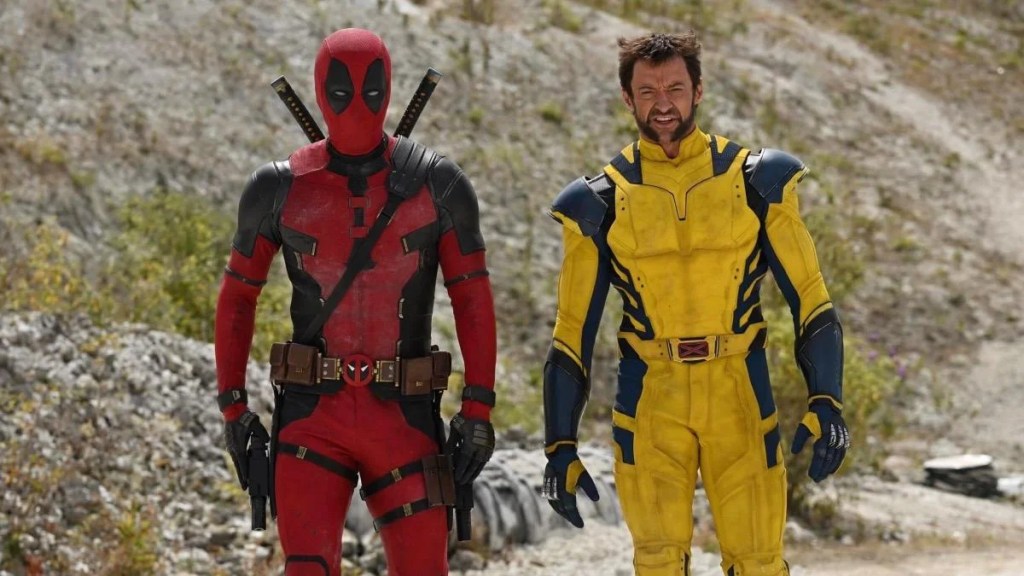
You don’t necessarily need to have watched Loki— the Disney Plus series in which the TVA first appeared on screen— or caught up with all the previous MCU movies to follow Deadpool & Wolverine, which builds more off the character beats established in the first two Deadpool films and Logan, James Mangold’s 2017 send-off for Jackman’s iteration of Wolverine. Reynolds and director Shawn Levy has spoken extensively in the press about the care put into making this film while respecting the other movies that came before it, but that purported thoughtfulness doesn’t remotely translate on screen. Logan was stripped back and emotionally resonant, more a serious character drama than a flashy comic book movie (despite some very R-rated bursts of violence). Deadpool & Wolverine undoes all that within its first few minutes, with its snarky attitude and crass sense of humor that ridicules that film’s legacy much more than it celebrates it. It doesn’t matter that the Wolverine in this film is technically a different Wolverine than the one in Logan. When a character can jump from one world to another at the push of a button on a device the size of a flip phone, the narrative and emotional stakes aren’t merely lowered, they’re obliterated. Deadpool & Wolverine, which buckles under the combined weight of five credited screenwriters (including previous Deadpool scribe Rhett Reese and Paul Wernick, and not including many others who wrote drafts before they came on board for rewrites), lays on both the exposition and fourth-wall-breaking jokes so thick, that the very few moments that stretch toward some emotional reckoning— either with Wolverine reconciling with his past, or Deadpool wanting to do something that matters, or merely serving as a heartfelt salute to the now-defunct era of Fox superhero movies— feel flat.
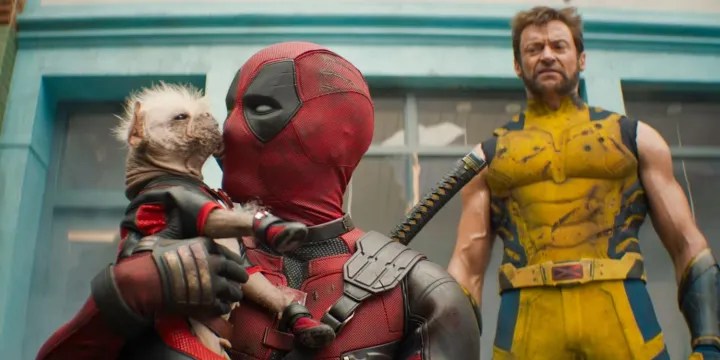
Of course, this movie is a comedy first and foremost, but in its efforts to connect with the previously-standing MCU, Deadpool & Wolverine is both less funny, and less vulgar, than the character’s previous two outings. What was fresh and fun in 2016 has been so thoroughly run into the ground by Reynolds— who appears to believe that cocky line readings and a shit-faced grin are a valid substitute for having an actual personality— it’s borderline insufferable to sit through. His much-played-up rivalry with Jackman and Wolverine doesn’t result in any discernible sparks flying on screen; if anything, the homoerotic charge that runs through some of their interactions, originating from Deadpool, borders on homophobic, playing sexual attraction for laughs and nothing else. That’s not to say that fans won’t be satisfied, from finally seeing a comics-accurate Wolverine costume in live action to the many Deadpool variants that grace the climax. Levy is not a particularly skilled action director, the characters getting too lost in the jumble of his poorly composed frames (and the film is lacking in great action set-pieces in general), but what physical combat sequences we receive deliver on grody kills and bursts of gooey gore. It’s hard not to note the timing of Deadpool & Wolverine’s release, however, occurring on the same weekend of Marvel’s much-hyped annual Hall H panel at San Diego Comic Con. Just yesterday, a surprise appearance by Robert Downey Jr. at the panel seemed to confirm that the actor— who gracefully exited the MCU in Avengers: Endgame after many appearances as Tony Stark, aka Iron Man— would be returning to play Doctor Doom in the upcoming Fantastic Four movie. It’s a choice that a quick scan of the internet appears to have left many of even the most die-hard fans baffled, one that seems engineered to generate social media hype with little regard for how his character’s arc concluded. Deadpool & Wolverine may believe it’s edgy, but this is not the shot of adrenaline the struggling post-Endgame MCU so sorely needed. It’s just another cog in a machine that has no direction and little regard for character integrity, let alone storytelling ability, when a massive payday is at stake, and no amount of name-dropping Kevin Feige and winking jokes about Disney’s corporate greed can paper over that.
Deadpool & Wolverine is now playing in theaters. Runtime: 127 minutes. Rated R.

 Katie at the Movies