When Elizabeth Ai set out to make her documentary New Wave, it was to strictly be a film about the music phenomenon that originated in Orange County, California in the 1980s. The city’s Little Saigon area saw a large influx of Vietnamese immigrants relocating due to the Vietnam War, and the trend capitalized on that diaspora among experienced among young people in particular, with new wave songs that were popular in America at the time being covered by Vietnamese performers in their language. It’s a movement that Ai, a child at the time, experienced through her aunt and uncle, then teenagers, who blasted new wave (alternately known as VWave) music in the car all the time, and she illustrates that history through archival footage and concert and music videos, as well as first-hand accounts from key people involved, like Ian Nguyen (otherwise known as DJ BPM), an influential member of Orange County’s underground music scene in the mid-1980s, and Lynda Trang Đài, a singer whose popularity sky-rocketed as a lead figure on the variety show Paris By Night, and who was dubbed the “Vietnamese Madonna.”

All of this information— the hair, the fashion, the music characterized by synth beats and an audience comprised primarily of rebellious teenagers— is an intriguing time capsule of a generation in flux, both physically and emotionally, on its own. But New Wave becomes more than just another niche music documentary when Ai begins to shift gears, steering the narrative toward a more personal angle. For that first generation of children who were transplanted from their home country to America, like Ai’s Aunt Myra, that music was an outlet, something that bridged the gap between their two worlds (it’s telling that Lynda’s attempts to perform original music were not met with as much enthusiasm as her covers of popular American songs). These discussions about the music fast morph into emotionally-resonant ruminations on family, expectations, and disappointment. While Nguyen claims he found a community in new wave, he also says it was at the expense of alienating his father, from whom he became estranged for most of his life. Lynda, meanwhile, had to lie to her parents about going to nightclubs to perform, telling them she was going to church instead; the songs she sung and the outfits she wore were simply considered too provocative. Later on, her persistent striving to provide for her family resulted in estrangement from her own son, first with her opening a sandwich shop when he was a chid as a means for a more steady income, and later— in a particularly vulnerable sequence that’s captured by Ai’s cameras— is late to her son’s graduation, and just misses him accepting his diploma on stage.
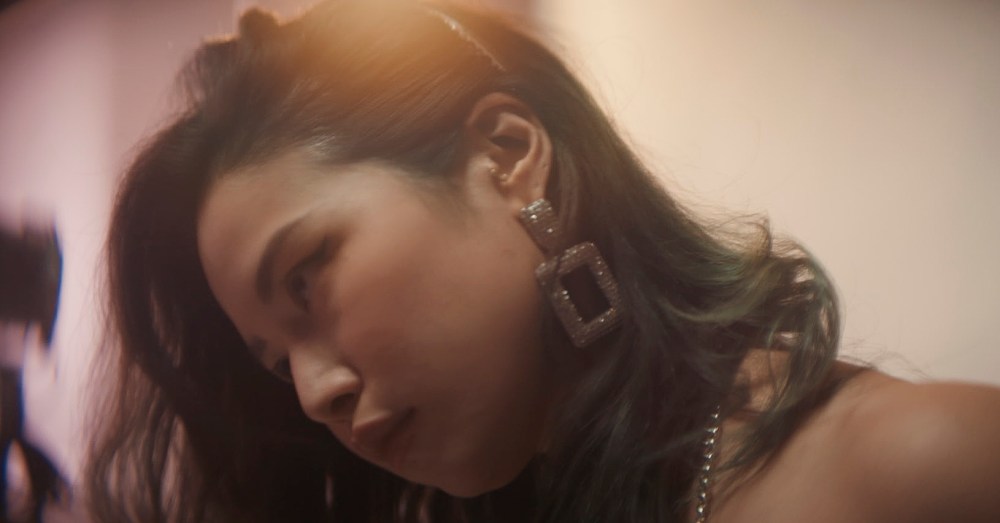
Through her subjects’ stories, Ai finds an outlet to reckon with her own fraught relationship with her mother, who she says simply wasn’t there for her when she was growing up (Myra became her primary caregiver). There are several moments when it is clear that Ai is staging conversations for the camera (like when she sits down to answer some of her young daughter’s questions about her family history), but they still come off as honest and raw. At times, they venture to a personal level that it almost feels like we shouldn’t even be watching. Text messages bubbles on screen show Ai asking her mother if she wants to be present for the birth of her granddaughter, only for the latter to reply that something came up and she won’t be able to make it; no dramatic score or reaction shot is necessary to convey the abject disappointment and sadness those words carry. And Ai’s frustration with this relationship is soon after illustrated more directly on screen, when she records her side of a phone conversation with her mother, trying to determine when she could come meet her granddaughter. Ai injects herself into this movie quite a bit, both through voiceover and in front of the camera, but she manages to do so without taking too much time away from her other subjects. These bits may all seem like disparate pieces, but New Wave effortlessly rolls from the general to the specific and personal, illustrating not only the sound and culture associated with a musical subgenre likely generally unknown outside of Vietnamese-American circles, but also how it pointed toward a larger diaspora and the fractured relationships that formed between parents and children just searching for success and acceptance in their new lives. Six years in the making, New Wave is an instructive document and an emotional reckoning; the most wonderful surprise in watching it is how greatly it succeeds at both.
New Wave had its world premiere at the 2024 Tribeca Film Festival on June 8. Runtime: 88 minutes.

 Katie at the Movies