“I really wanted to address the legal issue in its smallest details, to address the issues of the couple, of living together. It was also a pretext to dissect every bit of their life.”
Justine Triet stated the above to the magazine Paris Match following the world premiere of her courtroom drama Anatomy of a Fall at the Cannes Film Festival in May 2023. Triet, who became only the third female filmmaker to win the Palme d’Or when Anatomy of a Fall took home the festival’s top prize, co-wrote her film with her own partner Arthur Harari, so perhaps that’s why it’s so precise and cutting when it comes to the mechanics of being in a relationship— especially being in a relationship with a creative person— which gradually unveil themselves as the movie’s procedural trappings are stripped away over the course of its languorous two-and-a-half hour runtime.
For such a thorny drama, the set-up is quite simple: Sandra Voyter (Sandra Hüller) is a German novelist living with her writer husband Samuel (Samuel Theis) and their 11-year-old son Daniel (Milo Machado-Graner), whose vision was impaired in an accident that occurred when he was four years old. One day, Daniel returns from a walk with their dog Snoop to find his father’s body lying in the snow; he kept his office in the third-floor attic, and had seemingly fallen from the balcony. But what was it truly a freak accident, or did Sandra— who had just quarreled with her husband earlier after he refused to turn down his music, an instrumental version of 50 Cent’s “P.I.M.P.”, while she was being interviewed downstairs— have something to do with it?
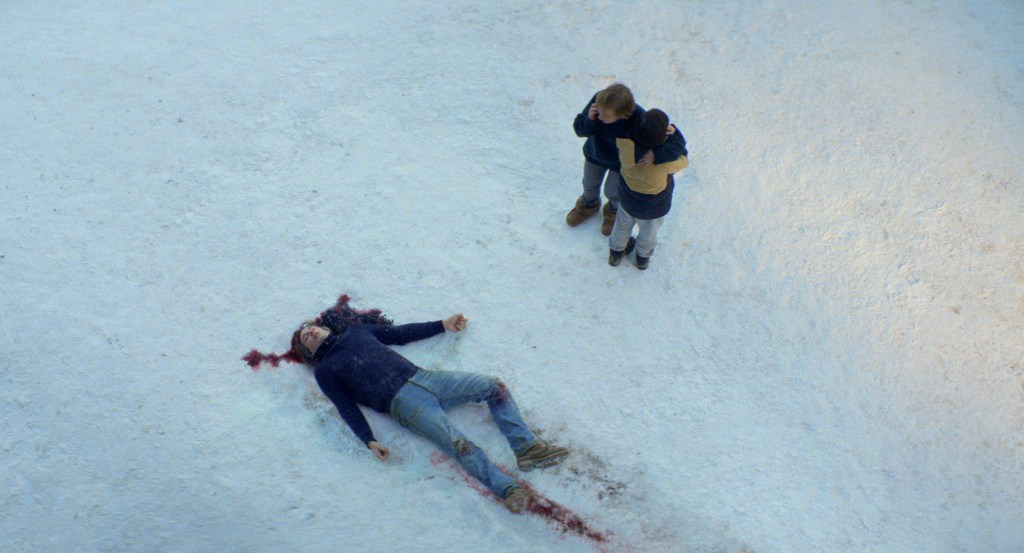
The latter question is what the entire conflict driving Anatomy of a Fall hinges on, and while it is technically resolved, Triet also doesn’t provide any concrete answers (the film’s distributor, NEON, capitalized on a clever bit of marketing for the movie, creating a website titled didshedoit.com where viewers can go vote for whether or not they believe Sandra committed murder after they watch the movie). That’s all well and good, for as Anatomy of a Fall progresses, it becomes less about the case at trial and more about the relationships that are tested and the secrets that are pulled out as a result of being subjected to such intense scrutiny on a public scale. A lot of the drama— and the cause of so much suspicion being thrown on Sandra— stems from the apparent discord in her and Samuel’s marriage: guilt and jealousy seem to hang over so much of their lives like the snow-covered landscape surrounding their chalet, from Sandra’s much more successful writing career to the cause of Daniel’s accident to Sandra’s sexuality. The latter in particular could have been rife for some more incisive explorations about this couple’s dynamic, but like the rest of the movie, Triet doesn’t attempt anything new or exciting with the material; she seems to view the trial and the lives of the participants in it more clinically than curiously (compare this to the much more emotionally ravenous Saint Omer, a French courtroom drama released last year). On a few occasions, Triet smoothly shifts from an encounter or conversation being related in the courtroom to a flashback of said event playing out on screen, a choice that livens up the proceedings, even if it does call into question the objectivity of the event (whether what we are watching is the actual occurrence or merely how it is being related from the perspective of the person telling the story). But Triet makes some other directorial decisions that are more baffling; she flips between different cameras and perspectives in a haphazard fashion that leaves little room for introspection or commentary on the events as they unfold, and plays with the employment of different languages in a way that only occasionally enriches the proceedings. And the actual manner in which the case is resolved, at least to the court’s pleasing, that sees Daniel— forced to come to some distressing realizations about both of his parents— doing some amateur sleuthing is frankly quite silly (Snoop, a key player in all this, innocent, however; he didn’t win the Palme Dog for his performance for nothing).
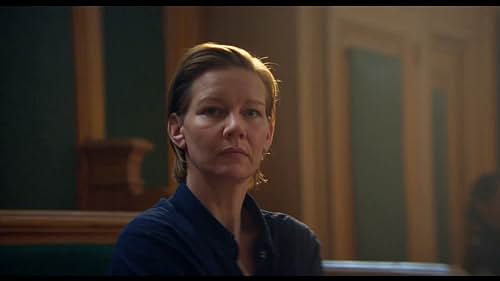
Some of Anatomy of a Fall’s most intriguing scenes involve the initial investigation into Samuel’s death, not the trial itself, which Triet treats with a dark sense of humor: first, when Daniel is subjected to reenactments of a potential argument Sandra and Samuel had over his blaring music to see at which volume he possibly could have heard the tone of their conversation from outside the house, and later, when the mother and son witness a dummy stand-in for their deceased family member being thrown unceremoniously from the roof to study how the body would have hit the ground. And Hüller deserves all the praise for her performance she’s been receiving. She plays Hüller as maintaining grace under unfathomable pressure, barely ever cracking— and when she does, it’s enough to make you sit up and pay close attention. Despite its twists and turns, however, Anatomy of a Fall on the whole doesn’t warrant so much merit. It’s the definition of what many have come to consider as “prestige cinema”: a strong lead performance and a compelling premise featuring some potentially rich themes that just barely masks the fact that the nitty gritty of the film, for as much dissecting as it does, doesn’t have that much to say at all.
Anatomy of a Fall is now playing in theaters. Runtime: 131 minutes. Rated R.

 Katie at the Movies
I had never heard of “prestige cinema” before, and I think I may enjoy its concept more than you. Like Tar, this movie seemed to embrace the empowerment of women, specifically mothers and wives, while dealing with ego battles, mental illness, and resentment. I was enthralled the whole way and actually liked the looser French courtroom system as it opened the door to a less objective whodunit and a more emotional dissection of a dysfunctional marriage. I’m still letting it all marinate, but I left the theatre more intrigued by this one than silly Napoleon and predictable Flowers of the Moon…
LikeLike