I didn’t put two and two together until I was standing in the hotel lobby. The same day I was set to go see Priscilla— Sofia Coppola’s screen adaptation of Priscilla Presley’s 1985 memoir Elvis and Me— I was checking into a hotel, a charming relic of Route 66’s heyday in southwest Missouri. As I waited for the clerk to check me in, I found myself staring at a bowl of bubble gum sitting on the desk, a sign with a photo of Elvis Presley blowing a bubble attached to it, and a small model of the singer’s famous pink Cadillac perched to one side. Outside, the hotel’s electronic sign advertising the establishments amenities intermittently flashed the proclamation that “Elvis stayed here!” For an increased nightly rate, you can choose to stay in the Elvis suite, whose special decor includes a king-sized bed situated on a frame that resembles a shiny red retro car.
Elvis is one of those rare celebrities whose fame never really faded over time; even nearly 50 years after his untimely passing in 1977, his iconography is almost universally recognizable. There’s a reason why a hotel in the middle of Missouri latched on to the fact that he stayed there once a considerable time ago and made it their entire personality. There’s a reason why scores of people annually visit the Memphis sites where Elvis lived and worked, all some of the top tourist attractions in the country: the Country Music Hall of Fame, Sun Studio, and of course his home, Graceland. There’s a reason why people still purchase and listen to his music (what self-respecting vinyl collector doesn’t at the very least own Elvis’s Christmas album?), why contemporary performers seem to enjoy remixing and riffing off his songs, why his movies still regularly air on television, even if they were less critically well-received. There’s a reason why I’ve opened this review of a movie about his wife by discussing him first. Perhaps some of that enduring fascination is because he was gone too soon, dead at the age of 42 from cardiac arrest likely brought about by a longtime dependence on various drugs; his image remains frozen in a specific moment in time. But the real reason is likely more straightforward: he possessed an inherent magnetism and charisma, a combination of raw talent and country boy humbleness that in some respects didn’t fit the mold of what you’d expect from a celebrity who had adults from a certain generation in an uproar, young women throwing themselves at his feet, and men trying to emulate him in appearance and manner. Coppola seems to understand this; when 14-year-old Priscilla Beaulieu (Cailee Spaeny), stuck and alone on the Air Force base where her father (Ari Cohen) is stationed, first meets Elvis (Jacob Elordi), it’s at a small party in his German home that he rented during his military service, having been drafted at the height of his fame back in the States. He’s playing a lively rendition of “Whole Lotta Shakin’ Goin’ On,” thumping the keys with so much force a beverage sitting on top of the piano slowly begins bouncing its way to the edge of the instrument. Elvis, without missing a beat, catches the glass as it tumbles down, the cluster of people surrounding him cheering and clapping with delight. Priscilla, meanwhile, has been observing him from the other side of the room. One look at her face, and we know she’s sunk. And we get it— and it’s important that we get it, as Priscilla’s life is about to take a drastic and, eventually, nightmarish turn.
Virtually every scene in Priscilla is ripped straight from the pages of Priscilla’s memoir, a best-seller that was almost immediately adapted into a surprisingly well-reviewed TV movie of the same title in 1988, but that, in the grand scheme of things, hasn’t exactly done anything to tarnish Elvis’s image. Not that Priscilla was trying to do that; within her book (written with Sandra Harmon), she makes it clear that she loved Elvis beyond the dissolution of their marriage, and that they would talk regularly, right up until his death. After the passing of Elvis’s father Vernon in 1979, Priscilla took it upon herself to transform the financially struggling Graceland estate into a profitable tourist destination, co-founding Elvis Presley Enterprises. Indeed, while she has had a career and a life outside of Elvis in the decades since their marriage ended, she is primarily viewed by the public as the steward of his legacy, producing orchestral arrangements of his music, dedicating postage stamps in his honor, even, more recently, popping up in a Graceland-set Hallmark Channel Movie for about two minutes to provide the film’s heroine with romantic advice based on her relationship with Elvis. But Elvis and Me is also extremely damning of the man propped up by so many as an icon. Priscilla is frank about his possessiveness, his occasional violent outbursts, the grooming, the hypocrisy their relationship was based on. While Priscilla serves as executive producer on Coppola’s film and has been a very present figure in the press tour, Priscilla was made without the blessing of the Presley estate, and before her unfortunate sudden passing at the beginning of this year, Lisa Marie Presley (Elvis and Priscilla’s only child) reportedly voiced her unhappiness with how the project portrayed her father to Coppola. It’s difficult, given the recency of the project and its great popularity, not to compare how Priscilla tackles the subject compared to Baz Lurhmann’s Elvis from last year. The latter (in which Priscilla is reduced to the supporting role of neglected wife) is a fairly conventional music biopic wrapped in the maximalist trappings typical of Lurhmann’s work, but it’s also extremely condoling of his Elvis’s behavior, at every turn either refusing to reckon with his faults or placing the blame on those around him (for his drug use, for his infidelity, for his appropriation of Black music). Priscilla could not be less interested in Elvis the superstar, but rather, what happens when a teenage girl gets caught up in the intersection of first love and fame .
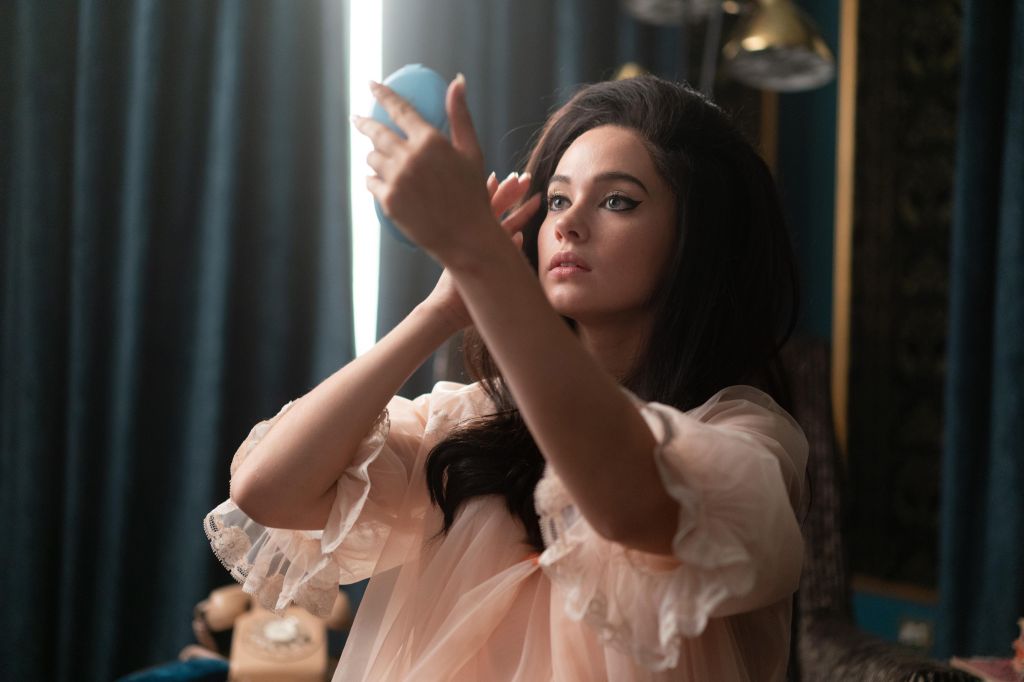
This is a Sofia Coppola movie, and all of her trademark themes— already present in Priscilla’s true story, ready and waiting for someone to pull them out— are on full display here: loneliness, coming of age, loss of innocence, that trapped feeling of being a teenage girl, feeling like life and the world is just passing you by (the “Coppola shot,” typically involving a young female protagonist staring forlornly out of the window of a room or a vehicle, crops up at least a couple different times). The easiest comp within her own filmography is Marie Antoinette, another story of a famous marriage and the young woman who felt stifled within it, but with Priscilla, Coppola strikes quite a different tone from the former’s pop-punk aesthetic and occasional bursts of humor. It’s understated, from its stripped-down production design (which includes remarkable recreations of both the exteriors and interiors of Graceland, as Coppola was not permitted to film there on location) to its delicate and hazy cinematography and editing (by previous Coppola collaborators Philippe Le Sourd and Sarah Flack, respectively) to its performances. Spaeny plays Priscilla from age 14 to age 28, and she gracefully maneuvers the subtle transitions between each stage of her life: a shy teenager who sees nothing beyond the world of the man she loves, a young woman who finds her independence and sense of self being stripped away in service of that love, and an adult who gains some agency and finds happiness beyond that relationship. Elordi, meanwhile, has never been better (or perhaps he’s just never been given an actually good project). He doesn’t physically resemble Elvis— well, maybe from a distance, in profile, and if you squint a little bit— but he has his voice and his manner down to a T, perfectly calibrating his performance to reveal both Elvis’s boyish, fun-loving side, and his temperamental, controlling side, often having to flip between the two within seconds.
It’s the age difference between the couple that most people, especially an online community that is perpetually chomping at the bit to get outraged over every little thing, are going to be hung up on. Priscilla was 14 and Elvis was 24 when their pair first met and began their relationship (when Elvis asks her if she’s a junior or a senior and she responds with “ninth,” he has to get her to explain that she means she’s in the ninth grade), something that Coppola’s brilliant casting illustrates visually through the not-true-to-life 16-inch height difference between Spaeny and Elordi. Coppola wisely forgoes providing a lot, if any, exposition (even if some moments might punch harder if the viewer knows a bit about Elvis and Priscilla), but Elvis’s deep love for his mother (who had passed away a few months before he met Priscilla) is sometimes attributed to his apparent penchant for surrounding himself with underage girls, keeping them close without striking up a sexual relationship with them (that may be why his pal Terry, who spotted Priscilla on base, was so eager to introduce her to him). The happier moments in Priscilla slip by as if in a dream; Priscilla walks the halls at her school with a small smile on her face and a faraway look in her eyes. One of the film’s most striking sequences is a montage that occurs right after Elvis’s deployment ends and he heads back to the States, leaving Priscilla behind in Germany. Set to the instrumentals of “Love Me Tender” (the sole direct allusion to a song that Elvis covered throughout the movie’s runtime), clusters of nostalgic ephemera mark the passage of time: Christmas and birthday cards, record albums and celebrity magazines, where a worried Priscilla reads gossip of Elvis’s potential new romances, afraid that she’s been forgotten— and is there any worse feeling than that when you’re at that age? When Elvis eventually does call and invite her to visit him at Graceland, she couldn’t be more thrilled; and yet, the more time she spends in his world the more its glitter begins to lose its shimmer. It turns out that even living under his roof, she’s as alone as she was when she was half a world away.
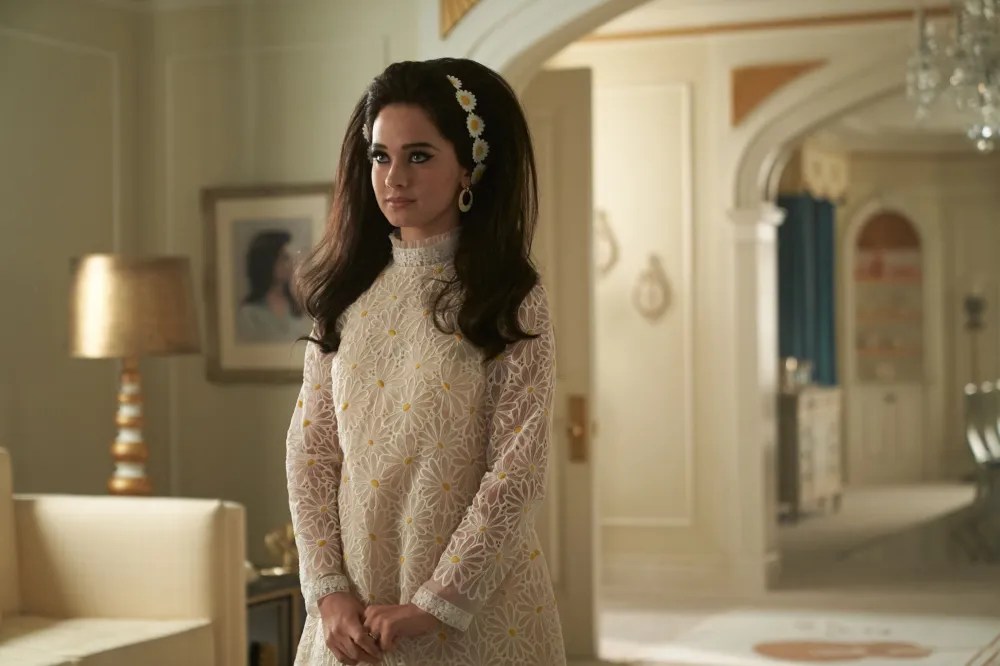
Coppola is particularly adept here at unveiling the stages of grooming, how someone so young can get easily caught up in an apparent dream life, and find it infinitely more difficult to extricate herself from it. It’s when Priscilla moves permanently to Graceland that she begins to realize how trapped she really is. Still in high school, she isn’t allowed to invite any friends over, and even if she wanted to, they would all only want to befriend her to get close to Elvis anyway. She can’t go out in public, or even outside, due to the throngs of eager fans constantly hanging around the gates of Graceland hoping for a glimpse of the King. She has only so much money to spend, but she’s not allowed to get a job. When Elvis is home, she spends glamorous nights out on the town with him, accepting his offers of pills to help her stay awake so she can still attend school during the day and make it home by the time he wakes up in the late afternoon. Elvis begins to tell her what she can and cannot wear, convinces her to dye her hair jet black, to wear lots of eye make-up. He needs her to be there for him, but refuses to take their relationship, physically, past a certain point until after they are married one day, requiring monogamy from her but carrying on affairs behind her back. And yet, his methods of manipulation are so subtle, masked by his frequently sweet demeanor, it’s easy to see why Priscilla is willing to look past so much for so long, while his influence is so great that Elvis’s posse treat his outbursts as normal behavior. Coppola crafts such a suffocating atmosphere of entrapment from their relationship and the airless walls of Graceland where so many of these scenes take place, and the more she deprives the audience of seeing Elvis the icon, the more cutting his abuse of Priscilla becomes. It’s what makes Priscilla Coppola’s most incisive film in at least a decade.
Putting it, again, in conversation with a film like Luhrmann’s Elvis, you could read Priscilla as the anti-music biopic; it’s so stripped-down, so uninterested in the mechanics of celebrity or art. Even its borderline insane final needle drop (the film’s soundtrack is largely curated from popular pop songs of the era), if you know the historical link between the song and the film’s subjects, reads less as a sentimental closing and more as one last cackle, a spit in the face. But Priscilla is equally the next in a long line of Sofia Coppola heroines, wrestling with their womanhood and sense of self in a world that wasn’t designed for them— and pushing through anyway.
Priscilla is now playing in theaters. Runtime: 113 minutes. Rated R.

 Katie at the Movies