“Think on every step before you take it. Put it to memory, remember that the whole way up. And if you can’t use your memory right, you lose.”
Francis (Aaron Pierre) utters those words to his younger brother Michael (Lamar Johnson) as they stand staring up at a transmission tower in their Scarborough, Toronto neighborhood. He’s telling him that the top of the tower offers the most spectacular views of the city—but also, if he touches the wrong piece of metal during his ascent, he’ll be immediately electrocuted. The opening of writer and director Clement Virgo’s Brother, based on the novel of the same name by David Chariandy, immediately establishes the close but opposing dynamic between the two brothers: Francis is bold, always aspiring to something greater, and ready and willing to take the risks to get there. Michael is meek, hesitant; in another scene early in Brother, Michael tentatively approaches his crush Aisha (Kiana Madeira) and makes awkward (if endearing) conversation, during which Aisha mentions that all the girls know Francis. But Francis’s advice also articulates some of Brother’s key themes, particularly the ties between mourning and memory, the ability to harness what has happened in the past in order to press forward.
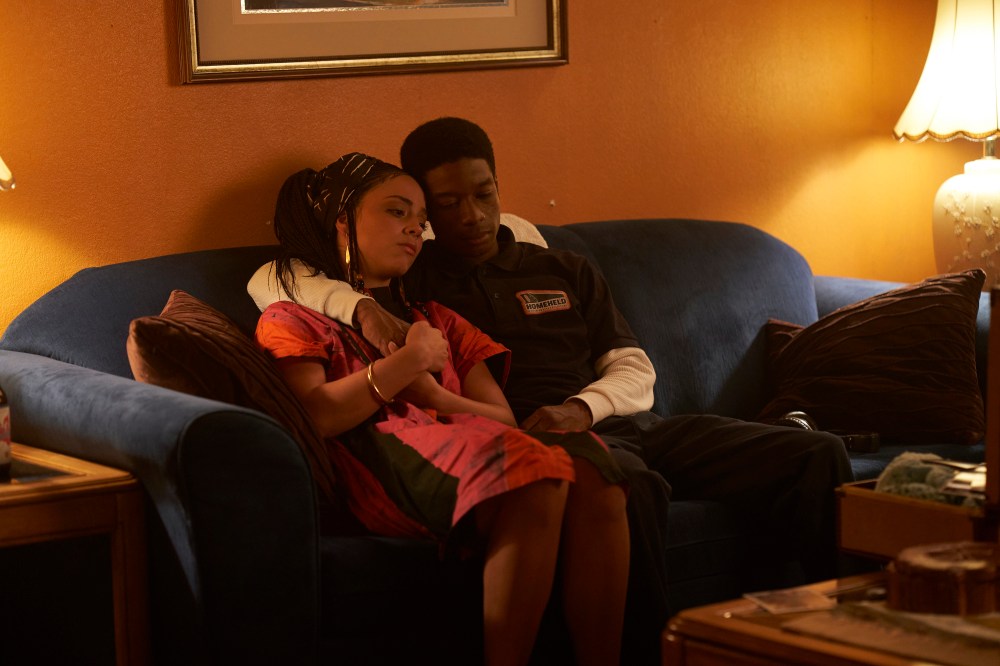
It’s in this examination of two brothers that Virgo’s film becomes a vital text on Black masculinity, grief, and culture. Brother glides delicately back and forth through time, from that opening sequence in which we see the boys as teenagers in the 1990s, to occasional flashbacks to Michael and Francis as small children, their single mother Ruth’s (Marsha Stephanie Blake) constantly needing to work overtime to make ends meet forcing them into responsibilities and knowledge about the world at far too young an age (the news stories of criminals on the loose and broadcasts of grainy security footage of police shootings that flicker from the TV haunt them while eerily foreshadowing the film’s final act) to ten years later. It’s in this later time period that we learn almost straight away that something happened to Francis in the intervening decade; he has disappeared, leaving Ruth so wracked with grief that she hardly speaks, and turning Michael bitter. The mystery of Francis hangs heavy over the entire movie, driving the story forward and imbuing it with a touch of intrigue that makes the pacing increasingly tense as the film cuts between past and present.
Virgo roots Brother in a firm sense of place; we circle the same locations that Francis and Michael frequent so regularly—the interior of their apartment, the streets around their neighborhood, the local barbershop, the valley by the stream that offers a bit of a respite from the hubbub of the city—that we note the similarities and differences in them as the movie moves through time. And, with those places serving as anchors, Virgo roots us in the experience of this Jamaican-Canadian community as well, tailoring the story specifically to them while making it simultaneously universal. Their father out of the picture, Francis and Michael both have to become the patriarchs of their family at a young age (the brawny Francis in particular is always looking out for his little brother), struggling to navigate the world with little to no support system to fall back on when they’re at their most vulnerable (Francis doesn’t hesitate to grab the blade of a knife to intimidate a man attempting to threaten him and Michael, but weeps when his efforts to reach out to his father fail). And that world is a harsh one. If it isn’t the gang violence threatening them, it’s the increasingly persistent police presence about their neighborhood, and their inclination to jump to violence first, questions later—same as it ever was. Brother depicts traumatizing events, but never in a traumatic or manipulative manner, in part because Virgo locates lovely grace notes in the midst of it all. If Francis and Michael have one thing in common, it’s their love of music (Francis specifically dreams of working in the industry), and the film’s stellar soundtrack, which encompasses everything from reggae to Nina Simone (and even a shout-out to Canadian pop star Anne Murray), adds an extra flavor to the film’s already poetic, warmly-lit visuals by cinematographer Guy Godfree. Music is something that binds the characters together, something that they use to reach out for connection. Brother often cuts to flashes of Michael’s reminiscences of happier times: dancing with his mother and brother in their home, their bodies circling each other in a carefree manner, a rare moment of levity.
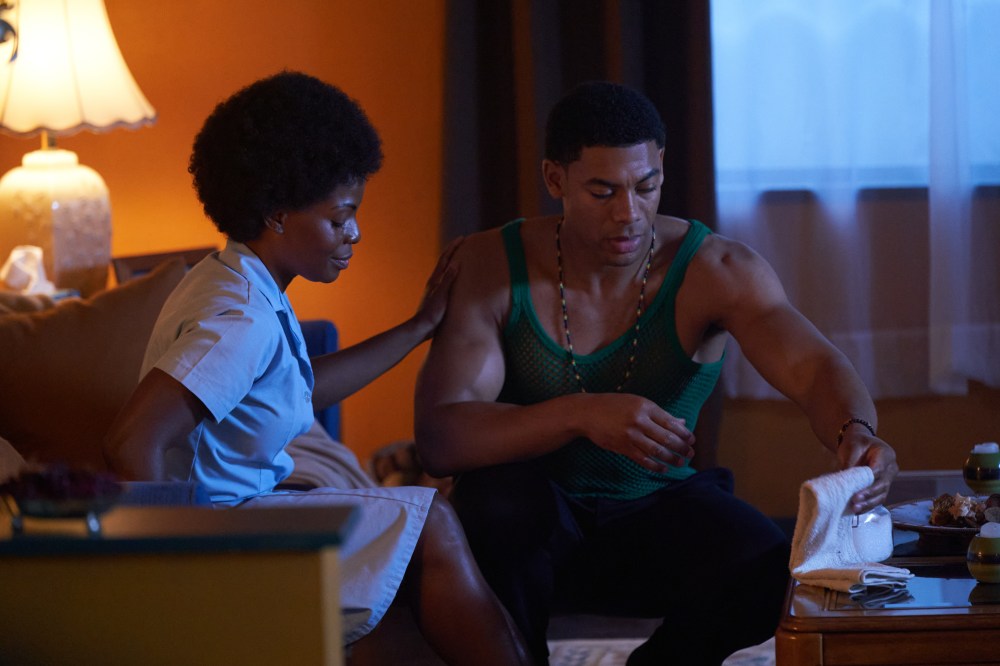
Brother’s uniformly excellent cast weave a rich tapestry from their performances, each member embodying their specific character’s personality—Pierre Francis’s simmering anger that gives way to desperation, Johnson Michael’s shyness, guilt, and regret, Madeira Aisha’s light charm, and Blake Ruth’s strength that is later replaced by shattering grief—all while carrying the weight that comes with living as Black people (Aisha articulates the longevity of this abuse to Michael when she at one point discusses how their immigrant parents came to this country for better lives only to find themselves cleaning for white people). The fact that, as mentioned above, the narrative rarely extends beyond a few locations accentuates that crushing feeling of inescapability all the more. But as devastating as Brother is (in the film’s final half hour, Virgo cuts between a series of especially tumultuous events at the same time, making for an especially upsetting stretch of story), it also finds solace in the radiant love of family and a community. This is no more apparent than it is in the beautiful, lyrical montage that Brother concludes on, one that caresses the faces of those who now only live on in the memories of the living, while reveling in the emotions and thoughts and aspirations of those who are still here.
Brother opens in select theaters and will be available to watch on demand on all digital platforms on August 4. Runtime: 120 minutes. Not rated.

 Katie at the Movies