In writer and director Noam Kaplan’s The Future, the world—or at least, the city of Jerusalem—is recognizable, yet rendered ever so slightly, ever so unsettlingly, off-kilter. Israel is on the cusp of launching a manned mission to the moon. Upbeat commercials advertise new tech of the bleakest sort: a program that uses an algorithm to target and ID individuals who might pose as potential terrorist threats. The inventor of the program, profiler Dr. Nurit Bloch (Reymonde Amsellem), finds herself facing some numbing revelations when her algorithm fails, and a young woman, Yaffa (Samar Qupty), gets away with murdering Israel’s Minister of Space and Tourism. Nurit asks to interview Yaffa—whose unrepentant feelings are expressed in the film’s chilling cold open, in which she is tasked with recreating the murder for authorities— to attempt to determine her motivations and what her program failed to detect.
A good portion of the action in The Future’s lean under-80 minute runtime is dialogue-based and conducted in the room where Nurit and Yaffa hold their meetings. Their encounters are less an interrogation, and more a conversation, as Yaffa’s radical viewpoints begin to shift Nurit’s perspective. Each character—and the actress portraying them— stands on equal footing, and is riveting to watch.
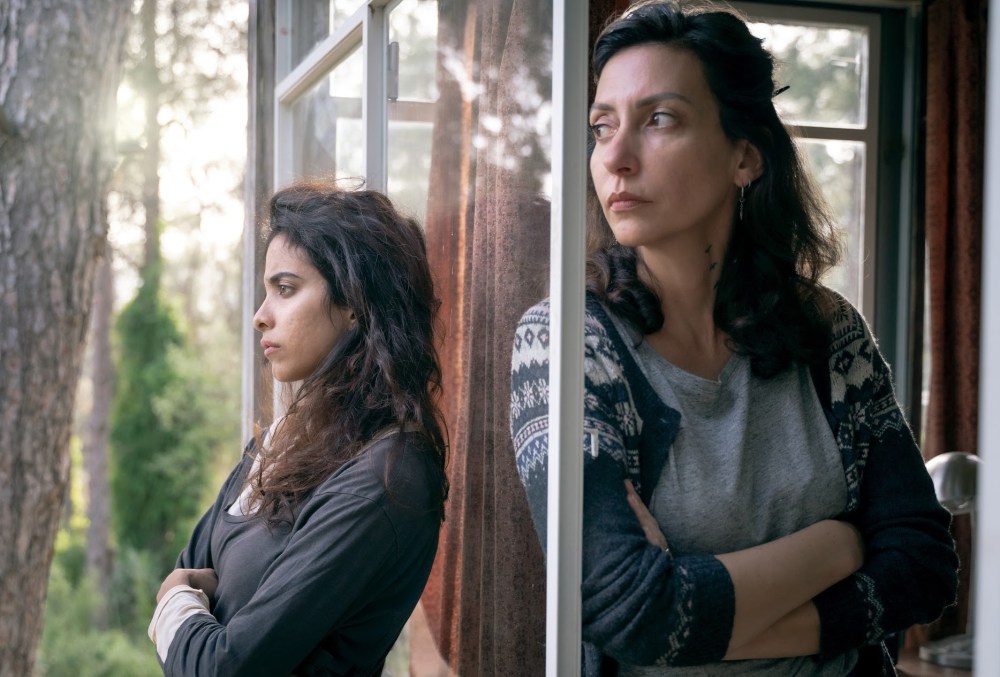
But Nurit brings some added baggage to the situation, which is what the other half of the film spends time on. She’s been struggling to have a child, and, at the same time she begins meeting with Yaffa, she is introduced to her potential surrogate, Maor (Dar Zuzovsky). Nurit’s conversations about her past with Yaffa and her future with Maor converge to bring her to a near-breaking point: is this the future she really wants to have?
The Future sounds— and in fact, begins— pretty bleak, but Kaplan punctuates it with bursts of humor. The perky ads painting an optimistic picture of a future that is difficult to fathom in reality are wrought with irony. And Nurit’s first encounter with Maor is humorous. The younger woman asks Nurit if she runs, and when the older woman responds negatively, she has Nurit talk to her as she runs on the treadmill. The scene then cuts to Nurit sitting alone in her car in a dim parking garage, scarfing down a burger. But a lot of The Future’s messaging is executed too obviously to effectively resonate. Take, for instance, all the times Nurit’s GPS prompts her to “turn right to The Future.” At other times, The Future grasps for ideas but fails to bring the point home— at least from a political standpoint, although the Israel/Palestinian conflict hangs heavy over the proceedings. The multi-generational relationships between mothers and their children, however—specifically mothers and daughters— is woven into a rich tapestry that demands the viewer to sit with every characters’ motivations (Nurit’s own mother plays a role in the film too, as Nurit searches for a birthday present for her in the midst of everything else going on; men don’t really figure into the story, Nurit’s often absent husband included). The Future doesn’t offer any easy answers or hopeful conclusions, but it’s a sturdy character drama that brings each characters’ arc to a fitting (if abrupt) end.
The Future had its world premiere at the 2023 Tribeca Film Festival on June 10. Runtime: 80 minutes.

 Katie at the Movies