In keeping with the theme of the True/False Film Fest’s 23rd edition, You Are Here, many of the film’s screening in the annual celebration of non-fiction filmmaking in Columbia, Missouri dealt not just with our existence in physical spaces, but also our place in time. Many weave together both, from the vibes-heavy science doc Phenomena (a world premiere) to the recent Sundance premieres Time and Water and The Oldest Person in the World, which both grapple with aging in the context of environmental disaster and personal crisis.
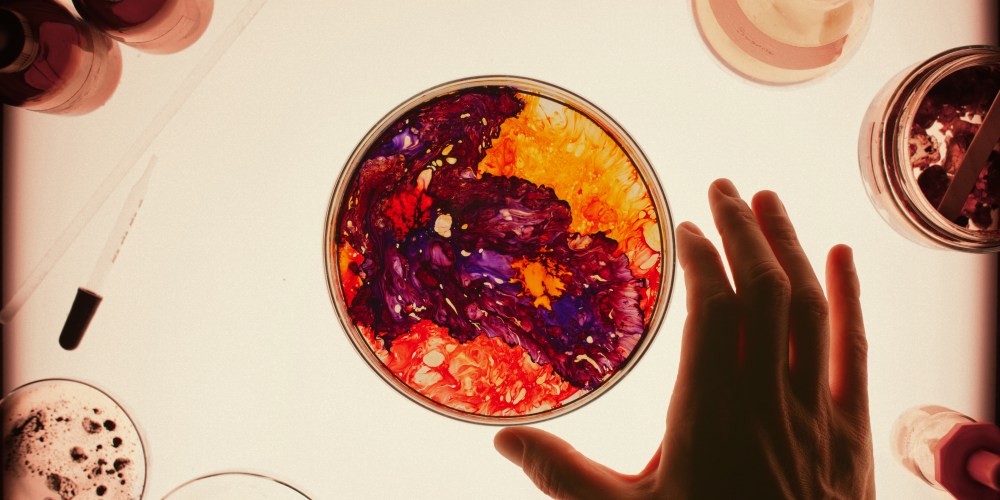
I love browsing for and watching abstract, experimental short films, so perhaps I’m more prone than the average viewer to vibe with Phenomena, which feels like the feature length equivalent of that. Josef Gatti’s trippy science doc opens with a warning, followed by an assurance: “These experiments can be dangerous. Don’t try them at home…like I did.” And then: “Every image in this film is real.” Gatti isn’t a scientist, a fact that his narration— which guides the viewer through the imagery throughout his film— confirms at the start. But his father Mark is a retired physics teacher, and it’s his knowledge that initially sparks Gatti to merge his love for art with science in his feature directorial debut.
Phenomena is divided into ten chapters, each concentrating on a different force or element in nature: light, energy, gravity, and so on. Gatti uses macro cameras to film experiments on which he’s guided by select few friends and experts, like John-Paul James, a musician, and Emme Orbach, an artist who specializes in crystal formations. Together, they make sound waves, or combine chemicals and liquids in Petri dishes. Phenomena is very much mostly Gatti going, “Hey, look at this cool thing,” playing like a guy who just discovered something neat he can do with a camera and wanting to show the whole world. But Gatti demonstrates an eye not only for the microscopic animations and kaleidoscope patterns that appear naturally in the phenomena he depicts, but also a curiosity for how they work, pulling back in between chapters to reveal the set-up of each experiment, as well as examples of these elements occurring naturally in the environment. The electronic score— part original, part selected from the existing work of composer Nils Frahm— pairs with the vibrant visuals perfectly, as they pulse and ebb and flow to their beat (the waves segment on energy in motion was my favorite; one scene felt like experiencing hyperspace in Star Wars, and made me positively dizzy).
Gatti isn’t imparting any ground-breaking scientific information, which may render the film’s observations shallow, but that’s also clearly not his aim. I could see this mesmerizing head trip as a great piece to screen in schools to stimulate viewers’ minds and get them excited to learn more about science, and all the beauty and bizarre wonders that exist just beyond our visibility.
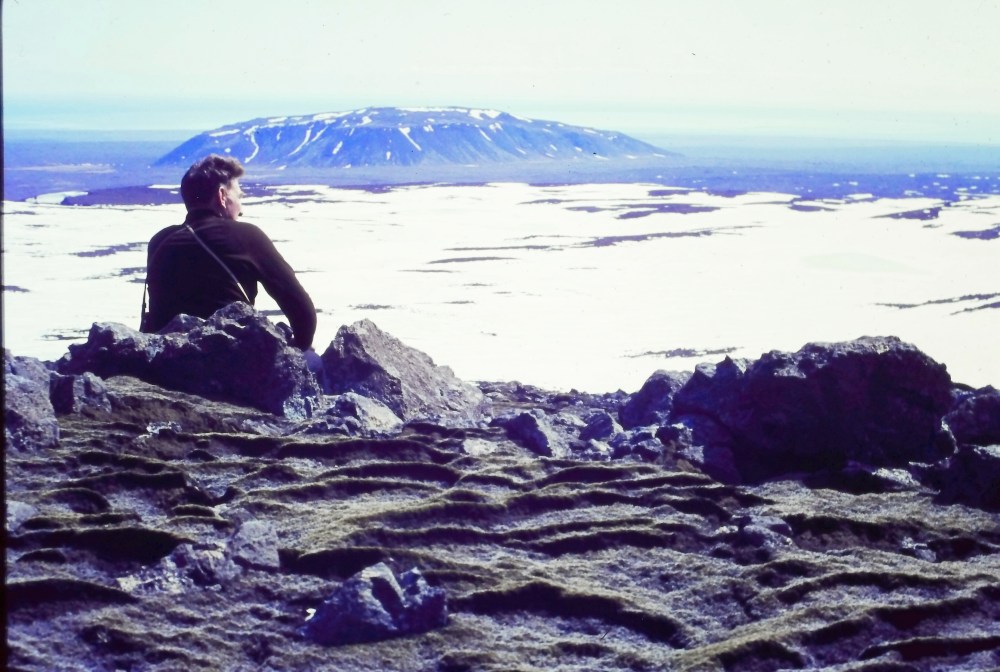
An unexpected parallel between familial loss and environmental devastation is movingly drawn in Sara Dosa’s documentary Time and Water. Andri Snær Magnason is a prolific Icelandic writer whose body of work encompasses fiction and nonfiction, poetry and short stories, science fiction and children’s literature. He’s the central protagonist and narrator of Dosa’s film, but his career isn’t really touched on. Rather, it’s through Magnason’s personal archive of family photos and videos, framed as a time capsule (Magnason’s opening voiceover asks whoever may find this in the future to press play), that Time and Water ponders the passage of time, and the importance of preserving the places, people, histories, and memories that mark it.
Magnason narrates from the present day, but his storytelling weaves back and forth through time, the footage on screen rhythmically cut to his words and the music by composer Dan Deacon. Magnason first picked up a camera and started filming everything at a party for his grandfather, having recently discovered he was very sick and not feeling ready to say goodbye to him. His home movies depict moments profound and mundane, spontaneous and engineered (such as when he stages a shoot with his grandmother Hulda and one of his daughters, also named Hulda). He talks about his four children. One of the film’s loveliest montages cuts together scenes of them stating their age; we watch them grow up in seconds. But mostly, he talks about his grandparents. The love story of two of them ties his family directly to the majestic glaciers that dominate the country’s landscape. One of their earliest dates was an excursion to a glacier that resulted in the pair being stranded in a tiny tent in an ice storm for three days. While gorgeous present day footage of Iceland abounds throughout the film, these scenes feature older films of the country that resemble old travelogues, or vintage postcards.
The inherent romance in nature follows a similar thread from Dosa’s award-winning 2022 documentary Fire of Love, which tells the story of married volcanologists Maurice and Katia Krafft through archival footage assembled in a style reminiscent of French New Wave films. But advocacy for the environment is even more pressing in Time and Water. Here, the grappling with the passage of time is mirrored in the death of something no one thought could ever die: Okjökull glacier, the smallest glacier in the world. Animated graphics illustrate how the glacier (700 years old at the time of its officially declared death in 2019) shrank due to climate change. But it’s not just that— Okjökull’s ice also stopped moving, a marker of a glacier’s aliveness, just as the coloring of its ice marks its age. As Magnason states, the deeper the blue, the deeper the time. Scientists estimate that in 200 years, all of Iceland’s glaciers will have died. He’s hired to write the epitaph for Okjökull, his four lines of words to be emblazoned on a plague that will sit on the site for all eternity. But what can one say in so few words about the loss of something that served as an archive of the history of Earth, its ice cataloguing the years like the tapes in Magnason’s video camera? Dosa ends her film on a bittersweet note that successfully ties together a project that possesses far more complex layers than her previous film, one that celebrates the life we have on the planet right now, while pleading for change to preserve our past before it melts away.
Another film that wrestles with the passage of time and mortality is Sam Green’s The Oldest Person in the World, albeit in a far more conventionally crowd-pleasing manner. Green, whose narration drives the movie, began this project ten years ago, when he attended the 116th birthday party of the then-oldest person in the world, Susannah Mushatt Jones of Brooklyn. He notes how absurd the whole affair is; celebrities participate, international news networks cover it, family and friends give moving speeches, but no one acknowledges that Jones is so old and tired, she sleeps through the whole event.
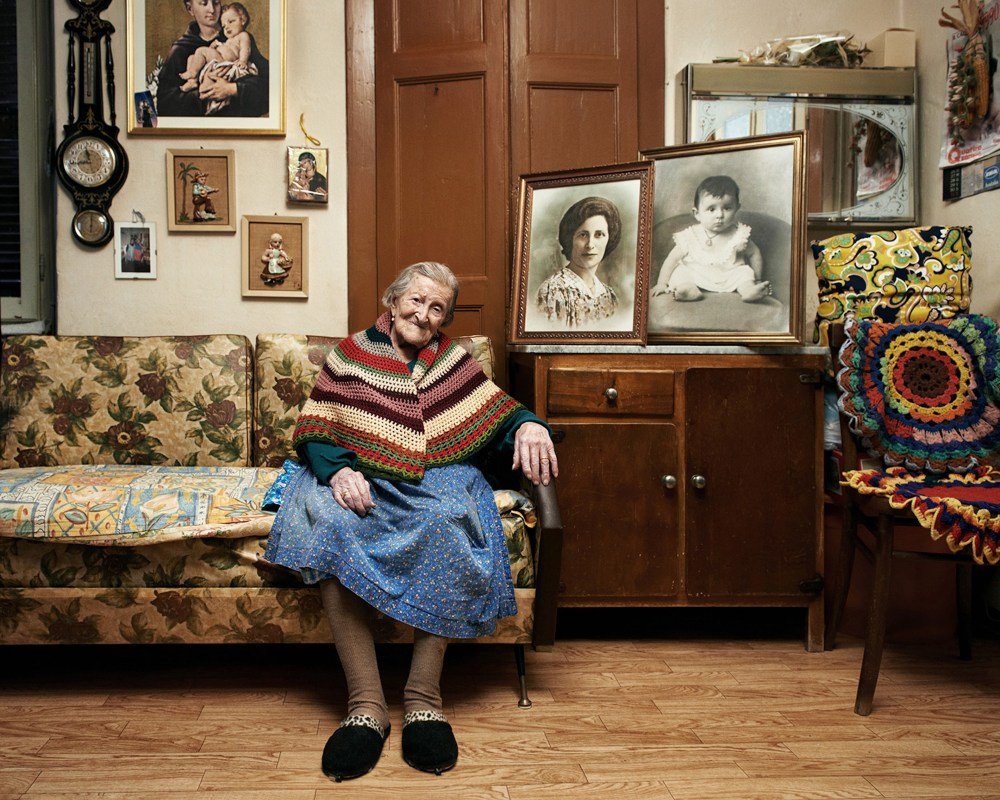
From then on, Green continued to follow each oldest person in the world. His conversations with them, usually facilitated by a family member, reveal sharp minds within their decrepit bodies. They provide witty responses to unoriginal questions. When asked what the secret to staying old is, Emma Morano of Italy responds, “Stay away from men.” After introducing us to each of these characters, who include the Coke-chugging Kane Tanaka of Japan, and Sister André, a French nun, Green provides just a nugget of backstory to provide some sense of who they are as people. Morano, for instance, was forced into a brief marriage to an abusive man, giving birth to a son who didn’t live beyond eight months old. Not wanting to be dominated by anyone anymore, she left, and never married again or had any more children. Violet Mosse Brown of Jamaica, meanwhile, impressively recites a poem from memory— “The Vision of Belshazzar”— that she learned as a schoolgirl over a century earlier. Most of them, however, don’t appear to wish to continue living in their aged state; Sister André, for example, presents the picture of irony, desiring to become the world’s oldest person while simultaneously yearning for death.
All of these people were anointed the Oldest Person in the World by the Guinness Book of World Records, and Green accents their stories with bits of his fascination with said book, which places legitimate accomplishments alongside such oddball traits as “longest living person with a bullet in their head” and “least successful author.” But more of a personal factor plays into the film when Green is diagnosed with cancer. In the midst of making this movie about growing old, he is suddenly faced with having to accept experimental drugs to stay alive, potentially leaving his young son to grow up without a father, and finds himself excavating the death of his brother, who committed suicide. He treats the latter matter so delicately, it almost feels out of place with the rest of the film, which walks a line between irreverent humor sincere curiosity and concern. Green’s narration is, admittedly, at times so self-reflexive (in step with his live documentaries, which he narrates live in person to music, he voices his worries and decisions about his approach to the documentary explicitly and in real time) it verges on irritating, robbing time from the oldest people the project was purportedly about in the first place. At the same time, it’s that free-wheeling nature to the filmmaking and the reflections on life and death and aging that makes The Oldest Person in the World so affecting. During a post-film Q&A at True/False, the filmmakers spoke to Green’s intention that the film never stop, that he’s still filming more now, that maybe even someday his son will take over the project and keep shooting the oldest people in the world. This may be a film whose subjects teeter on the brink of death every day, but the evolving nature of it makes it feel vibrantly alive.

 Katie at the Movies