At the start of Yellow Letters, Ilker Çatak’s follow-up to his Oscar-nominated drama The Teacher’s Lounge, celebrated Turkish actress Derya (Özgü Namal) is taking her bows to thunderous applause, having just completed the opening night performance of a new play penned by her playwright husband Aziz (Tansu Biçer), who waits for her in the wings. The snippet of dialogue and staging we receive points to a potentially sharp political critique of the current Turkish regime, and Derya subsequently demurs from a photo op with a government official backstage. It’s an act whose repercussions will be far-reaching and devastating, when Derya, Aziz, and several of their colleagues receive their yellow letters from the government, canceling Derya’s play and her long-standing position in the theater company that mounted it, and suspending Aziz’s job on the faculty of the university where he teaches drama. Regardless of the official reasons, they know the real reason is because they taken public political stands, Derya making incendiary social media posts, Aziz encouraging his students to skip class to participate in the demonstrations occurring on campus, telling them that that’s where the real theatrics are.
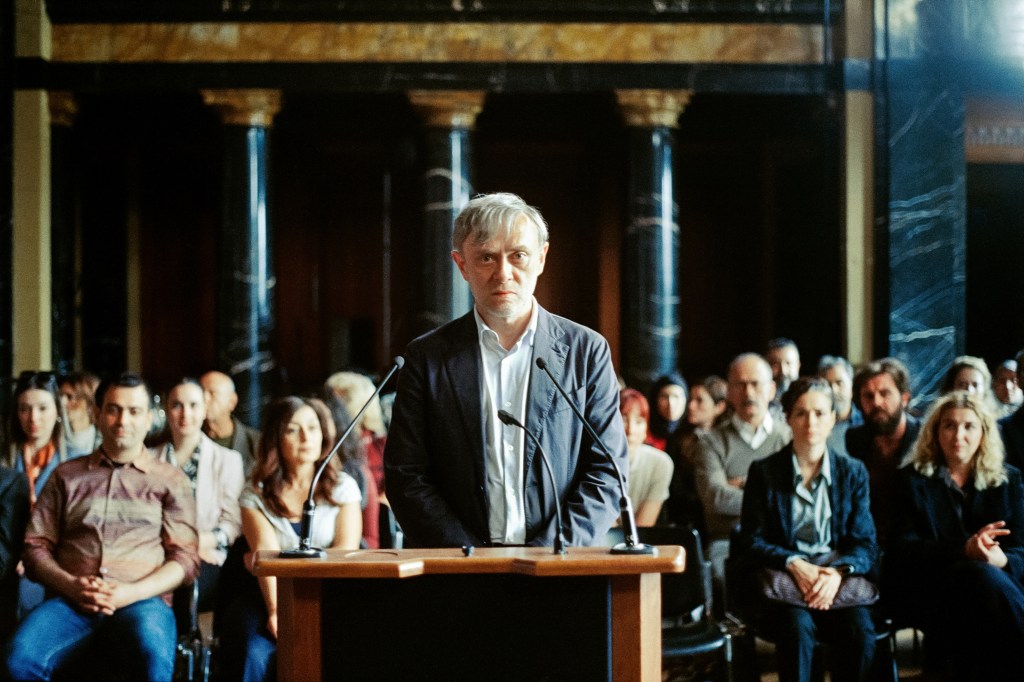
Çatak, who wrote Yellow Letters alongside Enis Köstepen and his wife, Ayda Meryem Çatak, was inspired by the massive purges in art and academia that occurred in Turkey around 2016-2019, when the government lashed out at those who signed the peace petition advocating for an end to the Kurdish Turkish conflict. Would that Yellow Letters possessed that sort of political specificity, however. Perhaps it’s because so many of us— not only in Turkey and in the EU, but in the U.S. under President Trump as well— are experiencing attacks on artistic freedoms, the ramifications of speaking out quelling desires to take a stand. Perhaps it’s because Yellow Letters happened to premiere at this edition of the Berlinale, where it was just awarded the festival’s top prize, the Golden Bear, and political controversy— namely, the jury president, filmmaker Wim Wenders, making a statement about movies not informing politics while circumventing a question about the ongoing genocide in Palestine— has made more noise than the art being displayed. But there’s something rather frustrating about Yellow Letters’ vague politics, right down to the generalized statements (ranging from anti-war to pro-LGBTQ) emblazoned on the signs at the college protest, that causes the film to feel more safe than subversive.
Still, there’s something to be said for the merits to Çatak’s broad approach, namely, the universality of the conflict it depicts. Ultimately, Yellow Letters hangs its examination of the impacts of political persecution on the framework of a family drama, one that’s consistently engaging even if the emotive crescendos of Marvin Miller’s string-heavy score frequently cause it to feel needlessly overwrought. The loss of their positions and income, Aziz’s pending court date, and the need to do what’s best for their teenage daughter Ezgi (Leyla Smyrna Cabas), put a strain on their marriage that only stretches thinner and thinner once they relocate from their home in the country’s capital, Ankara, to Aziz’s mother’s (Güngör, played by Ipek Bilgin) place in Istanbul. To make ends meet, Aziz starts driving a taxi, while Derya takes the lead on a television soap opera— but, still a recognizable public figure, she’s encouraged to amend her political stance (including deleting old social media posts) to improve her chances at being offered jobs. Meanwhile, the pair workshop a new play, one that even more obviously is backed by seditious political commentary, furthering the film’s stance on art’s function as a rebellious act.
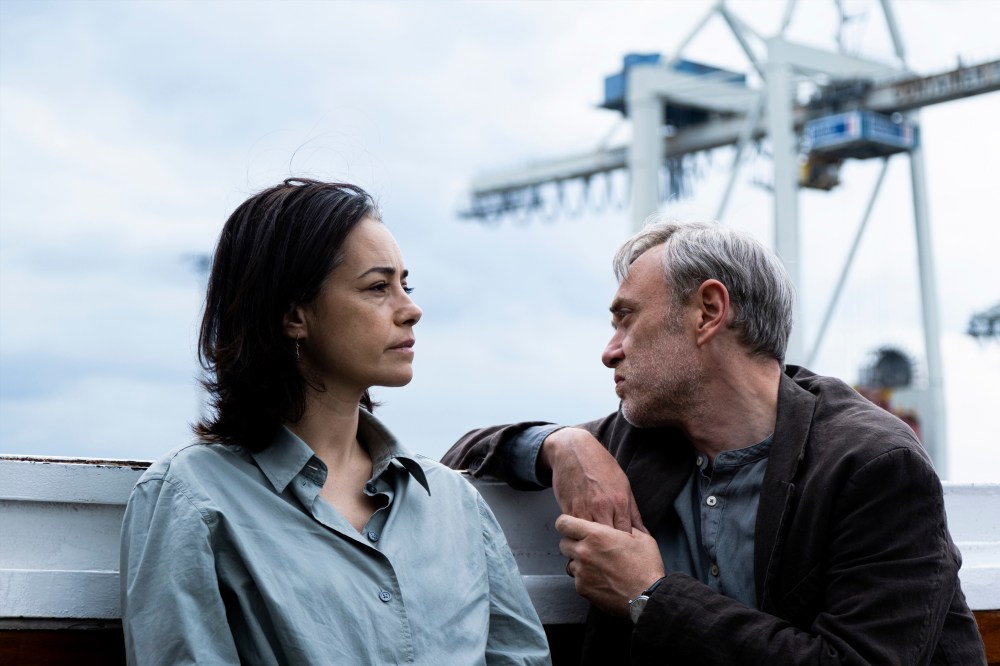
Yellow Letters is less focused on the latter, however, and more on the intimate implications at the intersection of art, politics, and life. Namal and Biçer deftly handle the talky script, conversing with ease whether they are bouncing creative ideas back and forth forth, or arguing about their next steps or the wellbeing of Ezgi, who is doubly affected by their newfound displacement. While the dissolution of the family plays as overly calibrated— as committed as the performances are, we see the performances more than the people— Çatak communicates the confusion of ostracism quite brilliantly, shooting his Turkish-set tale on location in Germany. A bold title card at the start communicates that Berlin is Ankara, and later, when the action moves, Hamburg is Istanbul. It’s a choice that may glide off the less geographically inclined, but that provokes disorientation in those who recognize the distinctly German landmarks— or even just the background signage, written in German— masquerading as another location. It’s the sort of effectively bold and creative approach to storytelling that lends richer shades to even Yellow Letter’s less impressive aspects.
Yellow Letters had its world premiere in competition at the 2026 Berlinale. Runtime: 127 minutes.

 Katie at the Movies