Dead Man’s Wire is as lean and taut as they come, launching into action with little preamble. And yet, the film opens not with Tony Kiritsis (a live-wire Bill Skarsgård) entering the downtown office of his mortgage broker Richard Hall (Darce Montgomery), who he will very soon be taking hostage, believing that Hall and his father (Al Pacino) want to claim the property he’s fallen behind making payments on to resell at a profit, but with the dulcet tones of Colman Domingo’s smooth radio DJ Fred Temple preparing Indianapolis listeners for the day ahead. In this way, Gus Van Sant’s anti-capitalist crime thriller immediately positions itself as centering as much on the media’s role in filtering breaking news events to the public as it does the crime itself.
The latter is based on true events, with Van Sant largely drawing on the 2018 documentary Dead Man’s Line examining the same incident. On the morning of February 8, 1977, Kiritsis takes Hall— in the absence of his father, who ventured out of town on a surprise trip— hostage by wiring the muzzle and trigger of a shotgun to the back of his head. The other end of the line connected to Hall’s head, meaning that if a policeman shot down Kiritsis, the shotgun would be triggered, shooting Hall in turn. Kiritsis and Hall spend the bulk of what ends up being 63 hours together in Kiritsis’ apartment, where their conversations that begin to verge on intimacy (Hall clearly diverges from his father on several fronts) are threatened by Kiritsis’ erratic manner. Skarsgård and Montgomery are able foils in this regard, the former’s level-headedness and burgeoning empathy, so very characteristic of the story’s Midwest setting, balancing out the latter’s volatility, consistently ratcheting up the tension in every scene they share.
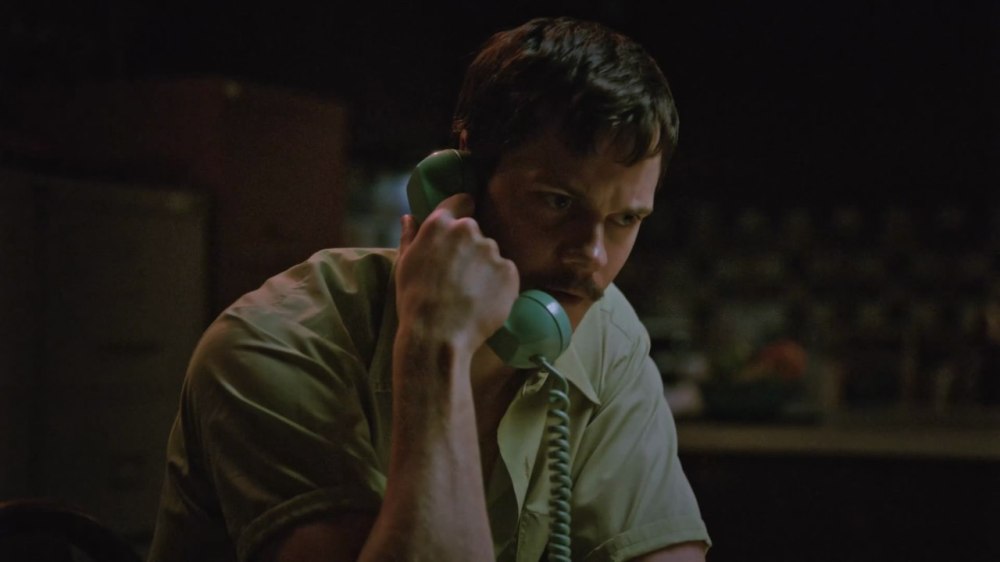
It’s when Van Sant travels beyond this central duo, however, that Dead Man’s Wire begins to flatten out under the weight of each character added to the conflict. There’s the aforementioned Temple, played with characteristic charisma by Domingo, who takes an active role in the hostage crisis when Kiritsis calls him up, using him as a mouthpiece for his incendiary thoughts. But then there’s Linda Page (Myha’la), the plucky young reporter who sees her shot at the big time when happenstance places her in close proximity to the incident, Michael Grable (Cary Elwes), the hard detective placed in charge of the case, and the elder Hall, a small part that sees Pacino literally phoning it in with his best Colonel Sanders impression (exemplary of the wildly inconsistent caliber of performances seen throughout the movie, which are subsequently undone by that all-too-prevalent biopic faux-pas of showing photos and videos of the real-life subjects). The film frequently cuts between what’s unfolding between Kiritsis and Hall behind closed doors, the police determining the best way to intercept the situation, and the media coverage of it all, with some shots taking on the news camera’s perspective, adopting a grainy old video aesthetic. It often plays its themes with too heavy a hand for them to effectively hit; during the climax, for instance, when Kiritis is granted a press conference and one news producer asks another what they should do if Kiritis and/or Hall are shot while they’re broadcasting, he coolly responds, “Keep the camera rolling and watch the ratings roll in.”
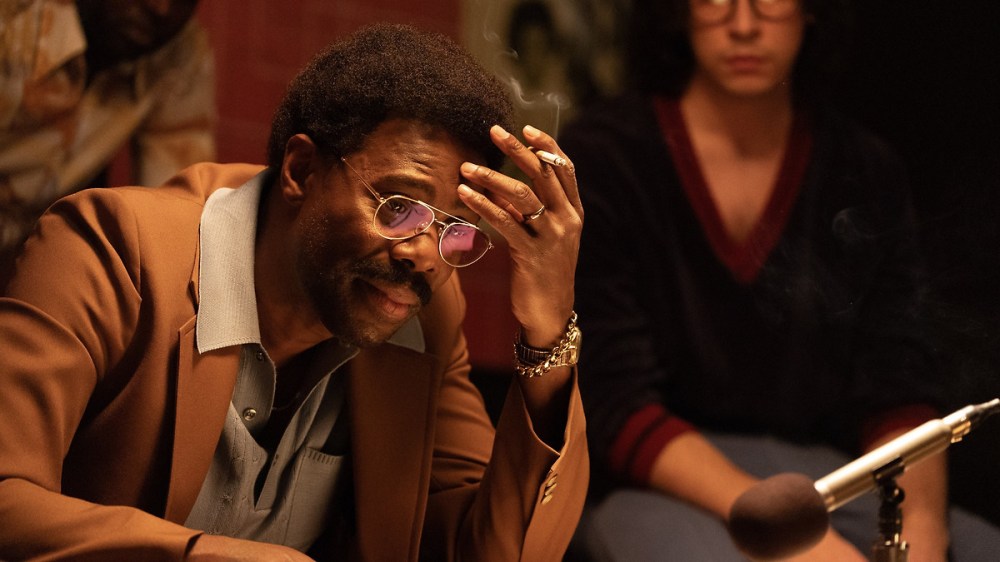
Dead Man’s Wire is sneakily insightful, however, regarding the media’s role in shaping narratives in real time. When Linda happens upon Kiritis’ brother in a crowd, she immediately puts the camera on him, and his claim— along with those of other acquaintances— that Kiritis was always a stand-up guy colors the man we’ve otherwise only seen as immensely disturbed in different shades. It works to drive more empathy toward Kiritis, equating his violent crimes with the financial crimes committed by the Halls’ toward those possessing less economic advantages. Sure, it’s also an overly romanticized concept, as illustrated by the wistful framing of the film’s delicate denouement, narrated by Temple and set in a future far removed from the incident. But for every uneven step Dead Man’s Wire takes, Van Sant makes up for it with bold stylistic, at times surreal, strides that engender this timely reflection on the past with enthralling urgency.
Dead Man’s Wire opens in theaters on January 16. Runtime: 105 minutes. Rated R.

 Katie at the Movies