Our Vines Have Tender Grapes is exactly the sort of heart-warming family drama MGM excelled at. That may make it sound overly trite and sentimental, but the film is crafted with such earnest sincerity, from its skilled performances to its charming vintage production design, in which studio soundstages stand in for rural Wisconsin. That’s where the family of Norwegian immigrant farmers at the center of the story reside: father Martinius (Edward G. Robinson), mother Bruna (Agnes Moorhead), and seven-year-old daughter Selma (Margaret O’Brien).

Released in 1945 and directed by Roy Rowland, Our Vines Have Tender Grapes— its title derived from a verse in the Song of Solomon in the Bible— depicts nine mo the in the life of the Jacobson family, told largely through the eyes of Selma. It’s a story brimming with childlike wonder (Selma raises a baby calf, plays and fights with her friend Arnold, portrayed by popular child actor Jackie “Butch” Jenkins, and is woken up by her father at 4 AM to visit a circus passing through town), growing pains, and the trials and tribulations of small town American life during wartime and the destruction of the American dream (a climactic sequence involves the barn Martinius spent so much time and money constructing burning down with all his cows inside). There are a couple side stories running parallel to that of the Jacobson family, including a romance between local newspaperman Nels (James Craig) and the town’s new schoolteacher Viola (Frances Gifford), who plans to leave what she initially sees as a backwater town before coming around to recognizing the merits of the people and their way of life. Another, much sadder narrative element comes into play in the form of a troubled teenager, Ingeborg (Dorothy Morris). While the Production Code in place at the time prevented any explicit discussions of such taboo subject matter, it’s implicitly understood that the ill-fated Ingeborg becomes pregnant at the hands of her father.
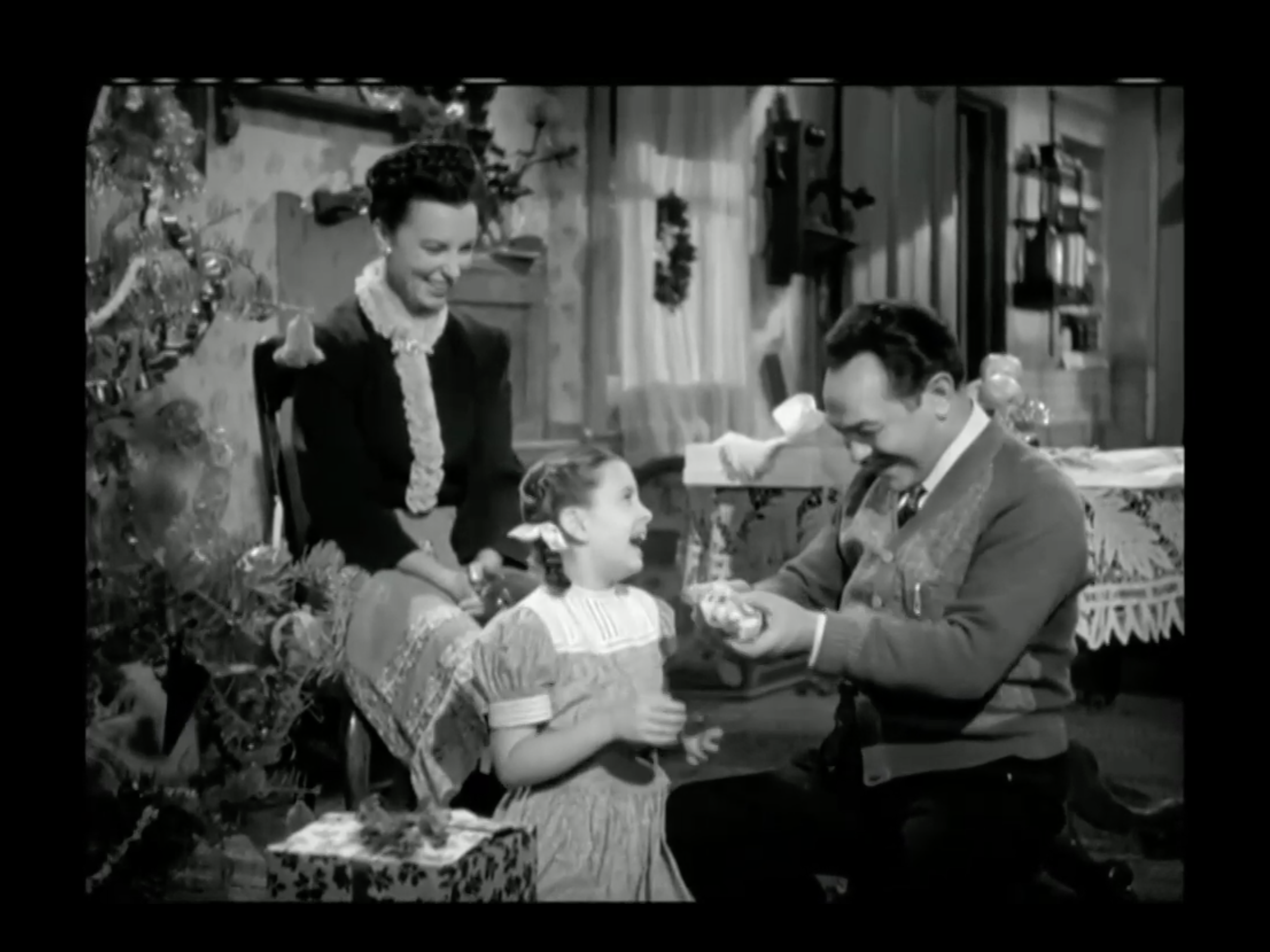
The magic of Christmas as seen through the eyes of a child is arguably the centerpiece of Our Vines Have Tender Grapes, however. The middle of the film sees Selma reciting the Christmas story for the church congregation, delivered with deeply-felt sincerity by O’Brien, followed by the town joining together to sing “Joy to the World.” On Christmas morning, Selma is so excited to give her presents to her parents (a knife for Martinius, a lamp for Bruna), she nearly knocks their tree over, before excitedly unwrapping her own gift, a gorgeous new coat. Their neighbors then join them at their home for a toast. The perils of the coming year are yet to come (and heavily foreshadowed in this scene), but it still plays as a joyous moment, looking forward to new beginnings and fulfilling new goals. It doesn’t hurt that the perpetually curious and open O’Brien and an achingly vulnerable Robinson, in a departure from his roles as a heavy, are remarkably sweet together. Our Vines Have Tender Grapes was adapted from a 1940 George Victor Martin novel by Dalton Trumbo, his last screen credit before being blacklisted. O’Brien later attributed this fact to the film largely flying under the radar for so many decades; regardless, it’s a lovely family drama of the sort that isn’t really made anymore, aptly balancing sentiment with harsh reality.
Our Vines Have Tender Grapes is currently available on Watch TCM, and can be rented or purchased on all digital platforms. Runtime: 105 minutes.

 Katie at the Movies
wen will our vines have tender grapes show again
u
LikeLike