I’ve watched The Thin Man countless times. But I’ll confess, if you put a gun to my head, I couldn’t tell you who the killer is revealed to be at the end of this sophisticated whodunit. That isn’t so much a failing of the storytelling as it is an indication that the mystery runs secondary to the entertainment provided by the characters themselves.
That mystery is provided by the 1933 novel of the same name penned by renowned suspense author Dashiell Hammett. The central couple are Nick and Nora Charles; the latter is a socialite with gobs of money, while the former is an ex-gumshoe who retired from working around low-lifes when he married Nora, and now spends his days spending her money, and drinking— a lot. While The Thin Man is somewhat lighter fare in Hammett’s oeuvre (he apparently based Nick and Nora’s relationship partially on his own tempestuous, long-term partnership with playwright Lillian Hellman), when MGM picked up the rights to adapt the novel to the screen, director W.S. Van Dyke instructed screenwriters Albert Hackett and Frances Goodrich to concentrate less on the mystery, and more on punching up the banter between Nick and Nora. The screenwriting duo who would go on to work on such classics as It’s a Wonderful Life (1946) and Easter Parade (1948) had by this time been married for three years, and would remain married for another 50 more. Whatever their dynamic in their personal lives was, they clearly brought some sense of what makes a solid partnership to Nick and Nora, whose relationship is defined by snappy, witty banter, light teasing, and sincere affection and concern for each other’s well-being. The Thin Man is often noted as being perhaps the first movie to make marriage look fun; any will they/won’t they suspense surrounding a burgeoning romance is negated by the fact that they have already long been a pair at the start of the film, and Nora’s excitedly joining Nick (along with their reliable wire fox terrier Asta, played by ‘30s canine screen icon Skippy) as he reluctantly dips his toe back into sleuthing proves that adventure doesn’t end the moment wedding bells begin to ring.
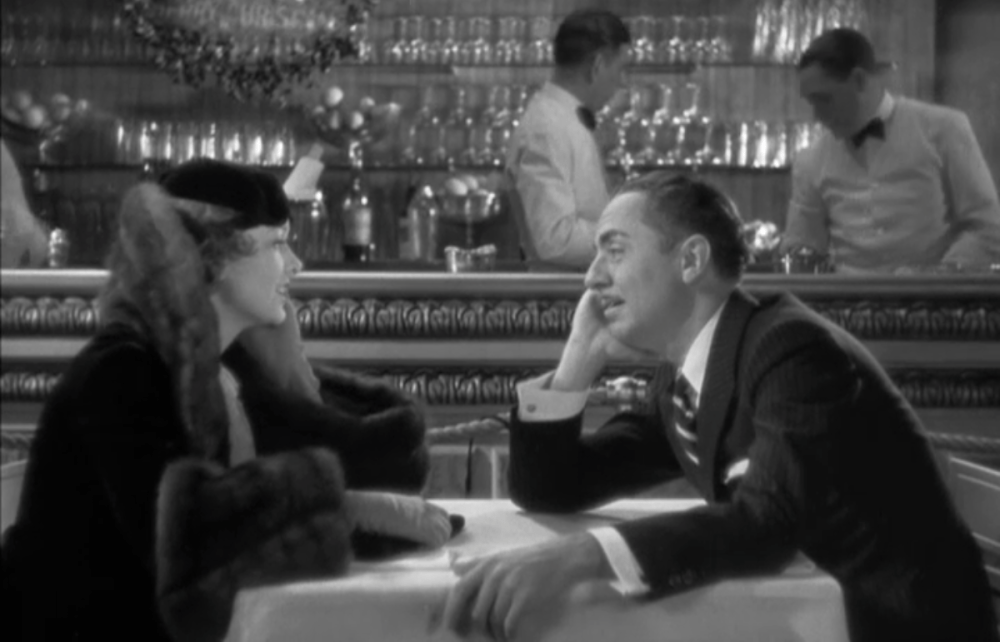
Nick and Nora’s playful dynamic and the dialogue’s verbal wit may be the most memorable aspects of The Thin Man (along with the perpetually soused nature of the lead detective, who downs cocktails like they are the elixir of life; strict enforcement of Hollywood’s Production Code was just around the corner by the time this film was released in theaters in May 1934, but clearly just enough laxness was still allowed— in addition to Prohibition having since been lifted— in portraying over-consumption of liquor as an acceptable means of socializing and an amusing personal quirk). They’re brilliantly brought to life by William Powell and Myrna Loy, whose first outing Van Dyke had just directed in the gangster flick Manhattan Melodrama. Despite having a reputation for working quickly, rarely utilizing more than one take, Van Dyke was astute enough when it came to his actors to recognize even in their secondary roles that Powell and Loy had the makings of a great screen team. He was right, even if he had to convince the studio to cast them against their respective types for The Thin Man; Powell had already been playing the more debonair detective Philo Vance on screen (a fact The Thin Man’s theatrical trailer has some fun with), while the very funny Loy had primarily been stuck in thankless, “exotic” roles. Altogether, Powell and Loy made 14 films together (including five Thin Man sequels).
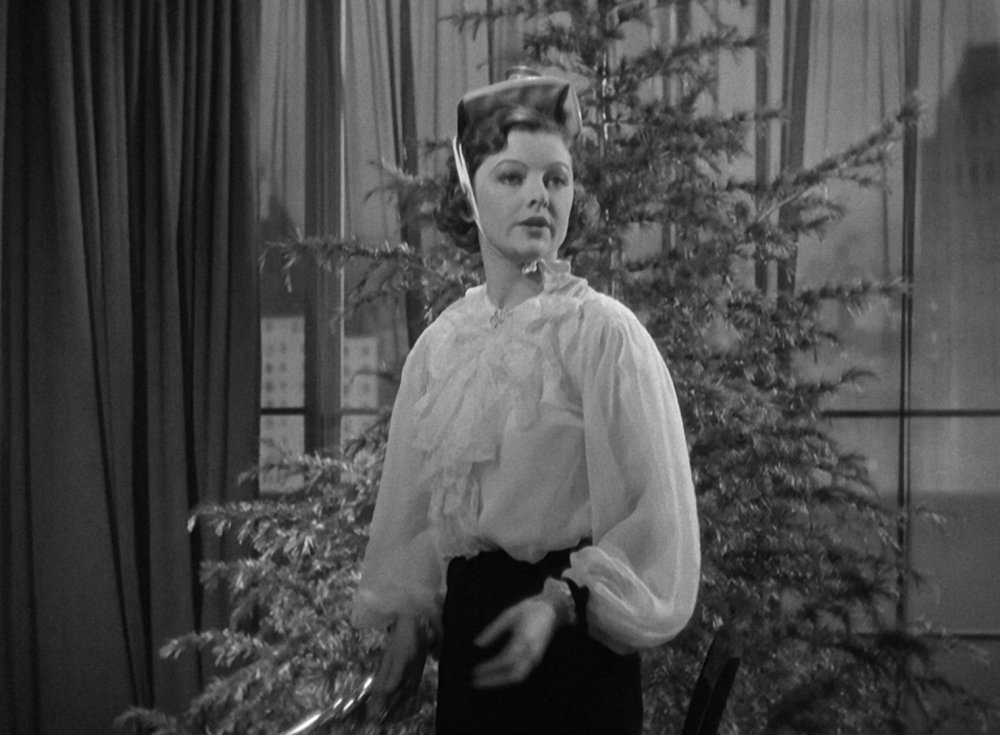
That plot that I mentioned takes a back seat to the couple kicks off when a young woman named Dorothy Wynant (Maureen O’Sullivan) implores Nick to search for her missing father (the thin man of the title). All manner of suspects start to stack up as the case is quickly complicated by a murder. That The Thin Man is set over the holidays provides a neat disparity between action and environment, making this a great Christmas movie for the more acerbic type. Nick and Nora’s lazy affluence— and Nick’s gutter associates— do that even without the dark mystery they become involved in. The couple throw a Christmas Eve party in their swanky New York City hotel, where cops and criminals are their primary guests. Nora, nursing a hangover with an ice pack tied around her head, snips, “The next person that says ‘Merry Christmas’ to me, I’ll kill him.” On Christmas morning, Nick shoots the ornaments off their tree with a machine gun, while Nora compliments Nick on the watch that he has no memory of gifting her (the implication being that she bought it for herself). And when we first meet Nora, in a bar brimming with holiday revelers, she performs a marvelous pratfall while juggling an armful of presents. It’s just the right touch to make The Thin Man perfect alternative holiday viewing, and I for one am looking forward to watching it again soon— and rediscovering who the killer is.
The Thin Man is currently streaming for free on Tubi, and is available to watch on all digital platforms. Runtime: 91 minutes.

 Katie at the Movies
I can relate! The last time I revisited In the Heat of the Night (1967), I couldn’t remember who the killer was, despite having seen the movie at least half a dozen times. Anyway, I had forgotten that The Thin Man takes place during the Christmas season, so thanks for the reminder. I might rewatch it this month. By the way, have you seen Murder by Death (1976)? Maggie Smith and David Niven do a fantastic job spoofing Loy and Powell’s Nick and Nora.
LikeLiked by 1 person
Yes, that bit of Murder by Death is so funny! “Dick and Dora Charleston,” haha. Thanks for reading!
LikeLiked by 1 person