It begins with a sweeping shots of the New York City skyline, just as that magic hour when the sun begins to peak over the horizon hits. The light dazzlingly reflects off the buildings, the water and windows of icons tall and small appearing gloriously warm as the strains of “Oh, What a Beautiful Mornin’” from the classic Rodgers and Hammerstein musical “Oklahoma!” plays over the footage. Highest 2 Lowest jumps back and forth between numerous tones and moods throughout its runtime, but this soaring sequence points to how it’s ultimately a collage of director Spike Lee’s myriad interests: music, history, heritage, and New York City.
As the song comes to a close, the camera finally lands on an individual standing on the terrace of a lavish penthouse overlooking the Brooklyn Bridge. The man, David King (Denzel Washington), is talking on the phone. The rather chatty few scenes that follow this fill us in on what we need to know: King— who lives with his wife Pam (Ilfenesh Hadera) and teenage son Trey (Aubrey Joseph)— is a music mogul, known for having the “best ears in the business.” The company he founded, Stackin’ Hits Records, was once a hitmaker known especially for elevating new Black talent, but now it’s barely breaking even, and King’s colleagues are preparing for a lucrative buyout. They don’t know, however, that King is planning to put up almost his entire fortune to buy back his shares, and by extension, his control over his legacy. But that plan is turned on its head in an instant after King receives a shocking phone call: Trey— who just that day he dropped off at basketball camp— has been kidnapped, the perpetrators demanding $17.5 million in Swiss francs as ransom for his safe return.
Alan Fox’s screenplay for Highest 2 Lowest is a reimagining of Akira Kurosawa’s 1963 police procedural High and Low, itself a loose adaptation of Evan Hunter’s 1959 novel King’s Ransom. Highest 2 Lowest largely follows the same beats as its source material, particularly in its patience-trying first act, so those familiar with the Kurosawa film won’t be surprised at where Lee’s goes: it turns out that there was a mix-up, and the kidnappers mistakenly took King’s driver’s (Paul, played by the reliably great Jeffrey Wright) son Kyle (Elijah Wright) instead. While Trey arrives home safely, the criminals still demand the same ransom from King for Kyle, throwing the former into a moral quandary. Paul may work for him, but the snippets of their interactions we witness underscore a deep friendship that borders on brotherhood; the same can be said for Trey and Kyle. Putting up that kind of money for another man’s son may be the right thing to do, but it also would throw King’s plan to buy back Stackin’ Hits out the window.
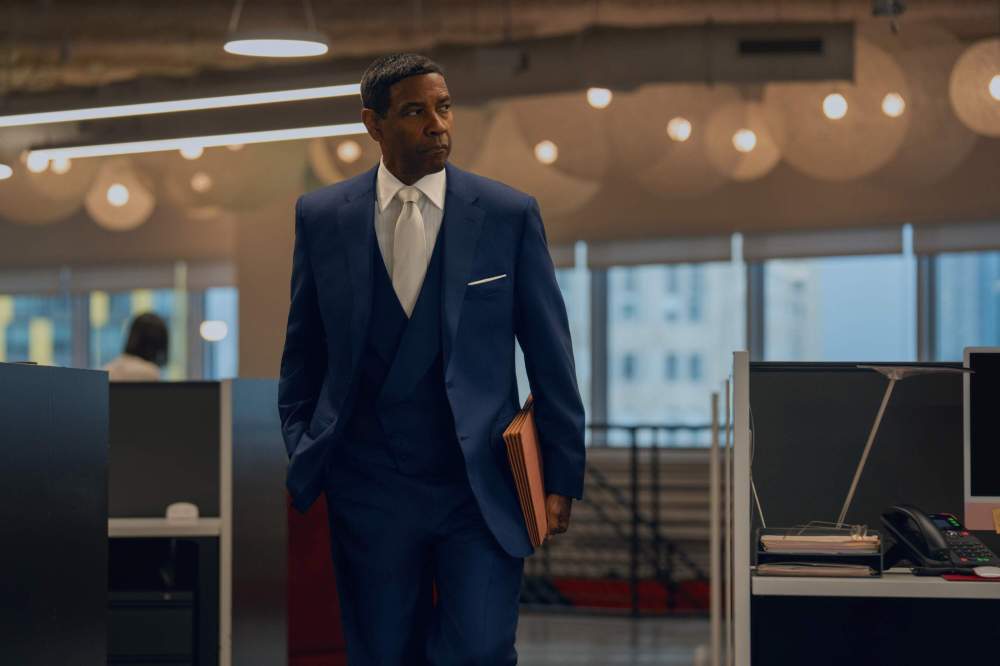
Highest 2 Lowest is an odd film that finds Lee occasionally making some head-scratching directorial choices. Cinematographer Matthew Libatique (who has worked with Lee previously, including on his last collaboration with Washington, 2006’s Inside Man) frequently observes scenes with a wide lens that allows the full scope of the characters’ surroundings to populate the frame, and rarely opts for close-ups, even when the bulk of these early scenes concentrate on heavy, intimate conversations. There’s almost too much coverage in some of these sequences; when King, early in the movie, expresses his desire to buy back his shares to Patrick (Michael Potts), the company’s other stakeholder, the film makes frequent, unnecessary cuts back-and-forth between them, from long shots to medium shots and from all different angles of the little office space they’re situated in. The result is disorienting to the point of distraction, and it’s difficult to discern the reason for it; there’s little purpose to throwing the viewer off in such a straightforward, conversational scene.
Other pieces of Highest 2 Lowest feel incongruous, but they work. Howard Drossin’s soaring score often feels too grand for the scenes it plays under, largely confined to the interior of the penthouse and dialogue between King, his family, and the detectives assigned to the case (played by John Douglas Thompson, LaChanze, and Dean Winters, they’re all gruff and ineffectual in equal measure). But the way these scenes, with their heightened emotions, play recall, more than any other recent movie, bombastic old school Hollywood melodramas.
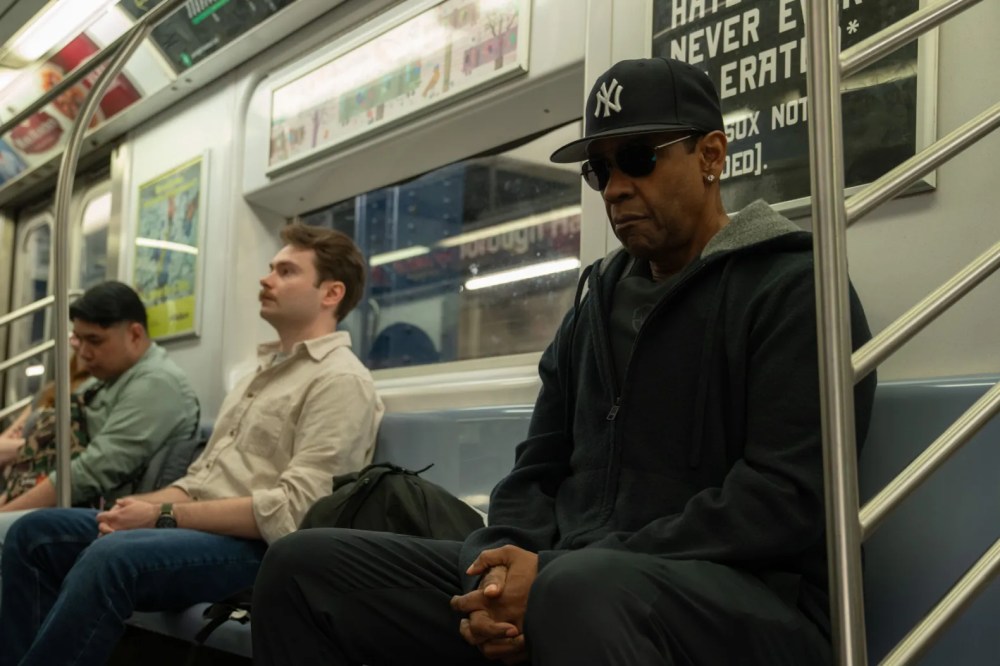
When I say Highest 2 Lowest is an odd film, however, I say it with affection. Because while it’s bisected in a similar manner to High and Low, the gradual-bordering-on-arduous first half of Lee’s film playing to his influences, once the ransom plan is put into place and the action moves out of the penthouse and down to the streets of NYC, it unequivocally transforms into a Spike Lee Joint. And a rocky film becomes a good film, and then a great one. This is Lee wholeheartedly in his bag, implementing the original story’s use of levels as an indicator of class difference (King’s impossibly high penthouse that gazes out over the entire city versus the subway and later, his rival’s basement recording studio) in a manner that is decidedly his. The second King steps onto a subway heading toward Yankee Stadium, backpack filled with money slung across his shoulders, Highest 2 Lowest takes off with a burst of newfound energy, the shift in action accented by a shift in score (light, upbeat tracks by Scottish composter Fergus McCreadie, fusing jazz with traditional folk, largely replace the heavy drama of Drossin’s music). At one point, as King waits for instructions on a train becomingly increasingly packed with baseball fans, Lee cuts between the train and a Puerto Rican street festival occurring nearby, in which the likes of Rosie Perez, Anthony Ramos, and famous Puerto Rican bandleader Eddie Palmieri appear as themselves. The traditional music from that event is then laid over the enthusiastic “Let’s go Yankees!” chants of the subway passengers, crafting a cacophony of sounds that couldn’t reflect the diversity of NYC better.
The visual aesthetic changes too, transitioning from the glossy digital look of the first half to gritty filmic grain. Close-ups are used more frequently too, more notably in two key, thrilling scenes that pit King and Yung Felon (ASAP Rocky, who contributes a couple of tracks to the soundtrack as well), a young rapper who idolizes King’s success, against each other. ASAP Rocky holds himself well against Washington, deftly channeling all the raw talent and rage and egotism that Lee may be saying is representative of many young people who rank money and fame above the quality of the art. In fact, there’s some push-and-pull throughout the film as to whether or not Lee— whose career in recent years has seen a bit of a resurgence with the acclaim that accompanied such films as BlacKkKlansman and Da 5 Bloods— is actually out of touch, or is cognizant of the fact that the creative landscape has changed, the need to continually reinvent yourself to remain relevant increasingly vital. The Kamala Harris poster seen hanging in Trey’s bedroom expresses the former; some pointed complaints about AI and social media presence as a barometer for success suggest the latter.
It’s an apt through-line for a film whose form is continually reinventing itself throughout its runtime, and whose protagonist— and the actor playing him— is doing the same. That King’s business success has meant that he has drifted away from loving the thing that got him started— the music itself— is told to us more than shown, although the furnishings in his penthouse serve a dual purpose. The pieces of Black art and culture hanging on his walls (a large painting by Kehinde Wiley, a poster advertising Muhammad Ali’s fight against George Foreman, photos of the legends of soul— Aretha, Stevie, James Brown— as well as magazine covers picturing himself in his youth) could alternately indicate a respect for heritage and history and the desire to cultivate new talent that could someday be elevated to such a lofty status, or serve as a reflection of his vast wealth. As the plot begins to turn in the middle, King becomes harder to warm to compared to Toshiro Mifune’s Kingo Gondo in High and Low, his acquiesce to supplying the ransom hinging more on a realization of what the social media fallout could do to his reputation that a genuine desire to help a dear friend. But Washington couldn’t be better, thrillingly adjusting his performance to what the scene requires. He jumps from confident and charismatic icon, the sort who’s stopped by others to proclaim what an inspiration he is to them, to sweaty panic as his money slips through his fingers (literally) and his business deals threaten to crumble, to doting family man, to a take-charge action hero more akin to Washington’s roles in films like The Equalizer series. But he’s so consistently great, these leaps, or any lack of character consistency, never strain credulity. It’s his fifth collaboration with Lee, a partnership that began in 1990 with Mo’ Better Blues, but they haven’t worked together in nearly 20 years. Both director and star are firmly old men now. Highest 2 Lowest labors on for a couple beats longer than it needs to, and lacks the angst and trenchant social commentary of Kurosawa’s original. But Lee and Washington craft a piece that, warts and all, works for different reasons, existing simultaneously as an affectionate tribute to their influences and an effective affirmation that they’ve both still got it. It couldn’t be more exciting.
Highest 2 Lowest is now playing in theaters, and will be available to stream on Apple TV+ on September 5. Runtime: 133 minutes. Rated R.

 Katie at the Movies