Director Steven Soderbergh and writer David Koepp understand that there are infinitely more frightening things in the world than paranormal entities. That becomes increasingly evident throughout Presence, the duo’s second collaboration following their crackerjack 2022 thriller Kimi. Perhaps it’s rooted in the fact that they were each somewhat inspired by their personal close brushes with the supernatural. Or maybe that they originally conceived of the film as a remake of The Uninvited, a 1944 ghost story set in a seaside manor in which the hauntings stem from the trauma and familial strife of a local girl. Presence is similarly not very scary— in the “boo” sense, at least— but it is a lot of other things that arguably hit harder, and linger long after it’s over: the dysfunction and subsequent destruction of a family in crisis is sneakily devastating, unfolding via a voyeuristic lens that permits the viewer to drop in on each family member’s most private moments in equal measure.
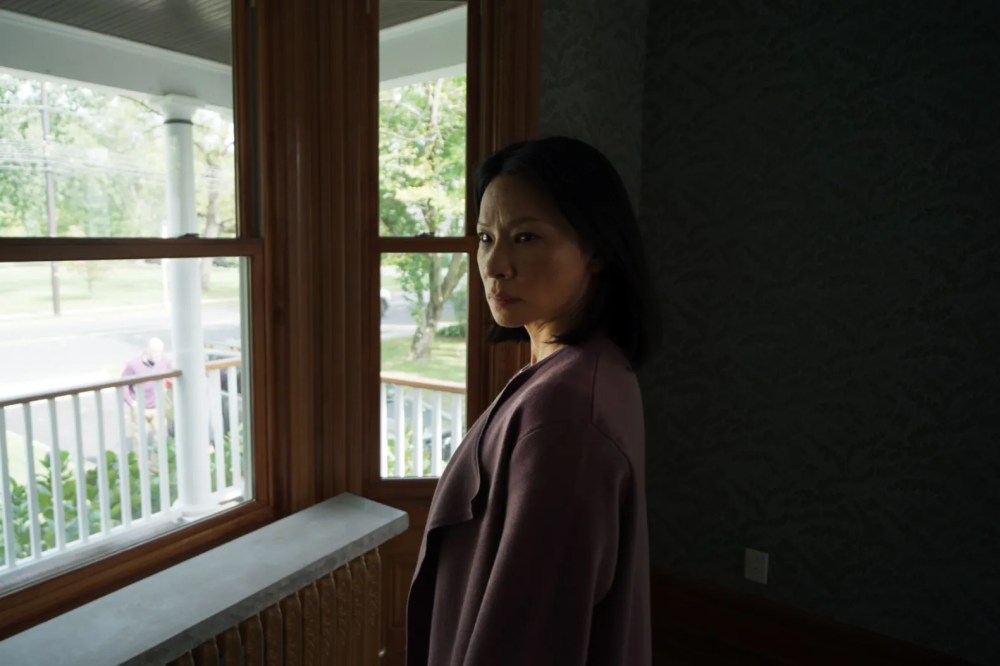
That latter aspect is attained by telling the story from the first person point of view of an unknown, unseen presence that resides in a stately old home, which at the start of the film is being shown by a harried realtor (a brief appearance by Julia Fox) to a family of four: dad Chris (Chris Sullivan), mom Rebecca (Lucy Liu), and their teenage children, Tyler (Eddie Maday) and Chloe (Callina Liang). Rebecca’s exuberant over the find (I’m not sure that she even looks at it beyond the kitchen before jumping on making an offer), presumably because it’s located in an impossible-to-get-into school district that would be major for Tyler’s athletic and academic future, but a couple lines from the much more hesitant Chris indicate that the family is trying to move past something else as well: an event that was traumatic for Chloe, specifically. The fade-to-black transitions that punctuate every sequence, sometimes easing the viewer out of one scene and into another, sometimes arriving with an almost comic abruptness, convey the passage of time. The next time we see the house, it’s being renovated by construction workers, some of whom refuse to enter certain rooms because they sense the spirit. When we see it again, the family has fully moved in. Soderbergh’s game attitude toward playing not only with different genres, but different forms, is on full display as he— also serving as the film’s editor and cinematographer— floats the camera around the interior of the home and the people within it, sometimes using wide angles to take in an entire room, sometimes hovering uncomfortably close to one or two characters, right over their heads. What initially plays like a cutesy and somewhat disorienting gimmick is bolstered by Koepp’s script, and how the two work hand in hand, the presence’s ability to drop in and out of conversations unseen allowing for gradual reveals about the characters: Rebecca’s prioritizing Tyler’s future over Chloe’s mental health, for example, or the fact that Tyler bullies others to attain popularity, or that Chloe recently lost two friends after falling in with a questionable crowd. The concept of the camera as a character takes on a more literal meaning than usual, and that camera is pretty active not only as an observer, but as an entity with its own ideas and fears; frequently, after a particularly explosive incident, Soderbergh will retreat the camera into Chloe’s bedroom closet, which becomes a safe place for the presence to hide and regroup. Presence is set entirely inside the home, and the camera’s near constant movement creates a deep sense of place in addition to a sense of claustrophobia that only mounts as the drama does.
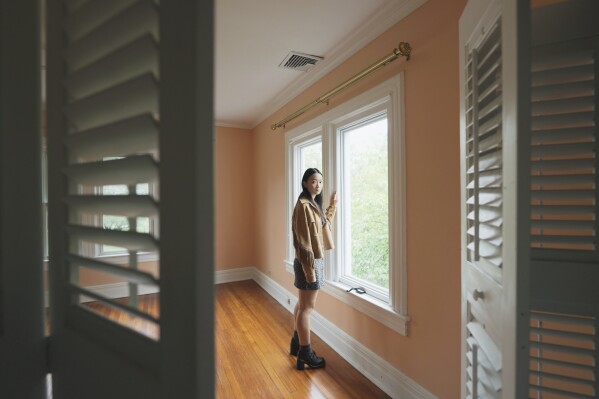
Because that’s what Presence is: a family drama that shifts almost imperceptibly from intensely involving to profoundly devastating, a ghost story not only about the past that haunts us but that oh so thin line between life and death that we all carry with us as long as we’re alive. The core group of actors don’t always hit— Liang is a wonderful find with an incredibly expressive face that serves this story well, Liu is great but underutilized— and there are some plot points that don’t fully cohere or lead to a satisfying payoff, but when a film is this invigorating and possesses such a strong emotional core, it’s difficult to quibble about little things that fall by the wayside in the wake of such a shocking and powerfully wrought finale.
Presence is now playing in theaters. Runtime: 85 minutes. Rated R.

 Katie at the Movies