I wasn’t so sure that this year ended up being such a great one for movies, at least for me. Some of 2024’s most acclaimed mainstream hits like Challengers, Dune Part 2, and Anora that have been sweeping the awards circuit were mostly misses for me. But when I started combing back through my Letterboxd diary to compile my list of favorites released over the last calendar year, I ended up with almost 50 movies. Many of these were premieres that I was fortunate enough to cover out of film festivals (this year, I attended Berlinale— my first European fest— and True/False, and virtually covered Tribeca and Fantastic Fest). Some I caught on out of town trips (I loved seeing India Donaldson’s wonderful debut feature Good One at the Chicago Critics festival last May, and was the only person in the theater settled in for Radu Jude’s incredible Do Not Expect Too Much From the End of the World at the Kan-Kan Theatre in Indianapolis immediately following the solar eclipse) and at local venues (I was surprised by how riveted I was by Belgian/Congolese filmmaker Baloji’s mythical drama Omen when I wandered into it mostly blind at the African Film Festival where I live in St. Louis). Some bypassed my local cinemas (or cinemas altogether) but were just as great experienced at home, like Rachel Lambert’s tender drama Sometimes I Think About Dying. Below, I wrote a little about my top 25 favorites of the year, with a list of more great movies below that, and another small list of movies that I watched at festivals this year that I loved and will hopefully get proper distribution and release in the new year. Click the links in the titles to read my full review of each movie where applicable (you can also find all of these movies collected together on my Letterboxd here).
And thank you to everyone who has read my work this year. Despite my best efforts to disappear (off social media, at least), traffic to my site has more than tripled between last year and this year. I appreciate everyone who has still managed to find this blog (which turned eight this past November!) and look forward to continuing to engage with you all in the coming year.
- DO NOT EXPECT TOO MUCH FROM THE END OF THE WORLD
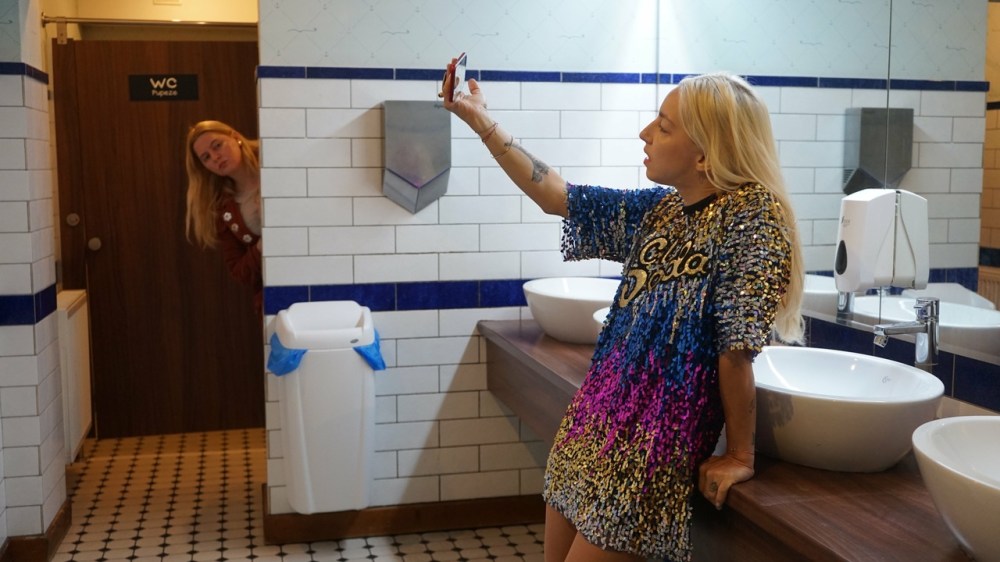
As an independent contractor who spends the majority of my time driving around to whatever random little places my employer tells me to go, perhaps Radu Jude’s Do Not Expect Too Much From the End of the World hit different for me. The Romanian writer and director’s epic black comedy follows a day in the life of an overworked and underpaid production assistant named Angela (Ilinca Manolache) as she drives around Bucharest casting a work safety video a large corporation commissioned from the company she works for. Jude’s prior filmography proved in spades what a politically savvy filmmaker he is (particularly his terrific 2021 comedy Bad Luck Banging or Looney Porn), but this film— and I mean this in the most complimentary way possible— is the most 2024 movie imaginable. Jude layers his commentary on the harried and frequently inhuman nature of the gig economy on top of footage from a 1982 Romanian film about a female taxi driver called Angela Goes On (the star of which, Dorina Lazar, also appears in this movie) and interspersed between Angela’s creation of viral TikTok videos, in which she adopts a foul-mouthed, misogynist persona. He further plays with form in the division of the movie into two parts, the first of which is sprawling and black-and-white, the second of which is in color and filmed in one long take. At nearly three hours long, the final film is dense and sprawling and— which all of the ideas it contains— challenges its audience to thoughtfully engage with it. But that’s exactly what every great movie should strive to achieve, and Do Not Expect Too Much From the End of the World is nothing short of a masterpiece.
Do Not Expect Too Much From the End of the World can be streamed on Mubi. Runtime: 163 minutes. Rated R.

2. NICKEL BOYS
I read Colson Whitehead’s novel The Nickel Boys for the first time a few years ago. He’s one of my favorite working authors, and like his novel The Underground Railroad, it shook me deeply. Director RaMell Ross’ film adaptation of the book is no less extraordinary, making full use of the cinematic language to tell the story in the most invigorating and empathetic way possible. Nickel Boys is largely set in Florida circa 1962, and follows two young Black men, Elwood (Ethan Herisse) and Turner (Brandon Wilson) set to the Nickel Academy reform school. Nickel is segregated; the white students are treated well, while the Black students are not granted educational opportunities, used for free labor, abused and sometimes— which the school administrators try to keep on the down-low— killed. Ross and cinematographer Jomo Fray shoot Nickel Boys almost entirely from a first-person perspective, flipping between the POVs of Turner and Elwood. It’s an unconventional choice that— not unlike my other favorite film of the year, Do Not Expect Too Much From the End of the World— challenges audiences to overcome any discomfort they may find with the format and really engage with the world through the protagonists’ eyes. And that world is trying and cruel, but Nickel Boys is sprinkled with warm moments and memories that transform relentless tragedy brought on by systemic racism into something deeply human.
Nickel Boys will be released in theaters in January. Runtime: 140 minutes. Rated PG-13.
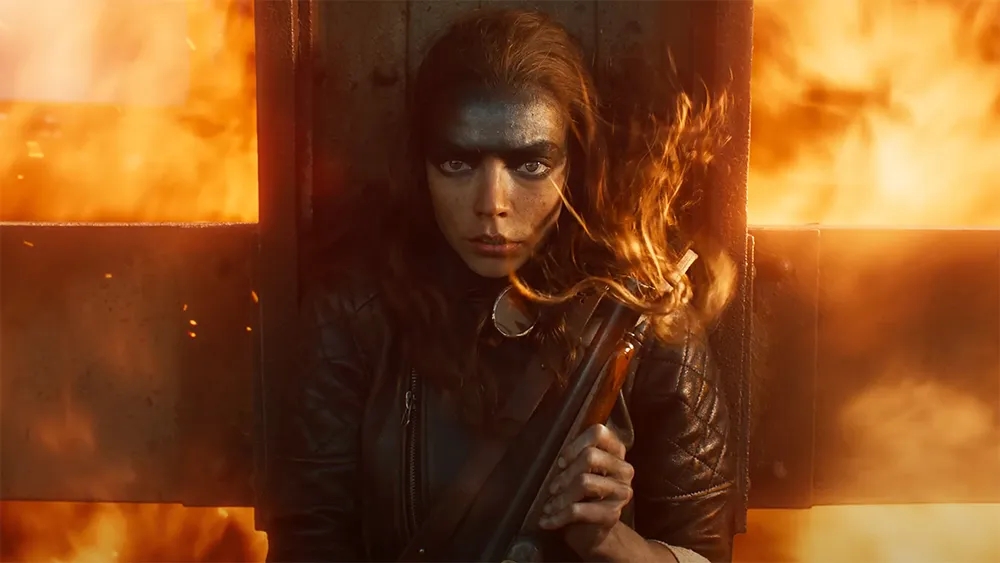
What could possibly top George Miller’s 2015 dystopian epic Mad Max: Fury Road, which was almost immediately widely praised upon its release as one of the greatest action movies of all time? Furiosa: A Mad Mad Saga, Miller’s prequel to that film, doesn’t, but it does accomplish something almost equally as impressive: taking a completely different approach narratively, while still loading it up with mind-boggling stunts and visuals. Anya Taylor-Joy takes the role of younger Furiosa (played by Charlize Theron in Fury Road) the story of her childhood and later ascension to the rank of Imperator unfolding in sprawling, almost fable-like fashion, opting for gradual emotional heft over the more streamlined and breathless Fury Road. But aided by a colorful array of supporting players (most notably Chris Hemsworth’s gonzo warlord Dementus) and top-notch vehicular mayhem, Furiosa carves its own path as a thrilling character study.
Furiosa: A Mad Max Saga can be streamed on Max. Runtime: 148 minutes. Rated R.

Ryusuke Hamaguchi’s Drive My Car was one of my favorite movies of 2021. It was also the first work in the Japanese director’s filmography that I had seen; in the couple of years since then, I’ve managed to catch up with several of his other movies, from his student feature Passion to his five-hour-long 2015 drama Happy Hour to his Vertigo take, 2018’s Asako I & II, and found things to love about all of them. So I wasn’t really surprised that I also loved his newest feature, Evil Does Not Exist, but I was surprised by the turns it takes. Evil Does Not Exist is set in a rural mountain village in Japan, where a corporation comes in proposing to establish a glamping site upstream, potentially devastating the town’s delicate ecosystem. The film unfolds with the same glacial pace as many of Hamaguchi’s previous works— look no further than the virtually silent, long takes observing the protagonist at work that open the film, or the lengthy sit-in on a community meeting— making its later, violent swerves all the more shocking. The broad themes are familiar— man versus nature, corporate greed— yet they’re mined with the assurance and intricacy of a master filmmaker who knows exactly how to say what he wants to say.
Evil Does Not Exist can be streamed on the Criterion Channel. Runtime: 106 minutes.

5. SOMETIMES I THINK ABOUT DYING
Admittedly, a lot of my love for Sometimes I Think About Dying— director Rachel Lambert’s debut feature based on a 2019 short film—likely stems from how close I felt to the protagonist. Daisy Ridley stars in the independent drama as Fran, a socially awkward woman who leads a lonely existence, trekking from her Oregon home where she lives alone to the office where she works and back again, in between which acts she often indulges in daydreams in which she imagines her own death. But a spark forms between her and a new coworker, Robert (Dave Merheje), after she makes him laugh with an off-handed remark, and his efforts to engage with her push her outside of her bubble. Sometimes I Think About Dying may be the sort of quiet and quirky indie that only speaks to introverts, but its impressive how effortlessly it fills out what living such an isolated existence is like: the prospect of small talk hanging over your head like some dangerously heavy object, envy at how those around you appear to have no issues connecting with other people, how normalized frequent thoughts of suicide become (anything to get out of the current hole you’re in), and how thrilling it can be when someone shows more than a superficial interest in you. Much of the film’s success with that has to do with the script, the textured interludes, and Lambert’s patient direction, but Ridley turns in one of the best performances of the year, saying maybe a handful of words in the film’s opening scenes, yet conveying such a rich sense of her character’s interior life through her posture and expressions and gestures and how she does deliver that handful of words. It’s a film that cut straight through me almost as soon as it began.
Sometimes I Think About Dying can be streamed on Mubi and Kanopy. Runtime: 93 minutes. Rated PG-13.
6. DAHOMEY
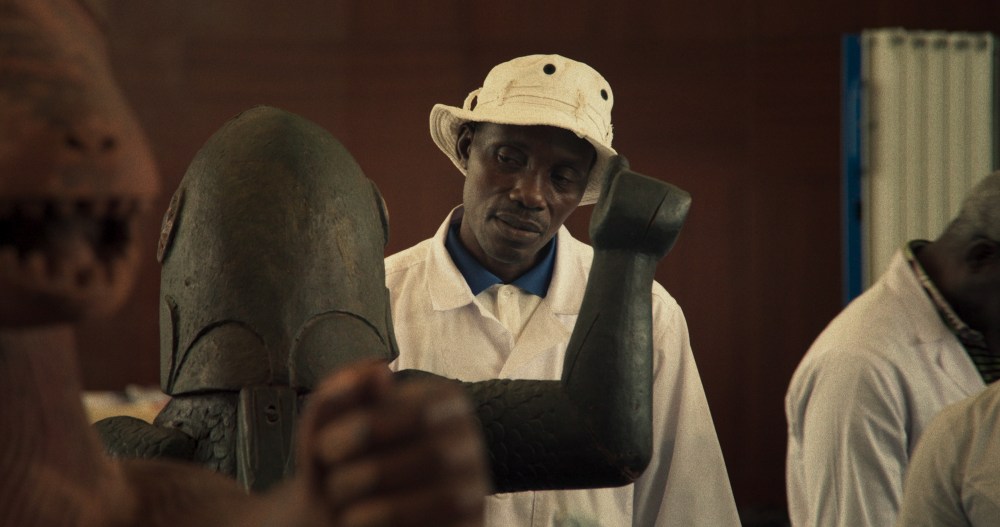
I attended the world premiere of Mati Diop’s Dahomey at this year’s Berlinale, and was immediately bowled over by what the filmmaker managed to accomplish in a mere 68 minutes. Not that that should be much of a surprise, given the sometimes actor/sometimes director’s penchant for her craft; it’s been five years since the release of her previous feature, the enchanting narrative Atlantics. While Dahomey is a documentary, she imbues it with the same sort of mythical touches that mark her entire filmography, blending fact and fiction to tell the story of the return of 26 African artworks stolen by France during their colonial rule over the region to the Kingdom of Dahomey (located within present-day Benin). Diop observes the transportation and display of these objects, anthropomorphizing the 26th piece, a statue representing Dahomey’s King Ghézo, by giving it a voiceover recounting everything from its time in storage in a Paris museum to its memories of Africa and feelings about returning to its homeland. But she also devotes a significant part of the film to a discussion mounted between students at the University of Abomey-Calavi, in which they lay-out their views on the return of these objects, some positive, some negative (there’s quite a bit of criticism over celebrating the return of a mere 26 pieces when thousands were taken altogether). Her innovative approach to the subject is both dreamy and cerebral, bringing past and future together and granting a voice to the voiceless.
Dahomey can be streamed on Mubi. Runtime: 68 minutes.
7. ALL WE IMAGINE AS LIGHT
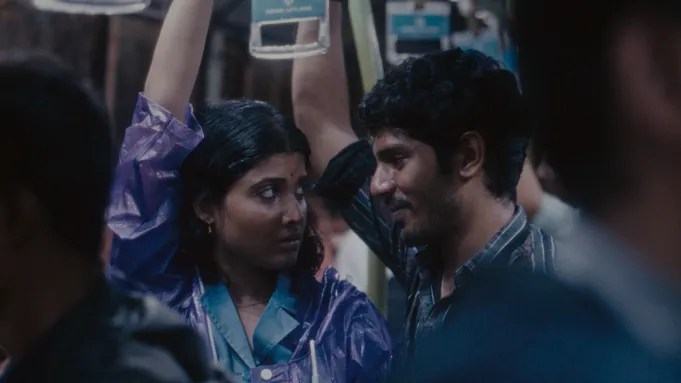
Writer and director Payal Kapadia’s drama All We Imagine as Light is a film that’s brimming with humanity. It follows two nurses in Mumbai who are also roommates: Prabha (Kani Kusruti) and Anu (Divya Prabha). Their contrasting approaches to both work and relationships are immediately apparent: Prabha is older and reserved. Her husband, who she hasn’t seen or heard from in a few years, moved to Germany for work, yet she deters the advances of a doctor at the hospital. Anu, meanwhile, is more vivacious and outgoing, and in the thick of a passionate affair with a Muslim man named Shiaz (Hridhu Haroon). A third woman, the hospital’s cook, Parvaty (Chhaya Kadam), enters the picture when Prabha tries to help her following her eviction from her home by a builder who wants to construct a high-rise in its place. This tangled tale of three women is always absorbing thanks to the performances and Kapadia’s story, which emphasizes desire, both repressed and brimming-over. Ranabir Das’ gorgeous cinematography highlights both the crowded, pulsating city and the calm rural spaces outside it with a delicate, romantic touch, and the final scene is as lovely an ending as any you’ll see in a movie this year.
All We Imagine as Light is currently placing in select theaters. Runtime: 118 minutes.

Writer and director Jane Schoenbrun took continues their exploration of the relationship between screen time and personal identity from their first feature, 2021’s We’re All Going to the World’s Fair, and expands it with a bigger cast and bigger budget. But I Saw the TV Glow is even more revolutionary. It opens in the mid-1990s with the bond that forms between isolated teenagers Owen (Justice Smith) and Maddy (Brigette Lundy-Paine) over their favorite TV show, The Pink Opaque. Schoenbrun’s film accomplishes so much more beyond mimicking the mid-90s young adult aesthetic to a remarkably accurate and amusing degree. Moving through time and between reality and fantasy, the story takes unexpected and often heart-breaking turns; viewers’ attempts to read into its sometimes murky narrative and rich imagery have led to reads into it as an allegory for trans life, teenage loneliness, and media as a refuge. Smith and Lundy-Paine deliver two of the best and most wrenching performances of the year in what is absolutely one of the most singular movies of the decade.
I Saw the TV Glow can be streamed on Max. Runtime: 100 minutes. Rated PG-13.

9. DAUGHTERS
I don’t know if I’ve been to any film screening this year that had such an audible impact on the audience as this film did when I saw it at the True/False Film Festival following its Sundance premiere. The documentary from directors Angela Patton and Natalie Rae follows four young girls whose fathers are incarcerated, and the lead-up to and aftermath of a special Daddy Daughter Dance. It’s part of the Date with Dad Weekend, a program established by Patton’s Girls for a Change organization, which grants families a day of normalcy and physical touch that’s typically prohibited by prison rules. Daughters diverts focus away from the nature of the crime and toward the impact these strict rules have on the families of the incarcerated. While the dance is the film’s centerpiece, the directors follow the families over several years, allowing the audience to experience their triumphs as well as their sorrows. The result is an urgent plea for change accomplished through empathy and humanity. The audience I saw it with alternately cheered and sniffled. Daughters is an ugly cry movie if I’ve ever seen one, but one that is artfully realized.
Daughters can be streamed on Netflix. Runtime: 108 minutes. Rated PG-13.

10. CLOSE YOUR EYES
Would that Close Your Eyes wasn’t the first film Victor Erice had made in over 30 years. But maybe if the Spanish filmmaker behind 1973’s The Spirit of the Beehive (widely regarded as a masterpiece of Spanish cinema) had been more prolific, Close Your Eyes wouldn’t have had as much of an impact. The drama is largely set in 2012, approximately 20 years after the disappearance of actor Julio Arenas (José Coronado) while shooting a movie. When a true crime TV series revives the case, Arenas’ director friend Miguel (Manolo Solo) is drawn back in, leading him to reunite with the movie’s editor, former friends and lovers, and Julio’s daughter Ana (Ana Torrent, who appeared in Erice’s Beehive as a child). The result is a poignant old man/ode to cinema movie, but even that statement feels too dismissive of the miraculously moving nature of Erice’s work, which trades in any initial pessimism and cynicism for something warm and perhaps even optimistic. Given his slight filmography and age, Close Your Eyes will likely be Erice’s last feature, but what a personally and universally resonant movie to go out on.
Close Your Eyes can be rented and purchased on all digital platforms. Runtime: 169 minutes. Rated R.
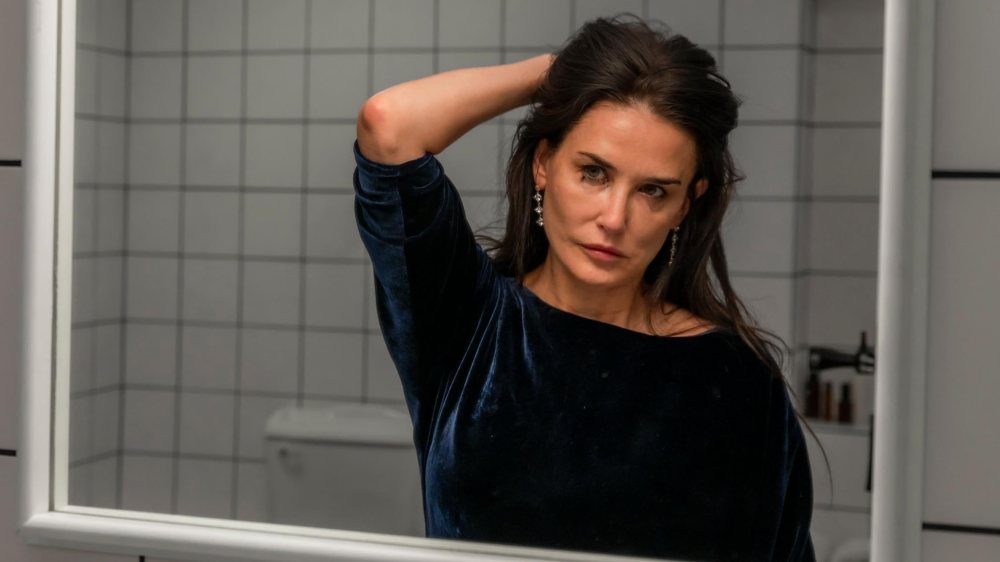
11. THE SUBSTANCE
Has any film this year been more divisive than writer and director Coralie Fargeat’s The Substance? I happen to belong to the camp that her squirm-inducing body horror feature is a modern feminist masterwork, in no small part thanks to an incredibly empathetic lead performance from Demi Moore. Moore plays Elisabeth Sparkle, a formerly huge Hollywood star who, as she turns 50, is fired from the aerobics show she hosts in favor of a fresher, younger face. Her distress leads her to try out a black market serum called “The Substance,” which promises a more beautiful, more perfect version of oneself. Literally, Elisabeth’s body is discarded in favor of a hot new persona she dubs Sue (Margaret Qualley). The broad beats of the story couldn’t be more predictable— of course Elisabeth is going to abuse the serum and bad stuff’s gonna go down— but it takes delightfully unhinged turns aided by the film’s purposely leering camera and remarkable makeup and visual effects. And it never feels too far outside the realm of possibly, because the sense of self-loathing on display is so real. Look no further than a scene in which the still gorgeous Elisabeth prepares to go out on a date with an old school friend, only to be slowly torn apart by the specter of the “better” version of herself. In a film that’s pretty brutal (and certainly unsubtle), she generates so much empathy and so much recognition for the harsh standards imposed on women.
The Substance can be streamed on Mubi. Runtime: 140 minutes. Rated R.
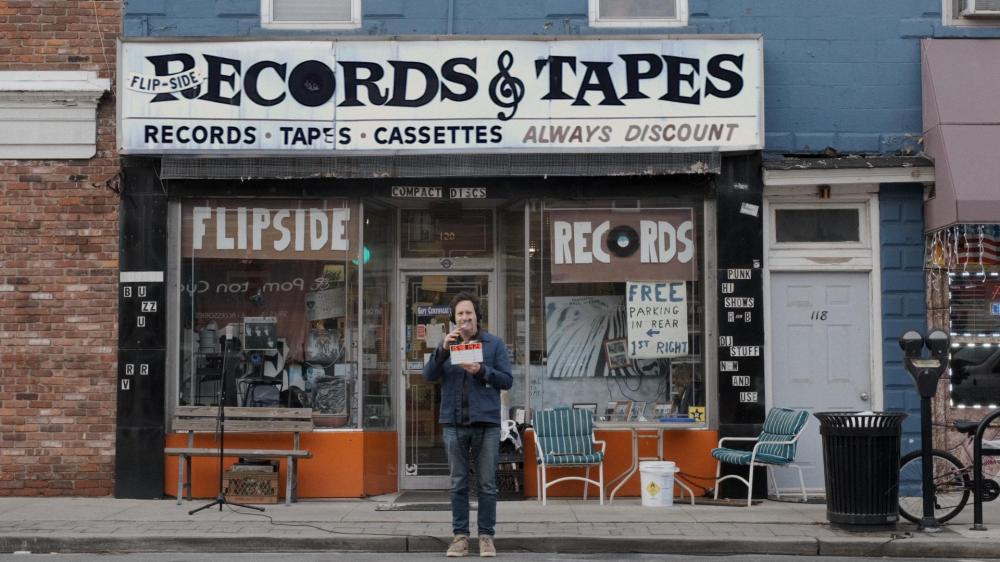
12. FLIPSIDE
With his film Flipside, documentary filmmaker Chris Wilcha crafts the cinematic equivalent of thumbing through a stack of records, never sure what trash or treasure you may uncover behind the next one. The opening of the film flies through Wilcha’s early success— creating a Sundance-award-winning documentary feature on the side at his soul-sucking corporate job which led to opportunities with This American Life and Judd Apatow and a move from New York to Los Angeles— only to find him years later constantly putting creative projects to side in favor of more consistently-paying commercial gigs. Then, after a visit to the New Jersey record shop where he worked as a teenager, Wilcha throws himself into helping the owner revive the struggling business. In between all that, Wilcha revisits all the documentary projects he discarded over the years, from a profile of renowned photographer Herman Leonard to a portrait of writer Starlee Kine at work (only for her to come down with a severe bout of writer’s block). It all sounds messy and meandering, and sometimes it is, but it is with intent. Wilcha manages to merge new footage tracing his time at the Flipside record shop with the B sides of all his previous projects, finding in them a unified theme of allowing your failures to inform your successes. Flipside is a funny crowd-pleaser, a dizzying autobiography, and a tender musing on art and life, all at once.
Flipside can be streamed on Prime Video and Hoopla. Runtime: 92 minutes.

13. TRAP
As it goes with most people, M. Night Shyamalan’s filmography either hits or misses for me. I was one of the few who seemed to truly appreciate his 2021 thriller Old, but was mostly repulsed by 2023’s overly cruel end-of-the-world horror Knock at the Cabin. Trap is not only his best film in many years, but marks one of the most exuberant movie-watching experiences I’ve had this year. The film begins at a stadium, where affable Philadelphia firefighter Cooper (Josh Harnett) is taking his teenage daughter Riley (Ariel Donoghue) to a concert by her favorite artist, Lady Raven (Saleka Night Shyamalan, one of the director’s daughters). Cooper soon notes that there’s an unusually high police presence in and around the venue, and learns from one of the vendors that the FBI are there hoping to catch a serial killer known as “the Butcher.” If you’ve seen absolutely nothing about Trap, this may be a spoiler, but it’s pretty quickly revealed that Cooper is the Butcher himself, and he spends the rest of the concert— and the show’s unexpected aftermath— outsmarting the authorities, whose efforts are spearheaded by FBI profiler Dr. Josephine Grant (a rare theatrical film role for former Disney child star Hayley Mills). Drawing from a wealth of influences ranging from Brian De Palma to Taylor Swift’s Eras Tour, Shyamalan crafts a self-aware thriller that’s visually striking and entertaining as all get-out, made all the more remarkable by Harnett’s exciting lead performance— just look at how he contorts his facial expressions on the turn of a dime to leap from friendly to sinister. A lot of people have remarked on the film’s stupidity and lack of plausibility; the commitment to the latter is exactly what makes Trap one of the most thrilling mainstream Hollywood releases of the year.
Trap can be streamed on Max. Runtime: 105 minutes. Rated PG-13.

14. FLOW
It’s so simple: in a world devoid of humans, a flood brought on by a summon tsunami sees the joining of a black cat, a yellow lab, a capybara, and a secretarybird on a boat for survival. We get it— we’re all in the same boat. But Flow is the best animated film I’ve seen this year for a reason. Animated in a hyper-realistic style and utilizing real animal noises as sound effects, the otherwise silent Latvian film directed by Gints Zilbalodis often feels like we are watching real creatures, heightening both the sense of peril and empathy toward their plight. It’s crafted with such verve, locating emotion in movement: the flash of fear in the eyes of the cat as its flung into the water, the dog’s innocent playfulness as it approaches and withdraws from the other animals, the stoic poise of the secretarybird as it steers the boat, and how they all wordlessly come together to help each other, their differences under normal circumstances falling away. Visually striking and gorgeously scored, Flow is a hypnotic piece of art open for audiences of any age and persuasion to engage with.
Flow is now playing in theaters. Runtime: 85 minutes. Rated PG.

Part romance, part crime thriller, part something wholly different, Rose Glass’ sophomore feature is a genre-bending exercise that’s more concerned with creating a feeling and a mood than making any actual sense (to its benefit). Set in rural New Mexico in 1989, the film follows socially-awkward gym manager Lou (Kristen Stewart), who almost immediately falls for bodybuilder Jackie (Katy O’Brian) when she blows into town on her way to a competition in Las Vegas. The pair’s all-consuming love affair quickly becomes wrapped in violence brought on by Lou’s crazed brother-in-law JJ (Dave Franco) and her estranged father (Ed Harris), who manages the town and its inhabitants through his ties to some shady organizations. Gloriously violent, more than tinged with desire (emphasized by Glass’ lingering concentration on bodies), and frankly just plain weird, Love Lies Bleeding is an exuberant example of what genre cinema can be when a visionary filmmaker is given free reign and an incredible cast— the extreme ends that Stewart and O’Brian bring their characters to only proves that they are two of the most exciting performers currently working.
Love Lies Bleeding can be streamed on Max. Runtime: 104 minutes. Rated R.

16. THE BEAST
Welcome back, Martin Scorsese’s The Age of Innocence. Bertrand Bonello’s French feature The Beast explicitly draws inspiration from that adaptation of Edith Wharton’s famous novel (specifically how the clasp of a hand can be such a sultry expression of desire and longing), but is also a loose retelling of a work from one of her contemporaries, Henry James’ 1903 novella The Beast in the Jungle, about a man who believed some catastrophic event lay in wait for him. The Beast’s framing device sets the story in 2044. Artificial intelligence has taken over most jobs that humans are deemed too emotional for, prompting some people to undergo the process of purifying their DNA, eliminating any strong emotions so they can find better jobs. Gabrielle (Léa Seydoux), feeling unfulfilled at her job, decides to do this, and the procedure takes her back-and-forth from the present day to 1910 France to 2014 Los Angeles, where every time she connects with and falls for a man named Louis (George MacKay). Even when the story’s simultaneous juggling of numerous threads doesn’t hold up to close examination, its rapturous unraveling of themes like love, purpose, humanity, and destiny are deeply felt, if not entirely understood.
The Beast can be streamed on the Criterion Channel. Runtime: 146 minutes.
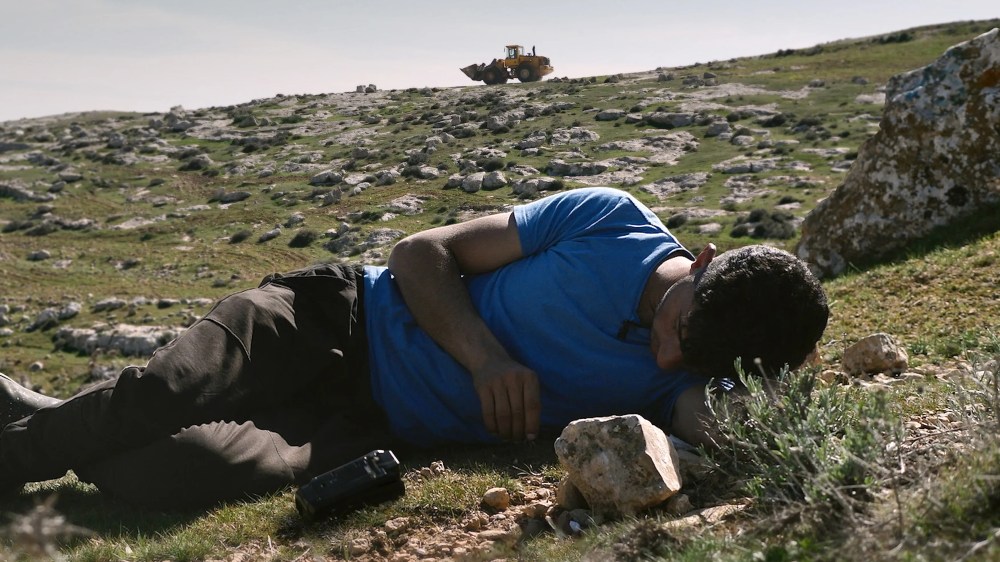
17. NO OTHER LAND
Four filmmakers share a directing credit on No Other Land: Basel Adra, Yuval Abraham, Hamdan Ballal, and Rachel Szor. Just that fact is enough to highlight the collaborative effort behind this documentary, a production born of a group of Palestine-Israeli activists. The filmmakers are active participants both behind and in front of the camera as they document the forced displacement of Palestinian civilians in Masafer Yatta, a region in the West Bank, by the Israeli military. Adra hails from that region, and he records the ongoing occupation that he’s been fighting since he was a child, integrating a decades-deep archive of videos from his family and neighbors into his own footage. His friendship with Abraham, an Israeli journalist trying to help in the resistance, opens up more questions and alternatives for ways that Palestinians and Israelis can co-exist , as their lives couldn’t be less equal: Adra faces violence and oppression daily, while Abraham lives freely. So much of the on-the-ground footage captured of Israeli violence inflicted on Palestinian civilians is devastating to watch; the danger that the filmmakers regularly placed themselves in could not be more deeply felt. There’s perhaps no more vital example of wielding the camera as a weapon— placing the atrocities of the current ongoing genocide in front of the eyes of viewers around the world who may otherwise feel secure in their distance from the conflict— and as historical record, capturing communities as they were prior to their rapid erasure. Powerfully compiled into a document that couldn’t be more damning or eye-opening, No Other Land— whose road to finding distribution has been an arduous one, given that it won the Documentary Film Award out of its world premiere at this year’s Berlinale (the aftermath of which led to further controversy)—may not be able to force people to care, but it can force people to watch, and to know.
No Other Land is playing in select theaters. Runtime: 95 minutes.

Memoir of a Snail edges dangerously close to being almost too cruel to enjoy. But just before it dives totally into the darkness, it always pulls back. Australian writer and director Adam Elliot’s stop-motion-animated film locates numerous moments of warmth and humor in the story of Grace Pudel (perfectly voiced by Sarah Snook), a young woman recounting her traumatic life to her snail friend, Sylvia. Grace’s life is filled with loss— the death of both her parents and forced separation from her twin brother— and loneliness— heartbreak and repressed desire leads to her, for a time, becoming a recluse and a hoarder. But Memoir of a Snail imbues tragedy with a black sense of humor and an open heart; it’s such a unique combination of empathy and weirdness, it’s hard not to be won over by it. And its exquisitely detailed sets and character designs— the end credits proudly state that every piece of this film was “made by humans”— make it a stunning piece of art to behold.
Memoir of a Snail is now playing in select theaters, and can be rented and purchased on all digital platforms. Runtime: 95 minutes. Rated R.

19. GHOSTLIGHT
Ghostlight really snuck up on me. A lot of that is by design; Kelly O’Sullivan’s script (which she co-directed with Alex Thompson) is structured so that the reveals about the characters and their circumstances are gradually peeled away over the course of the film, building to a riveting emotional crescendo. That it never feels manipulative despite the plausibility-stretching circumstances of the plot is a credit to the honesty of the emotions displayed throughout this drama, which concerns a construction worker named Dan (Keith Kupferer) who gets drawn into participating in a community theater production of Romeo and Juliet. Art as therapy is one of the running themes here— Dan, his wife Sharon (Tara Mallen), and their teenage daughter Daisy (Katherine Mallen Kupferer), who they’ve been experiencing disciplinary issues with, experienced an immense family loss— but that almost feels too shallow a way to describe how Ghostlight manages to have the events of the play run parallel to the events in the real world, constantly informing each other and providing opportunities to heal. Perhaps it helps that the three leads are husband, wife, and daughter in real life, but they play off each other and the rest of the supporting cast (which includes Dolly de Leon as fellow actor Rita) with so much ease, it makes it simple for the audience to embrace their highs and commiserate with their lows right along with them.
Ghostlight can be streamed on AMC+. Runtime: 115 minutes. Rated R.

One of my greatest festival regrets is returning my ticket to the Midnight Madness world premiere of Vera Drew’s The People’s Joker at the 2022 Toronto International Film Festival because my flight home left so early the next morning. That screening ended up being the only one of the festival; all secondary planned screenings were canceled after a “media conglomerate” citing copyright issues (despite the film being a parody, which would technically exempt it from copyright infringement under fair use) sent Drew and the festival an angry letter. For a while, it seemed like The People’s Joker may never seen the light of day, but it was finally widely released this year, and the result is pretty glorious. Spoofing character from the Batman comics, Drew also stars in the film as Joker the Harlequin, a trans woman who grows up in Smallville, Kansas and later moves to Gotham City to realize her dream of being a stand-up comedian. Less a coming-out story than a coming-of-age one, The People’s Joker grabs on to the kind of IP whose repeated rehashings in mainstream media often only reflect one point of view and violent shakes it into a cocktail of raucous satire, vulnerability, and self-acceptance, providing a unique point of view into how the stories we grew up with can inform our identity. That radical storytelling is reflected in the film’s visual style as well, an amalgamation of art and animation crowdsourced from over 100 different artists. It’s the rare film that far exceeds the hype built around controversy.
The People’s Joker can be streamed on Mubi. Runtime: 92 minutes.

21. THE REMARKABLE LIFE OF IBELIN
Mats Steen was a Norwegian man born with muscular dystrophy, making it increasingly difficult for him to participate in physical activities until his death at the age of 25. But that ending is only the beginning of Benjamin Ree’s documentary The Remarkable Life of Ibelin. Mats’ parents find that their son left behind the password to his blog, which they use to log in and write a post about his passing. What they discover is a whole other life their son— who they believe missed out on life— led that they didn’t know anything about, as the flood of responses they receive to the post describe Mats’ friendship and the positive impact he had on so many lives. And Ibelin is not about death, but an incredibly crafted celebration of that life. Ree seamlessly integrates interviews with Mats’ family and friends with animated recreations of his interactions in the game World of Warcraft, using logs that recorded his character’s— named Ibelin Redmoore— dialogue and actions. While parts of Ibelin edge toward the so-personal-it’s-difficult-to-watch stage, it’s an otherwise uplifting film, not only a memorialization of one specific person, but a tender reminder of how people touch so many others’ lives in ways big and small.
The Remarkable Life of Ibelin can be streamed on Netflix.
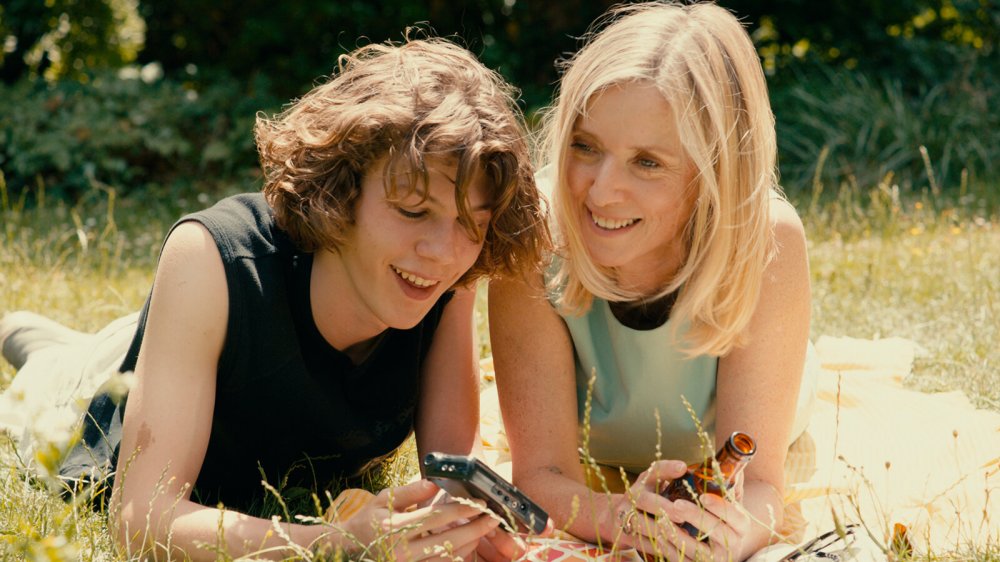
22. LAST SUMMER
Catherine Breillat continues to push at her reputation as a provocateur with her latest film, Last Summer. This drama centers around Anne (Léa Drucker), a high-powered lawyer who lives in Paris wither husband Pierre (Olivier Rabourdin) and their two young daughters. Their idyllic lives are shaken up when Pierre’s 17-year-old son from a previous marriage, Théo (Samuel Kircher), moves in with them. Anne and Théo soon begin an affair, putting Anne’s career and family on the line and pushing the passionate, destructive Théo closer to the edge. Last Summer isn’t so much shocking and uncompromising (despite its appalling subject matter) as it is suspenseful, mesmerizing, and surprisingly human in its unpacking of female sexuality. Perhaps some of that has to due with the breezy environment that envelopes the film, its leisurely pace and candid approach to the story tamping down the torrid stepmother/stepson relationship. Perhaps some of that has to do with Breillat’s skill at treating the uncomfortable and morally reprehensible with some sense of normalcy. Regardless, Last Summer is one of the most engrossing films I’ve seen this year.
Last Summer can be streamed on the Criterion Channel. Runtime: 104 minutes.
23. MOUNTAINS
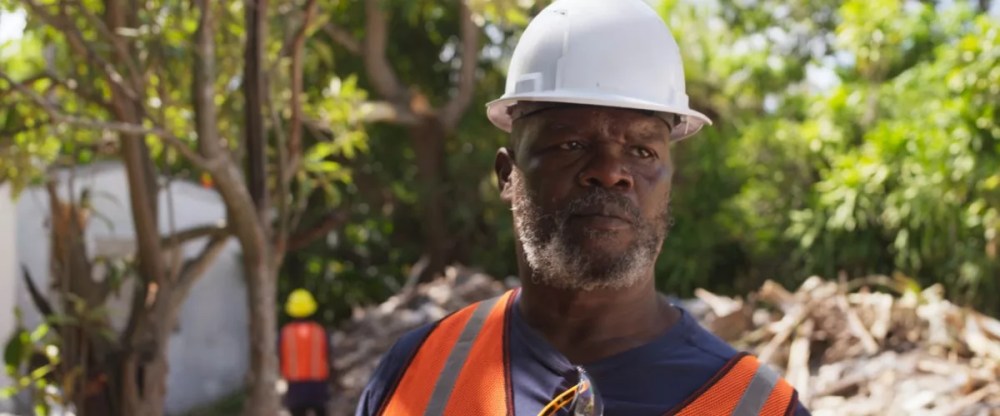
I watched Monica Sorelle’s wonderful debut film Mountains when it had its world premiere at the Tribeca Film Festival well over a year ago, but I never forgot it. This delicate drama follows Xavier (Atibon Nazaire), a Haitian demolition worker tasked with tearing down his rapidly gentrifying Miami neighborhood. He dreams of buying a nice new house for his wife Esperance (Sheila Anozier), who works two jobs herself to make ends meet, and struggles to connect with his son Junior (Chris Renois), whose dream of being a stand-up comedian is outside the realm of his immigrant parents’ more practical expectations. Mountains is far from the first movie to explore the ways in which the American dream is just that, but there’s something achingly personal and unique to the perspective that Sorelle offers, while the story is brilliantly acted and the vibrancy of the location gorgeously captured.
Mountains can be rented and purchased on all digital platforms. Runtime: 95 minutes.

Admittedly, I’m not up on my Hong Sang-soo; the Korean writer and director is so prolific, I struggle to keep up with his new releases, let alone backtrack to catch his old ones. But I was pretty immediately taken with A Traveler’s Needs when I saw it at this year’s Berlinale. The film stars Sang-soo’s frequent collaborator Isabelle Huppert as Iris, an enigmatic French woman eking out an existence in Korea. She mainly accomplishes this by giving French lessons to some Korean locals, but her teaching methods are less than conventional: she poses personal questions to her pupils that she then translates and writes on index cards for them to memorize. Huppert leans into Iris’ (often comical) eccentricities without making her appear like too much of a caricature, and despite the film’s loose structure and leisurely pace, Sang-soo probes at something gentle and sincere about human emotions via Iris’ seemingly random questioning.
A Traveler’s Needs is now playing in select theaters. Runtime: 90 minutes.
25. OMEN
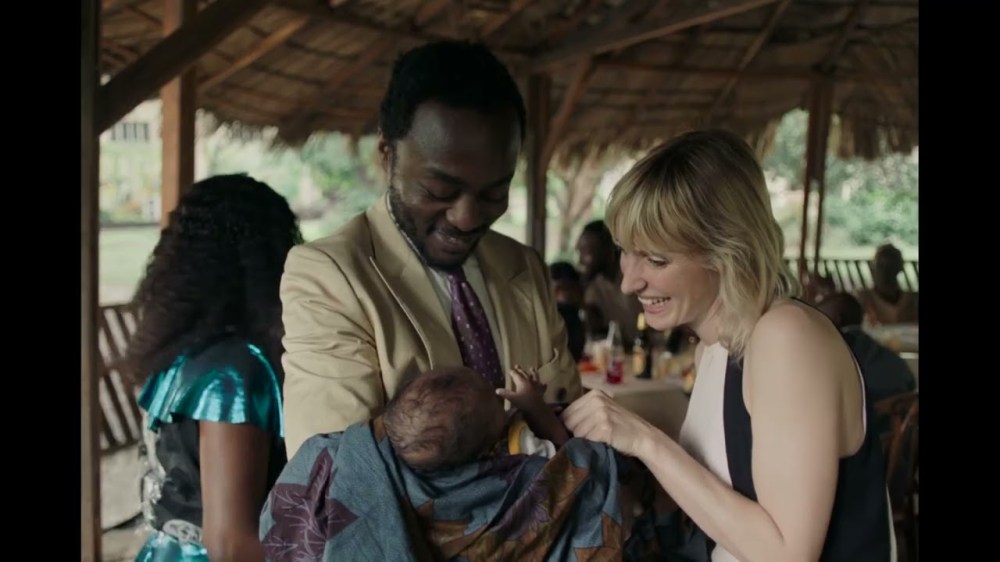
I went into Omen fairly blind when I saw it at a local African Film Festival, but almost immediately found myself rapt by director Baloji’s haunting and surreal drama. The bulk of the story centers around Koffi (Marc Zinga), a Congolese man who returns from Europe to his home years after his mother disowned him for supposedly being a sorcerer, his pregnant white girlfriend Alice (Lucie Debay) in tow. Ancient rituals and local superstitions are held over the couple’s heads while the world around them further expands to encompass multiple storylines involving marginalized groups and their ties to the occult, something that in this culture is treated with a matter-of-fact normalcy. Omen perhaps becomes a bit too cluttered the more it takes on, but it remains a staggeringly beautiful and ambitious film, brimming with bold visuals and compelling human drama.
Omen can be streamed on Mubi. Runtime: 92 minutes.

More favorites:
SUGARCANE dirs. Julian Brave Noisecat and Emily Kassie
GOOD ONE dir. India Donaldson
WOMAN OF THE HOUR dir. Anna Kendrick
THE YOUNG WIFE dir. Tayarisha Poe
PICTURES OF GHOSTS dir. Kleber Mendonça Filho
AGENT OF HAPPINESS dirs. Dorottya Zurbo and Arun Bhattarai
SOUNDTRACK TO A COUP D’ÉTAT dir. Johan Grimonprez
INSIDE THE YELLOW COCOON SHELL dir. Phạm Thiên Ân
NOCTURNES dirs. Anirban Dutta and Anupama Srinivasan
A REAL PAIN dir. Jesse Eisenberg
OH, CANADA dir. Paul Schrader
THE ROOM NEXT DOOR dir. Pedro Almodóvar
ABIDING NOWHERE dir. Tsai Ming-liang
MARIA dir. Pablo Larraín
HANDLING THE UNDEAD dir. Thea Hvistendahl
BYE BYE TIBERIAS dir. Lina Soualem
MISSING FROM FIRE TRAIL ROAD dir. Sabrina Van Tassel
HUNDREDS OF BEAVERS dir. Mike Cheslik
THELMA dir. Josh Margolin
MEGALOPOLIS dir. Francis Ford Coppola
THE MONK AND THE GUN dir. Pawo Choyning Dorji
JUROR #2 dir. Clint Eastwood
SANTOSH dir. Sandhya Suri
BANEL & ADAMA dir. Ramata-Toulaye Sy
VERMIGLIO dir. Maura Delpero
Great films I saw at festivals this year that will hopefully get a proper release in the near future (so keep an eye out for them):
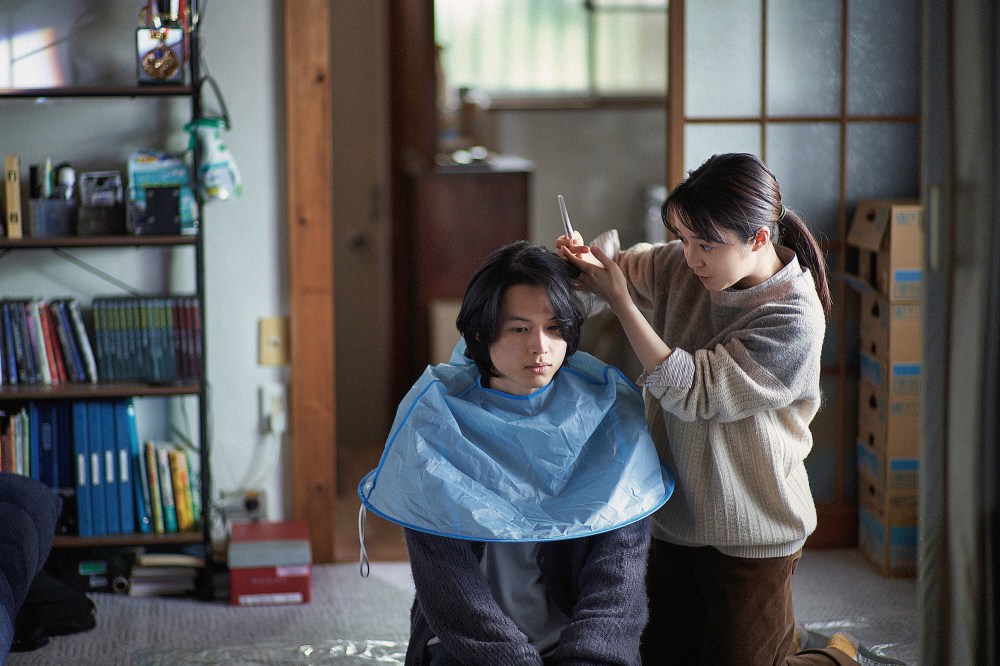
ALL THE LONG NIGHTS dir. Sho Miyake
MY FAVOURITE CAKE dirs. Maryam Moghaddam and Behtash Sanaeeha
THREE PROMISES dir. Yousef Srouji
AS THE TIDE COMES IN dir. Juan Palacios
A PHOTOGRAPHIC MEMORY dir. Rachel Elizabeth Seed

 Katie at the Movies