There’s something inherently comforting about returning to the same old favorites every holiday season. But it’s just as exciting to discover new films to add to your rotation. That’s how I felt last year, when Turner Classic Movies aired Miracle on Main Street in primetime— a film I had never even heard of before they screened it.
It’s easy to see why: Miracle on Main Street was made by the Poverty Row studio Grand National Pictures, which was liquidated in between the film’s production and its release (it was ultimately released by Columbia Pictures, while a Spanish language version filmed at the same time, titled El milagro de la Calle Mayor, was released by 20th Century Fox). But it was also released in that storied movie year of 1939, which saw the premiere of so many all-time classics— from Gone with the Wind and The Wizard of Oz to Mr. Smith Goes to Washington and Stagecoach— it’s no wonder that Miracle on Main Street got lost in the shuffle. But it’s a charming film, and unique to most Hollywood holiday movies of the time for portraying a diversified mix of cultural traditions.
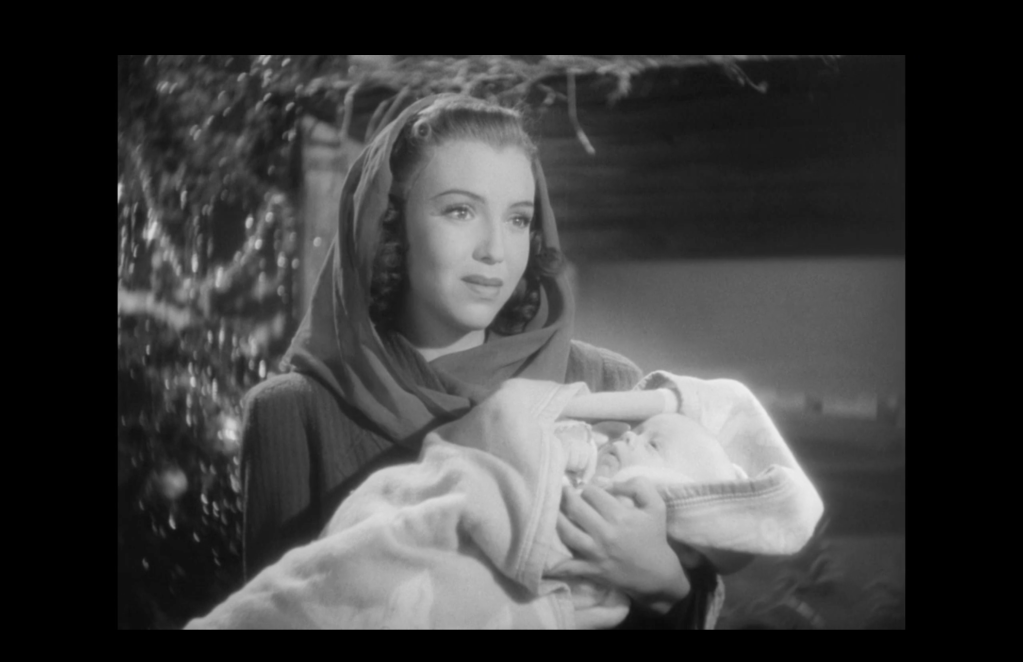
Miracle on Main Street is the directorial debut of Hungarian filmmaker Steve Sekely and follows Maria Porter (played by Mexican dancer and actress María Marguerita Guadalupe Teresa Estela Bolado Castilla y O’Donnell, billed simply as “Margo”), a belly dancer in Los Angeles’ Mexican corner who lives and works under the thumb of her shady carnival barker husband Dick (Lyle Talbot). Starved for cash on Christmas Eve, the pair’s attempt to rob a drunk goes south when he reveals himself as an undercover cop. Dick flees, and Maria takes refuge in a church, where she finds an abandoned baby in the manger of the Nativity scene as strains of “Silent Night” play in the background. The combination of being newly on her own and having a child to care for leads Maria to remake her life in positive directions, from accepting the aid of a doctor and her landlady, to taking a job sewing that leads her to meet Jim (Walter Abel), a lonely, divorced rancher who begins courting her and ultimately supports her in pursuing a career in fashion design. But her sordid past catches up with her with Dick’s return, demanding money in exchange for silence.
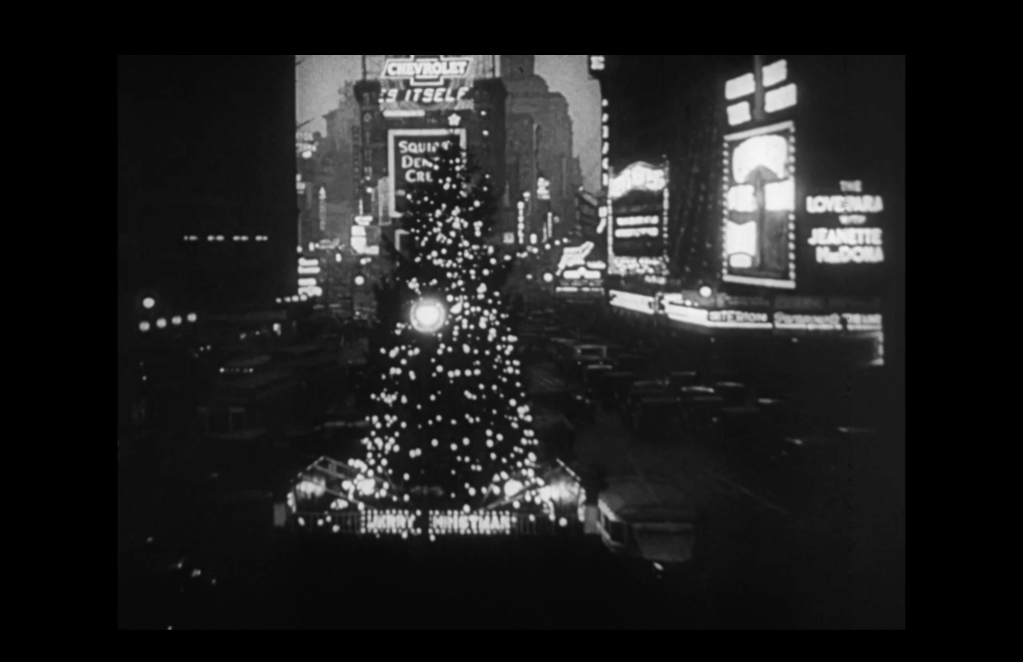
Miracle on Main Street opens with an assemblage of archival footage of various Christmas celebrations, a dizzying festive montage of brilliantly-lit Christmas trees, decorated shop windows, and crowds forming around parade floats of Santa being pulled by his reindeer. Admittedly, that’s the most explicitly holiday-focused Miracle on Main Street gets, but it’s themes of redemption and renewal are more than appropriate for the season, even as its plot becomes increasingly routine. It helps that the cast includes such reliable players as Talbot, a fixture in low-budget features in Hollywood from the 1930s and beyond (and so good at being bad), and is led by Margo, an electrifying and beatific presence who ought to be better known. Unfortunately, Margo’s career, like this film she appeared in, was similarly obscured. Despite appearing steadily in films up to the 1960s, including such well-known projects as Frank Capra’s 1937 adventure Lost Horizon and the 1955 drama I’ll Cry Tomorrow, she (along with her husband, actor Eddie Albert) was blacklisted by the major Hollywood studios, not because she was a Communist, but because she held progressive political views, and vocally supported the Hollywood Ten, leading her name to be published in the anti-Communist pamphlet Red Channels. Her film career did not survive, although her arts advocacy— which included founding the arts and education center Plaza de la Raza in Los Angeles, still in operation today— continued. Margo, like Miracle on Main Street, is a figure who’s ripe for rediscovery.
Miracle on Main Street can currently be watched on YouTube. Runtime: 78 minutes.

 Katie at the Movies