“On the seventh of June in the year 2015 I passed away at the age of 93. By then I had become quite accustomed to dying.”
Christopher Lee rises from the grave to narrate a documentary about his own life in Jon Spira’s The Life and Deaths of Christopher Lee. That statement, uttered at the movie’s start, sets the tone for the personal yet conversational film, which subsequently backtracks to detail Lee’s— a screen and stage actor with over 300 credits to his name, but who is primarily regarded today as a horror movie icon for his roles in such films for Britain’s Hammer Film Productions as Dracula and Frankenstein’s monster— parentage and early upbringing and military service. But while this style of narration is rather unique for this sort of celebrity bio-doc, Spira (who funded the film via Kickstarter) also visually distinguishes it early on, with an animated sequence depicting the construction of a marionette in Lee’s likeness— which pops on screen throughout the film every so often to help tell his story— and footage from a voiceover booth, where actor Peter Serafinowicz tries out a few different takes repeating the phrase “I’m Christopher Lee” until he gets the cadence of his subject’s voice right. It’s Serafinowicz who brings the words written by Spira from Lee’s perspective to life, and he nails it just enough to make it believable.
The remainder of the documentary, which touches on just about every aspect of Lee’s life and career without shortchanging much of it despite its brisk runtime— from his family to his acting career to his friendships with fellow horror icons Vincent Price and Peter Cushing to his brief stint as a heavy metal artist to his impressive third act, which saw him appearing in some of the biggest movies and franchises of all time, including working with Tim Burton and acting in Star Wars and The Lord of the Rings— boasts similarly creative touches that elevate it beyond the conventional talking heads doc. Of course, there is still some of that; Spira invites friends, family, and colleagues who knew and respected Lee to ruminate on his life and career, like filmmaker and historian Jonathan Rigby, his Dracula AD 1972 costar Caroline Munro, his niece, actress Harriet Walter, son-in-law Juan Aneiros, and directors Peter Jackson, John Landis, and Joe Dante. They don’t all necessarily deliver the most meaningful or thought-provoking remembrances, and the heavy inclusion of Landis— given that director’s checkered history— is questionable. But their footage is seamlessly integrated into the film alongside archival film and photographs and those animated flourishes (there are a few different art styles displayed here, which is nice to see). Unfortunately, some of that art was generated using A.I., a choice that severely undermines the look of the film and leaves a bad taste on it overall.
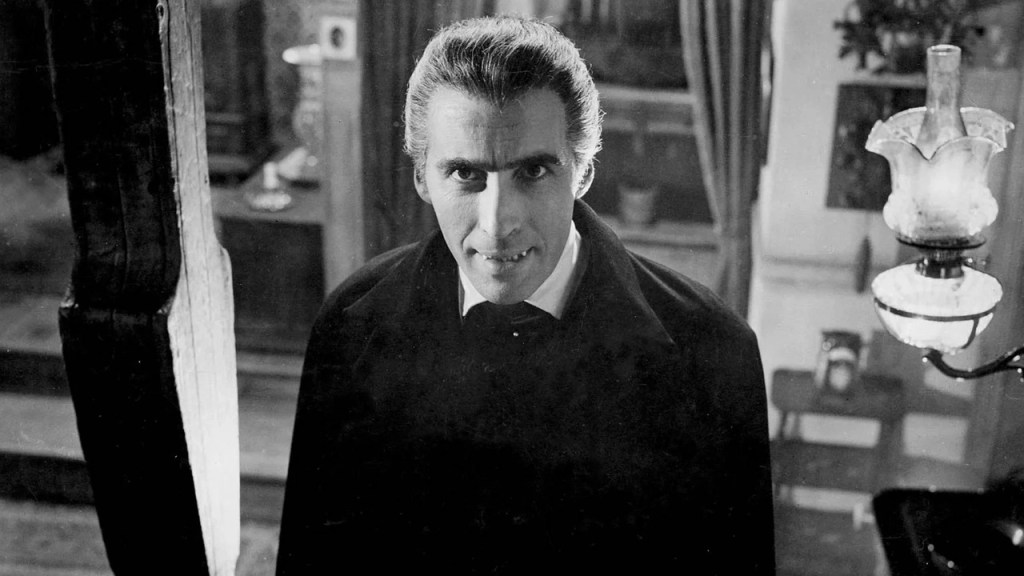
That really is a shame, because otherwise The Life and Deaths of Christopher Lee mirrors the uniqueness of its subject. The film touches on just a few of these staggering qualities: that Lee was obsessed with executions and witnessed the last ever death by guillotine (he also collected artifacts related to executions, and supposedly left a rope used to hang a man to James Bond actor Roger Moore in his will). That the nature of his military service during World War II was so shrouded in secrecy he never discussed it. That he sang opera, and became oldest person to ever crack the Billboard music charts with his heavy metal album. Comprehensive isn’t the right word to describe this film, but it is noteworthy that it doesn’t dwell on the most recognizable aspects of Lee’s career (aka, the Hammer films) even though that is likely what many viewers will come to this movie for. Rather, Spira devotes equal time to Lee’s early successes and failures, from his uncredited film debut in the 1948 British gothic romance Corridor of Mirrors (Lee spoke one line in one scene) to his appearances in a streak of adventures movies and swashbucklers. And there is consideration given to Lee’s status as a horror icon; footage of Lee, at his knighthood in 2009, suggests his reticence at such an association when he pushes back at a reporter who names him the “king of horror.” There’s an intriguing push-and-pull between Lee’s colorful life and career (and his apparent ease with accepting almost any role in any movie regardless of budget or screen time) and his seeming distaste for horror specifically, that the film and its commentators attempt to flesh out. But as engaging as the film is, there’s something off-putting about the skewed nature of Spira’s script and how it phrases thoughts and feelings from what is intended to be Lee’s perspective— putting words in his mouth, as it were. Spira drew from research from Lee’s personal archives and other sources near to the actor, and the opening of the film does reveal the machinations at play, but just how close we are to the real Lee no one can ever really know. But if you’re willing to take it with many grains of salt, The Life and Deaths of Christopher Lee is a fantastical and moving tribute to a man who may have died on screen many times, but off screen lived so many lives in one.
The Life and Deaths of Christopher Lee had its North American premiere at Fantastic Fest 2024 on September 22. Runtime: 103 minutes.

 Katie at the Movies