I often find observational documentaries the most fascinating, and several made their world premieres at this year’s Tribeca Film Festival. Below, I reviewed two documentaries that took vérité approaches or made extensive use of first-hand, on-the-ground footage, Checkpoint Zoo and DRIVER. You can also read my review of another terrific vérité doc that premiered at Tribeca, Pirópolis (which follows Chilean firefighters) here.
CHECKPOINT ZOO
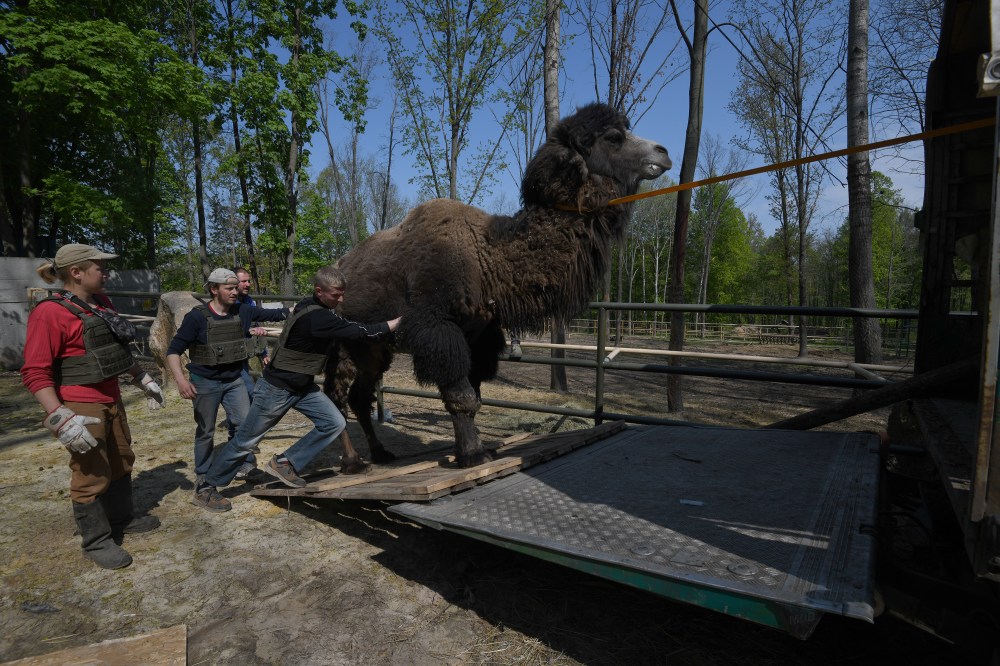
There is so much about war that those of us who have not been directly affected by it don’t know, don’t even think about. When Russia invaded Ukraine in February 2022, the fighting made headlines around the world. But humans were not the only ones caught in the crossfire. Feldman Ecopark is a zoo in Kharkiv, Ukraine’s second largest city and, because it sits so near the Russian-Ukrainian border, the location of some of the most intense fighting in the early days of the invasion. Suddenly, 5,000 animals were stuck there, unable to evacuate on their own as food, water, and other supplies dwindled. The zoo’s founder, Oleksandr Feldman, managed to get the word out on social media, first locating other zoos around the world that would be able to house the animals— and then, finding volunteers to help the remaining zoo staff get the animals out of there.
To call it a daring rescue feels like an understatement after watching director Joshua Zeman’s Checkpoint Zoo, a documentary cut together from news footage and personal videos captured by the volunteers and zoo staff, accented by talking-head interviews responding to the events after they happened. Sometimes, that footage is cute, the sort of heart-warming content that easily goes viral on social media, like a video Polish volunteer Tymofii Kharchenko took of him driving a truckload of kangaroos, the popularity of which helped raise awareness for the Ecopark’s plight. Often, the on-the-ground footage displayed is much more staggering, bringing us as close as possible to large groups of people working together to wrangle large and potentially dangerous animals as bombs explode nearby, putting their lives on the line to help these creatures. The role the Ecopark plays in the larger community in put in to perspective via the interviews; the zoo has programs for children with special needs and rehabilitation programs for adults with drug problems, of which Andrii Tyvaniuk— one of the zoo employees featured prominently in the film— is a veteran of.
Checkpoint Zoo transforms into a whole different beast in its final stretch, when the human toll of the war becomes personal for the zoo staffers, and audiences are privy to some intensely emotional and upsetting scenes that are so difficult to watch, it almost feels like we shouldn’t be watching them. But it brings the full scope and impact of the war home for the majority of those watching this film, likely on the other side of the world, safe and detached from the fighting. Moreover, it’s a riveting celebration of the generosity of the human spirit at a time when we have arguably never needed to be reminded of that more.
Checkpoint Zoo had its world premiere at the 2024 Tribeca Film Festival on June 6. Runtime: 103 minutes.
DRIVER
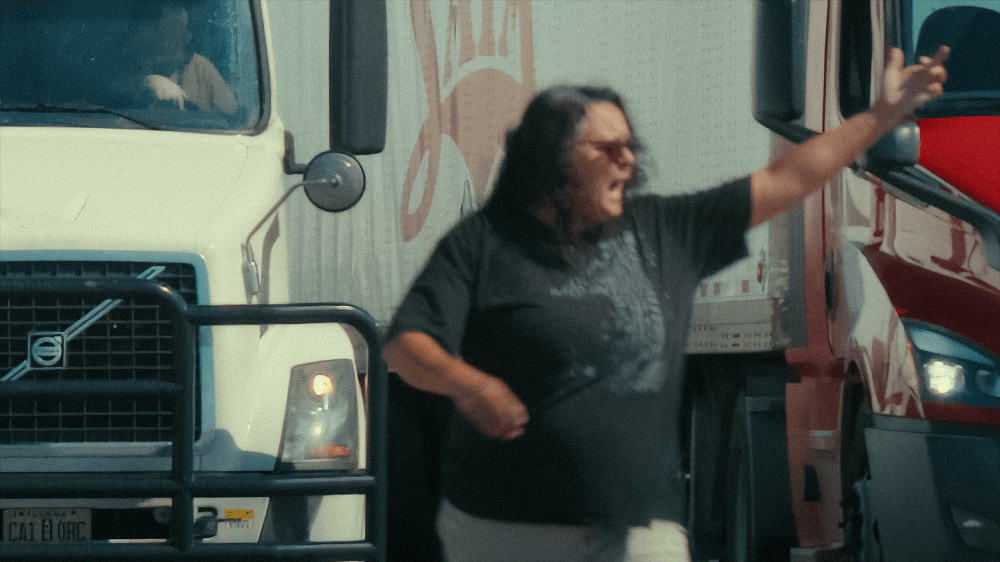
Long-haul trucking is one of the most de-valued and underpaid jobs in the United States. It’s also largely male-dominated; the ten percent of women who venture out on a life on the road not only face the typical issues of corporate greed— the price of freight dropping down so low that it’s nearly impossible to make the payments toward owning your own truck, a necessity for an independent lifestyle— but also abuse at the hands of male truckers and instructors who rarely face the consequences of their actions. The vérité approach of DRIVER, the feature directorial debut of Nesa Azimi, renders some of these facts and statistics a little muddy, but its observational nature also brings viewers as close as possible to a life on the road: the loneliness, living out of your car, stopping at truck stops for food and a shower, and the quietness and beauty of the passing landscape, but also the business side of things, from the considerations that go into claiming jobs to negotiations with lawyers over pay disputes and allegations of abuse.
Azimi tracks a couple different female truck drivers, but she centers her film on Desiree Wood, a 40-something-year-old woman who used to be a stripper but decided to start a new life as a driver. Desiree is a firecracker— she’s confident and takes charge, but still manages to have a sense of humor even in dire circumstances (she comments that she never looks down at passing cars when she’s driving because she’ll inevitably see some man jerking off)— but she’s also an important figure in the trucking community. After being sexually assaulted by her own male driving instructor a decade earlier, she founded REAL Women in Trucking, an organization that advocates for better wages and working conditions while raising awareness for the discrimination women in trucking face. This is work Desiree takes on on top of her already labor-intensive job, fielding phone calls from other women who don’t know where else to turn from the back of her cab.
Driving is a solo act, but Azimi makes it clear that Desiree isn’t really on her own. When she isn’t gathering with other female truckers in person, she’s talking to them on the phone, keeping a sense of community alive even when they are hundreds of miles apart. Punctuated by beautiful cinematography by Carissa Henderson and Victor Tadashi Suárez that both emphasizes the specificity of the regions Desiree travels through and the confining nature of her truck cab, DRIVER is a tenacious and eye-opening portrait of one of American society’s most marginalized groups, and how broken regulations allow predatory companies to take advantage of them— something that the film’s somber final images drive home that much harder.
DRIVER had its world premiere at the 2024 Tribeca Film Festival on June 7. Runtime: 90 minutes.

 Katie at the Movies