For this batch of capsule reviews of films that premiered at the 74th Berlinale, I’m looking at three films that, in a sense, deal with loneliness, in addition to possessing an innate sense of space. Otherwise, the variety of themes and tones they offer is vast, stemming from Iran, Japan, and Taiwan.

Keyke mahboobe man | My Favourite Cake by Maryam Moghaddam & Behtash Sanaeeha
IRN, FRA, SWE, DEU 2024, Competition
© Hamid Janipour
MY FAVOURITE CAKE
It’s hard to live a lonely life, and it doesn’t get any easier as you get older. Mahin (Lily Farhadpour, who’s immediately lovable) is 70 years old and lives in Tehran. Her husband died decades ago, and her children and grandchildren no longer live in Iran. She has a group of girlfriends of a similar age who she gets together with every once in a while; over lunch, they tease each other about their blood pressure and false cancer diagnoses.
But otherwise, Mahin goes about her day alone. Mahin’s friends encourage her to try dating, and while Mahin demurs, privately she makes tiny efforts to attempt to form a connection with a man. Writers and directors Maryam Moghaddam and Behtash Sanaeeha play these scenes with a light comic touch. Mahin goes to a deserted coffee shop, but can’t figure out how to open the QR code menu. She sits a little too close to a man in line to buy bread. She thinks maybe she will meet men out exercising in the park, but they’re all finished by early morning, and Mahin never wakes up until noon. It’s humorous, but Moghaddam and Sanaeeha often use long shots that emphasize Mahin’s solitude in the spaces she occupies.
And then Mahin happens across Faramarz, a taxi driver who she overhears in a café state that he is unmarried. She pursues him, and what unravels over the course of the night they spend together is a funny, melancholic, and sweet rumination on love and life in your twilight years. Few stories center so strongly on female loneliness, even more so surrounding a senior woman; My Favourite Cake (Keyke mahboobe man) realizes its narrative tenderly, but with a strong political undercurrent. The Iranian government’s restriction on women’s rights that’s prevalent in the background sometimes seeps into the foreground, most notably in an encounter in the park where Mahin doesn’t hesitate to jump to the defense of a young woman about to be arrested for improper dress. A sense that something illicit is going on permeates the film; even behind closed doors, Mahin can’t let anyone know she’s brought a man home. In actuality, the only occurrence is the purest expression of love: two lonely souls colliding in their search for a connection, and the baking of a cake to welcome them home.
My Favourite Cake had its world premiere at the 74th Berlinale on February 16. Runtime: 96 minutes.
Yoake no subete | All the Long Nights by Shô Miyake
JPN 2024, Forum
© Maiko Seo/2024 All the Long Nights Film Partners
ALL THE LONG NIGHTS
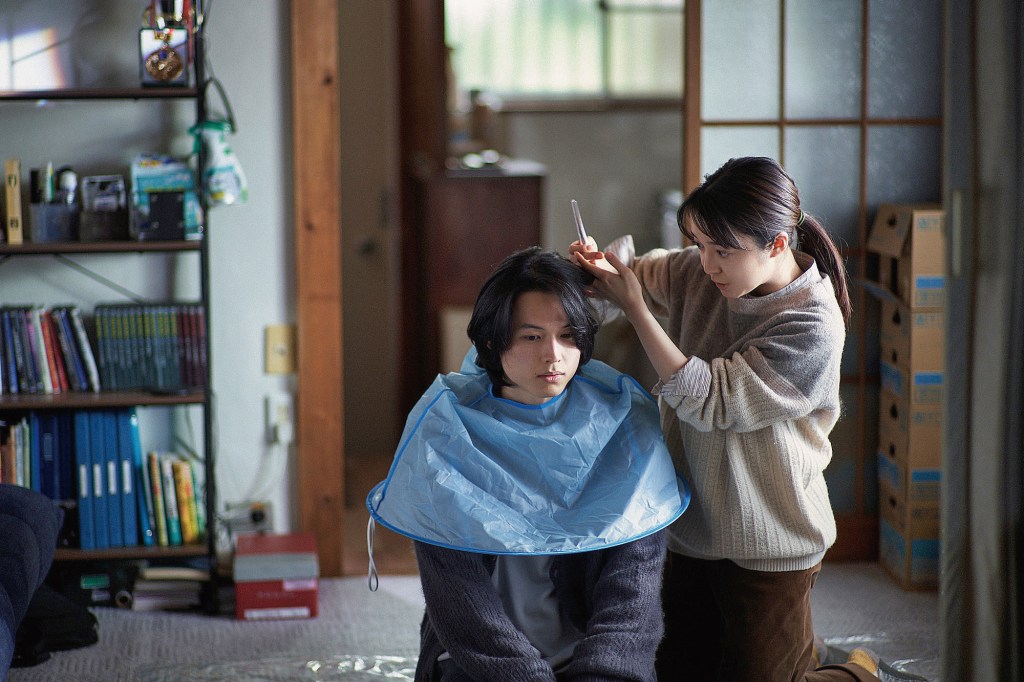
She has PMS. He has a panic disorder. What sounds like the start of an opposites-attract romantic comedy is actually a rumination of the quest for direction and personal happiness that unravels with quiet wisdom. Misa (Mone Kamishiraishi) resigns from her first post-college job (a stuffy corporate affair) due to her sudden bursts of anger brought on by her condition. Takatoshi (Hokuto Matsumura) has similarly had to renounce his old life as he struggles to work through his panic attacks. They both end up working for Kurita Optics, a small company that manufactures science kits for kids and schools. Their older coworkers are a sweet bunch who are understanding and willing to work with their disorders (Misa always brings them snacks to compensate for her behavior regardless), although Misa wants to be closer to her mom so she can help take care of her, and Takatoshi simply believes the work is beneath him.
Misa and Takatoshi’s relationship begins with some hostility— Misa snaps when she can no longer stand the sound of the carbonated water Takatoshi loves to drink when he opens it— but she grows to recognize the similar symptoms Takatoshi experiences when he has an attack, while Takatoshi makes an effort to learn more about PMS so he can help Misa with hers. It’s through helping each other that the pair learn to cope, and it’s through their work— they study constellations in preparation for a planetarium presentation at a local elementary school— that they begin to gain some sense of perspective and direction.
Japanese writer and director Shô Miyake’s film All the Long Nights is based on Maiko Seo’s novel of the same name, but it wouldn’t be far off to compare the piercing emotions in this gentle work with the films of Yasujirō Ozu. The perspective delicately shifts between Misa and Takatoshi over the course of the narrative, with Takatoshi at one point addressing his feelings directly when he narrates a blog post: “Nothing tastes good and nothing is fun. It’s an agony to be alive but I don’t want to die.” Miyake also exhibits an interest in environments that, shot on film, have a lovely warm texture. He trains his camera on the clutter of the office, or the interior of his characters’ cramped apartments, and concentrates on how they move around each other and interact with the space (particularly evident in a peaceful long take that plays over the closing credits). These places, and the bonds formed between the characters, feel lived-in and real, and even seemingly tangential supporting players are given rich interior lives filled with both grief and joy. Perhaps nothing in the film articulates the tension between those two emotions better than the closing visual of Misa, standing in a steady rain as the sun shines all around her.
All the Long Nights had its world premiere at the 74th Berlinale on February 21. Runtime: 119 minutes.

TWN, USA 2024, Berlinale Special
© Claude Wang / Homegreen Films
ABIDING NOWHERE
I’m not the best person to place Abiding Nowhere within the context of director Tsai Ming-Liang’s body of work; the tenth film in his Walker series, which he began back in 2012, is my first. And yet, I found it impossible not to become lulled into the meditative rhythms of the piece (this would be a pleasant film to fall asleep to, and I mean that as a compliment). Tsai’s frequent collaborator since 1992’s Rebels of the Neon God, Lee Kang-Sheng, shaved head, bare feet, clad in a saffron robe, is the Walker of the series titled, moving slowly and deliberately through space. In Abiding Nowhere, that space is Washington, D.C. There is no dialogue, but sound is integral, the offscreen audio of sirens blaring, car engines, and people chattering incoherently juxtaposing the cacophony of urban life with the slow and serene pace of the Walker.
Occasionally, Tsai turns his camera to a younger man, who sometimes occupies the same spaces as the Walker, although never at the same time, following him with the same level of patience as he prepares and consumes a bowl of ramen. This concentration on simple pleasures is lovely, but the film’s most striking images are of the Walker moving across America’s capital. Familiar landmarks, symbols of a complicated nation that doesn’t always practice what it preaches, color the Walker’s journey with a more complex shade. This is especially evident when he moves across a museum exhibiting historic Asian artifacts. For the entire film, Tsai shoots the Walker in long shots, allowing the space around him to breathe, except for one moment in the museum when he cuts to a medium shot. A Avalokiteshvara statue, one of the most recognizable Buddhist deities, looms behind the Walker, who strides with his hands raised; the frame is composed so it appears that he and the Buddha’s hands are touching, linking the ancient past with the living present for a brief second before time moves on.
Abiding Nowhere had its world premiere at the 74th Berlinale on February 20. Runtime: 79 minutes.

 Katie at the Movies