One afternoon in the middle of December 2018, I hoofed it a good eight blocks across the packed streets of Manhattan as tourists crowded around Rockefeller Center and the department store shop windows to catch a glimpse of the city’s elaborate Christmas decorations to the August Wilson Theatre to watch Mean Girls— not the 2004 movie that in the almost 20 years since its initial release has become something of a cult teen classic, but the Broadway musical based on it. Watching that show wasn’t even remotely my purpose for being in NYC on this occasion, but for someone who enjoys attending live theatre almost as much as she does the cinema, it was a passable way to spend a couple of hours inside on a blustery winter day: the comfort of a familiar and funny story, peppered with some mid-but-energetic songs. That’s sort of the reaction I expected to have to Mean Girls— not the Broadway show now, but the new movie based on the Broadway show that was based on the 2004 movie that was based on Rosalind Wiseman’s 2002 book Queen Bees and Wannabes (I don’t think enough people talk about the fact that this book is a nonfiction guide intended for parents to help their daughters survive adolescence, but maybe that’s a story for another day). And yet, something about this new Mean Girls— the directorial debuts of Samantha Jayne and Arturo Perez Jr., with a screenplay penned once again by the original film and Broadway writer Tina Fey— inexplicably irked me.
The bones of the story, if you know it, are the same. Cady Heron (Angourie Rice) has spent her entire life being homeschooled by her mother (Jenna Fischer) on the plains in Kenya. Longing for the real teen experience, she’s initially thrilled when her mother decides to take a job back in the states, allowing Cady to enroll at North Shore High School. But the naive and socially-awkward Cady quickly becomes embroiled in the push-and-pull between North Shore’s numerous cliques, particularly arty outsiders Janis (Auli’i Cravalho) and Damian (Jaquel Spivey) and the shallow, gossip-driven Plastics, whose members include try-hard Gretchen Weiners (Bebe Wood), airhead Karen Shetty (Avantika), and the queen bee, Regina George (Reneé Rapp). Cady’s allegiances are torn when she first starts to befriend the Plastics under the pretense of spying on them, and later starts to become them when she seeks revenge for Regina’s transgressions.
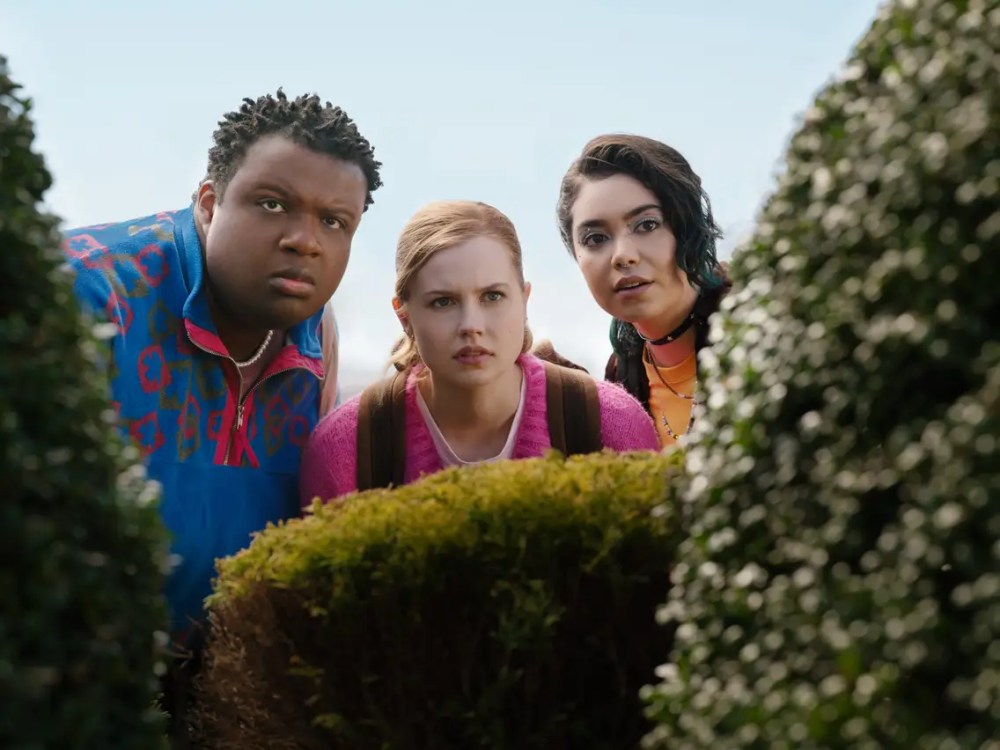
Mean Girls 2024 was advertised with the slogan “This isn’t your mother’s Mean Girls.” Well, that’s true, but probably not in the way the marketing folks intended. Mean Girls is another unfortunate victim in a recent trend in Hollywood where full-blooded movie musicals aren’t being marketed as such (see December’s whimsical prequel Wonka, which boasted an original premise and songs, and The Color Purple, another screen adaptation of a Broadway show based on a movie that was based on a book). A lot of the transitions into songs in Mean Girls are jarring in a way that isn’t uncommon to musicals, but based on the snickers in the audience at my screening, didn’t play well on screen (especially if said audience wasn’t aware that this was a musical; even the film’s trailer uses Olivia Rodrigo’s single “get him back!” as backing, as opposed to an actual song from the musical). The numbers themselves, however, are generally quite fluid and well-directed, even if they almost all utilize the same tracking shot trick. It isn’t so over-edited that we can’t see the choreography (an issue I’ve noted time and time again with many other stage-to-screen adaptations), and Jayne and Perez do often effectively cut the scenes to move the action along, such as with the opening number, which effortlessly carries Cady from Kenya to North Shore, and with “Revenge Party,” which cuts back and forth between the characters’ real-life actions and their candy-coated fantasy sequence.
But this also isn’t like the 2004 Mean Girls in that the screenplay is less funny, less biting. There’s too much self-awareness of the lines in the original that have become almost iconic: “It’s October 3rd,” “She doesn’t even go here,” and “You go Glen Coco” are all overplayed. That the songs aren’t especially memorable is the fault of the original musical, but 14 of them were still cut from the film (with “It Roars” being replaced with a new song, “What Ifs”). It also doesn’t help that the story’s attempts to swing at a feminist narrative— condemning putting each other down while empowering women to lift each other up—is nice, but feels a little dated and shallow. These original elements are given a bit of a refresh, as this Mean Girls is set in the present day. While the 2004 film was made in the pre-social media age, Tik Tok and viral videos are fully integrated into this version. Maybe I’m just old, but it’s difficult to see the appeal of the way these social media reactions are chaotically edited into the action. It may serve as a time capsule of this period of online history for future generations, but it isn’t funny and it isn’t smart, and it’s rarely utilized within the film in a clever way. It’s just loud and ugly. Still, the way that teens interact with each other and the world around them has drastically changed in the couple decades since the release of the original Mean Girls, and this film does, at least, reflect that.
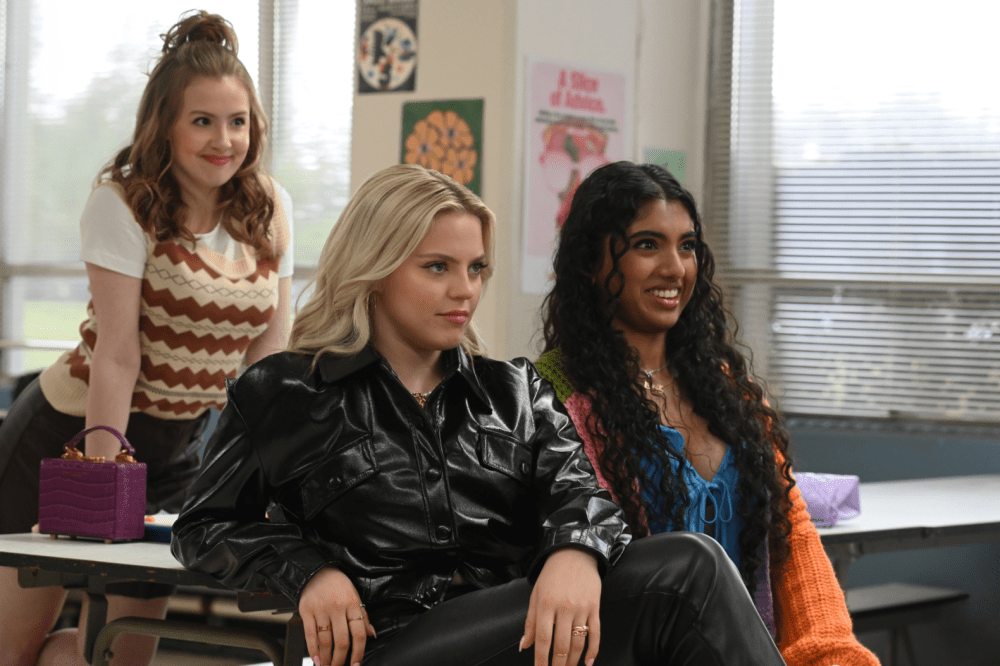
The performances are about as inconsistent as the tone of the entire movie. Christopher Briney, who plays Cady’s love interest Aaron Samuels, apparently almost backed out of the movie when he learned it would be a musical; so if you’re wondering why the film’s leading man doesn’t sing at all, there you go. Rice is passable as the protagonist; she doesn’t possess the star power of Lindsay Lohan, who played that role in the original movie, but she does ably embody Cady’s wide-eyed naiveté (she’s less convincing when the narrative shifts to require her to be mean). The real stand-outs are Rapp and Cravalho. The former portrayed Regina on Broadway, replacing original cast member Taylor Louderman, and while Broadway actors don’t always successfully make the transition to film (see Clint Eastwood’s misguided adaptation of one of my personal favorite musicals, Jersey Boys), it’s apparent from the moment she appears on screen that she knows how to play to the camera. The same can be said for Cravalho, whose confident stage presence that was evident as soon as she first stepped into the public eye as the voice of Disney’s Moana carries over here.
As someone who does attend the theater quite often, musicals based on movies— and often movies that don’t seem well-suited for music at all— are the ones I generally look forward to the least. They often do little to justify their existence beyond cashing in on brand familiarly and nostalgia. That extends to Mean Girls, which was a pleasant yet immediately forgettable experience when I saw it live way back in 2018. There’s some fan service for those who love the original (including Fey and Tim Meadows reprising their roles, and a handful of other cameos). There’s some contemporary relevance added for newcomers. Still, the movie has done little to improve on it.
Mean Girls is now playing in theaters. Runtime: 112 minutes. Rated PG-13.

 Katie at the Movies
Katie Dixon
LikeLike