As 2023 winds down and another banner year for cinema comes to a close, I’m recounting my favorite films released over the last 365 days, from new auteur-driven projects to anime, from romantic comedies to Godzilla. Click the links in the titles to read my full review of each movie where applicable. And thank you to everyone who read and supported my work this year, whether you were here for classic movies or festival coverage— this site had its most successful year to date by far, and I look forward to continuing that into 2024.

Wes Anderson’s newest feature film is both the director’s signature style at its most distilled, and his most ambitious and complicated movie to date. Anderson’s recognizable vibrant retro aesthetic and carefully designed compositions are all here, as is his clipped, deadpan sense of humor, delivered by a stable of Anderson regulars (Jason Schwartzman, Tilda Swinton, Edward Norton) and newcomers (Scarlett Johansson, Tom Hanks, Margot Robbie). But in a narrative that is at its heart about grief and making art, Anderson deftly moves back and forth and in and out of a story within a story (within a story?), utilizing clever visual cues (shifting color and aspect ratio, for starters) the orient it. It’s all a little overwhelming, and at times, slightly intangible. But even when it’s uncertain just where we’re at in the story or what a specific scene is aiming for, Asteroid City is never not fascinating. With every subsequent rewatch, more little details unveil themselves, and more layers to the tale are peeled away. It’s incredibly entertaining, sure, but Asteroid City is also as meaningful and moving a work of art as what the characters in the movie are striving for.
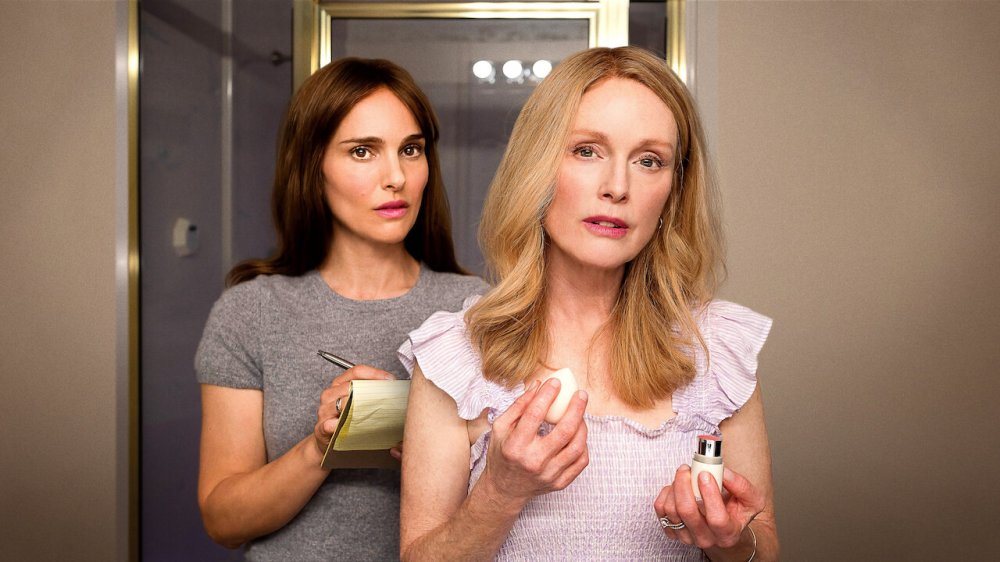
2. MAY DECEMBER
Not unlike Asteroid City, Todd Haynes’ May December is also about performance and questioning what is and isn’t real, but while Anderson’s story is wrapped in a television program about a play, Haynes’ film is about the making of a fictional movie based loosely on a real life incident. Natalie Portman has never been better (in fact, hers is the performance of the year for me) as an actress who travels to the Savannah, Georgia home of a woman (Julianne Moore) she is to play in a movie— a woman who served a prison sentence for engaging in a sexual relationship with a 13-year-old boy when she was 36, a boy (Charles Melton) who she is now married to and has a seemingly normal family with. Mining fierce humor from an uncomfortable situation, with a rich visual language rife with subtle details (just about every frame of this movie can and should be paused and studied) and a talented cast who tackles the heightened emotions of the story whole-heartedly, May December is a classic melodrama that challenges notions of impersonation, identity, and the roles we play with a grace that only Haynes could pull off so beautifully.
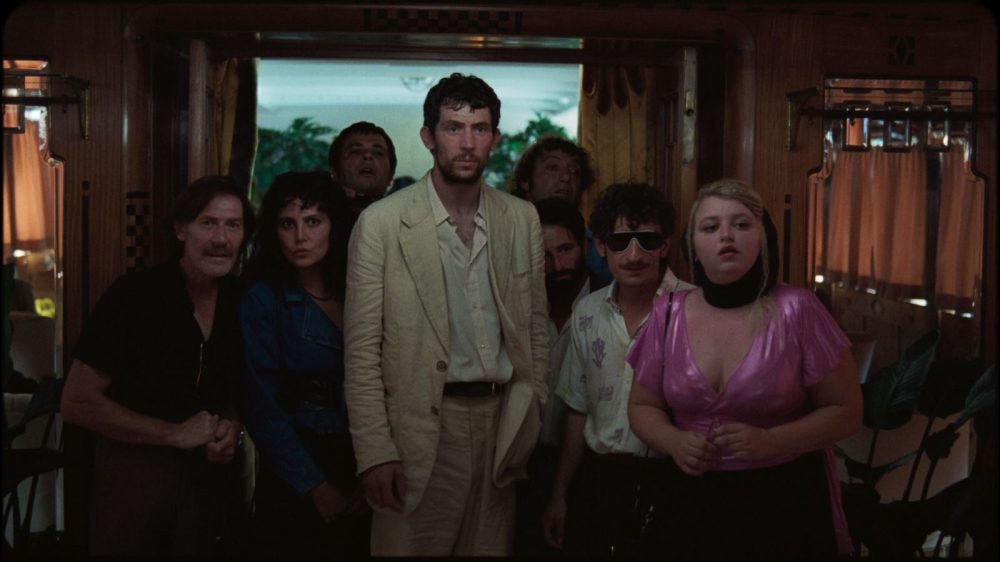
3. LA CHIMERA
Much like the profession of her main character (a raffish Josh O’Connor plays Arthur, an archeologist who raids tombs in the Italian countryside and sells the artifacts he finds to a shady dealer), writer/director Alice Rohrwacher’s La Chimera excavates a richer wealth of themes the deeper it plunges into itself. Shot in a combination of 16 mm, Super 16 mm, and 35 mm that grants the film so much fantastic texture, and with a cheeky sense of humor that includes playful camera moves and editing and fourth wall breaks, La Chimera is a vision to behold. But it also has a bevy of ideas on its mind: class differences, the quest for purpose, ownership, history, and literal red strings of fate. The influences of classic Italian neorealism on La Chimera is obivous— the Fellini-esque touches in its characters and mood, the presence of Isabella Rossellini, daughter of the movement’s most prominent figures— but Rohrwacher also possesses an incredible vision that’s uniquely hers, beautiful to behold even when what her film is reaching for feels just out of grasp.
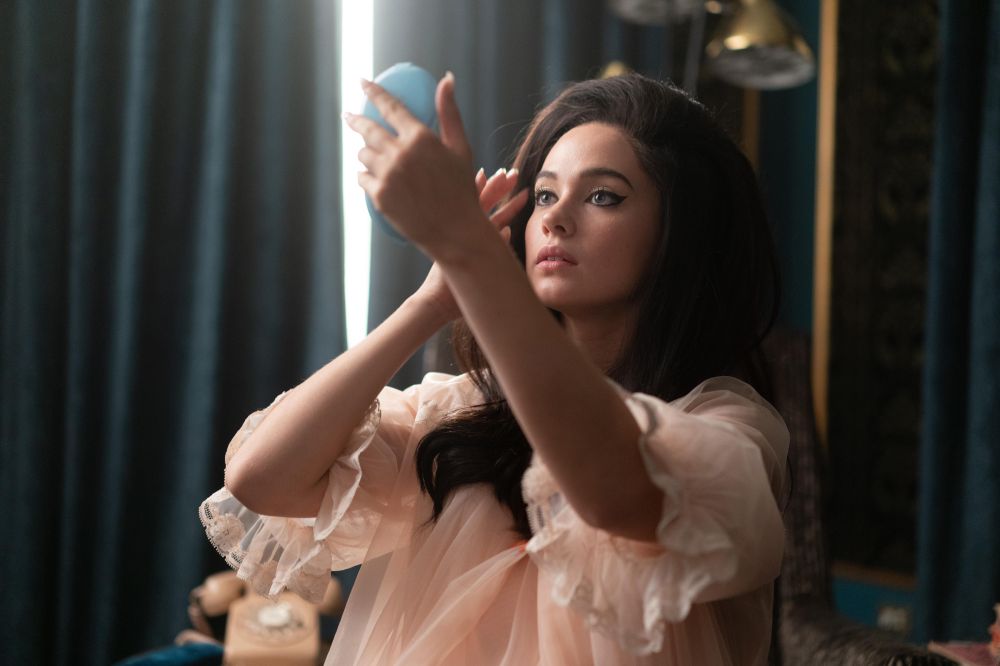
4. PRISCILLA
Sofia Coppola adapting Priscilla Presley’s best-selling memoir Elvis and Me? It sounds like a match made in heaven on paper, and it is on screen too. The common themes that are woven throughout most of Coppola’s work— specifically stifled young women wrestling with loneliness, growing up, and feeling out of place in the world— were already present in Priscilla’s recounting of her decades-spanning relationship with rock star Elvis Presley. But as faithful as Priscilla remains to its source material, it is still decidedly a Sofia Coppola joint, one that moves from dreamy teen romance to a waking nightmare with a pace as graceful as it is uncompromising. Every element pulls together to create something special, from the carefully curated soundtrack (with no Elvis songs to be found) to Sarah Flack’s delicate editing to the makeup and costuming that transforms revelatory star Cailee Spaeny from age 14 to 28. It’s about as opposite the typical celebrity biopic that you can possibly imagine, and it’s all the better for it.

5. RYE LANE
The greatest romantic comedy to be released in recent memory is a directorial debut starring a handful of newcomers. Rye Lane follows a path that’s familiar to the genre— two people who have recently gone through break-ups share a chance encounter and fall for each other after spending the day together— and yet it feels fresh and exciting at every turn. Nathan Bryon and Tom Melia’s script is sharp, stars David Jonsson and Vivian Oparah sparkle both individually and together, and director Raine Allen-Miller and DP Olan Collardy inject liveliness into every frame. I’m not normally a fish-eye fan, but here, the uniquely wide angle of the frame allows the characters to breathe, and their London neighborhood to feel vibrant and alive. Sometimes, it’s nice to just watch a movie that makes you feel good, and Rye Lane is one of the only recently released movies I’ve seen that made me think, “I could watch that again right now,” as soon as it ended.
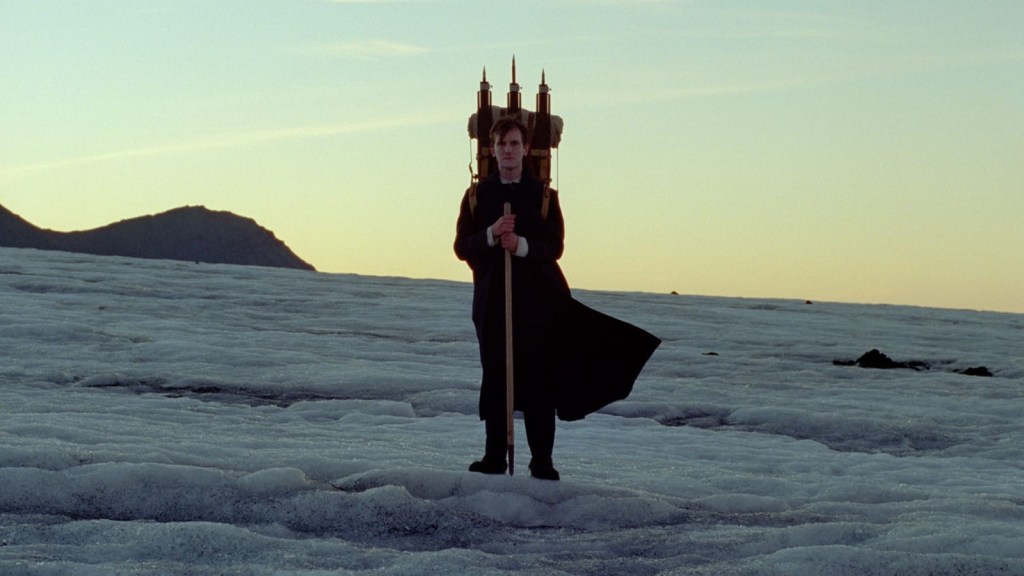
6. GODLAND
Hlynur Pálmason’s Icelandic drama has been on my radar since it premiered at the Toronto International Film Festival in 2022, and I was as enraptured by it as I’d hoped I’d be by the time I got to watch it in the theater in March of this year. Set in the late 19th century, Godland follows a Danish priest who is tasked with traveling to a remote area of Iceland and building a Danish settlement there. The film is essentially divided into two parts (the journey to the settlement and the building of it) but as varied as each segment is— the former extraordinary in its comprehension of the majestic and terrifying landscape, the latter intimate in how it looks inward on someone grappling with their faith— together they form an incredible epic about nature, humanity, faith, colonialism, and who tells peoples’ stories. That last bit is informed by the priest’s affinity for documenting Iceland and its people via photography, and that extends the film’s aesthetic, which resembles the texture of an old photograph. It’s some of the most stunning cinematography I’ve seen all year, and the film itself, while bleak, is mesmerizing throughout.

7. ALL DIRT ROADS TASTE OF SALT
Watching writer and director Raven Jackson’s debut feature is akin to having a person’s memories wash over you. All Dirt Roads Taste of Salt traces the life of Mack (played primarily by Charleen McClure, but at younger and older ages by Kaylee Nicole Johnson and Zainab Jah), a Black girl growing up in rural Mississippi. The film moves loosely back and forth through time, less concerned with plot and more with feeling, and it is certainly rich with that, creating indelible images with a camera that is focused on the body, and specifically the rhythm of hands as they work and touch and gesture and love. It’s a moving and poetic work, one that manages to feel both personal and universal, and points to Jackson as a filmmaker with a strong voice and vision straight out of the gate.
8. SHOWING UP
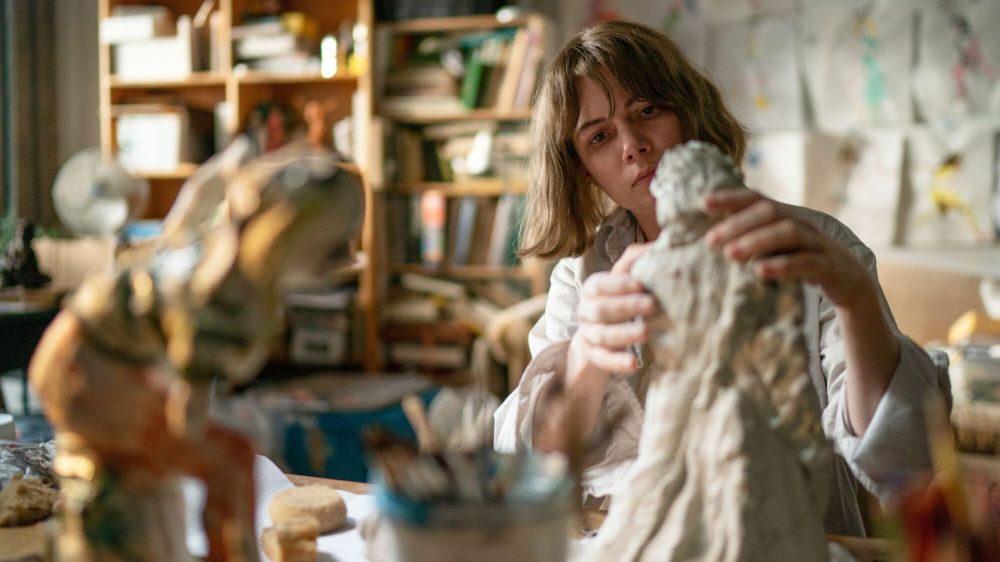
Kelly Reichardt seems incapable of missing, and her latest work is another low-key masterpiece. Also incapable of missing is Michelle Williams, Reichardt’s frequent collaborator, who stars as Lizzy, an introverted Portland artist who works as an administrator under her mom at a local arts college and sculpts female figures on the side. As Lizzy prepares for an upcoming show, a myriad of forces seem to be conspiring to prevent her from soaring creatively, from an injured pigeon she ends up caring for to her landlord and fellow artist (a great Hong Chau), a bubbly dynamo who is so well liked by the community despite only pretending to take strides to help others that she makes Lizzy question herself all the more. Showing Up never explodes in any fits of creative fury like most films about artists do; rather, like most of Reichardt’s work, it’s quiet and serene, deriving pleasure in observing artists at work in a way that’s more meditative. But it’s still an incisive character study, reveling in little struggles and successes and the potential to really fly.

9. GODZILLA MINUS ONE
A mere month ago, I never would have expected to unabashedly love the newest Godzilla movie, let alone for it to crack my top ten best of the year. And yet as soon as the Toho Studios logo flashed across the screen, a giddy feeling fluttered across my chest and didn’t disappear for the entirety of Godzilla: Minus One’s runtime. Written and directed by Japanese filmmaker and visual effects guru Takashi Yamazaki, Godzilla: Minus One is the 37th film in the Godzilla franchise since the 1954 original, and it’s perhaps the one that best emulates the spirit of the original too. Godzilla is treated with equal parts reverence and terror, and the human side of the story— a classic melodrama that follows a handful of characters grappling with their actions in the aftermath of World War II— isn’t mere filler used to move the audience from monster set-piece to monster set-piece; Godzilla’s presence is in service to their story, not the other way around, and it’s compelling and moving from start to finish. But speaking of those monster set-pieces, they— and the impressive visual effects that create them— are among the most staggering ever put on screen. Hollywood, please never attempt a kaiju movie ever again; you simply do not have the juice.

10. ARE YOU THERE GOD? IT’S ME, MARGARET
The best book-to-screen adaptations don’t merely translate the existing material to a new medium, but add to it in meaningful ways. Judy Blume held on the to film rights to her controversial children’s novel for decades before finally granting them to producer James L. Brooks and writer and director Kelly Fremon Craig, and that proved to be a great decision. Craig proved how adept she was at telling stories about teenage girls with her debut feature The Edge of Seventeen, and her version of Are You There God? It’s Me, Margaret— which is set in 1970 and follows an 11-year-old girl who begins trying to communicate with God while dealing with puberty and moving to a new town— is faithful to the book while expanding on it. Under Craig, Are You There God? It’s Me, Margaret is still centered around young Margaret Simon (an incredible Abby Ryder Fortson), but also becomes about three generations of women, as Margaret mom Barbara (Rachel McAdams, who has arguably never been better) and grandmother Sylvia (Kathy Bates) and their various struggles with family, loneliness, and work. The story becomes more accessible for any age, while remaining an incredibly funny and authentic tale of the ups and downs of womanhood.
11. KILLERS OF THE FLOWER MOON
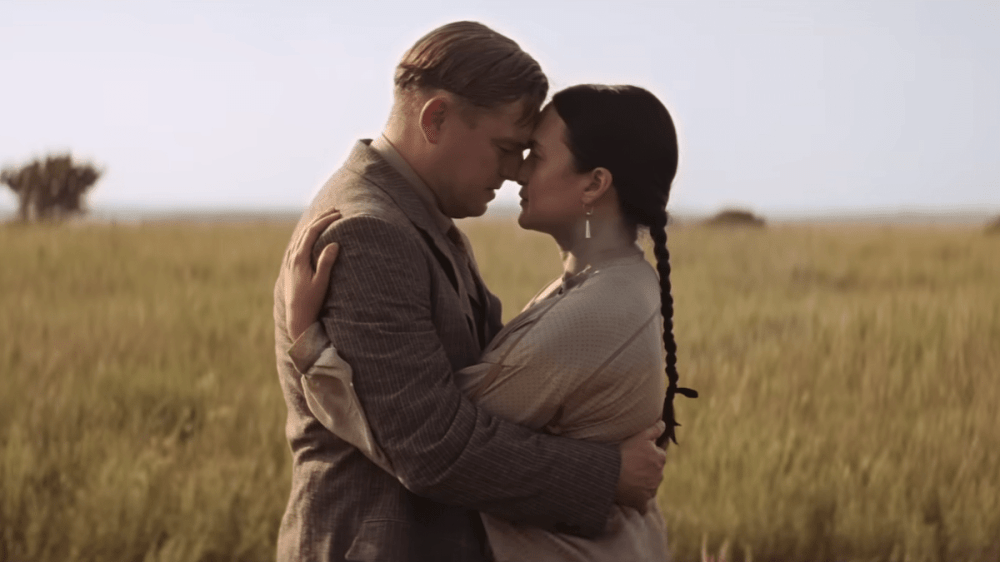
David Grann’s nonfiction book Killers of the Flower Moon— which tells of a series of murders committed by the white community on Oklahoma’s wealthy Osage nation in the 1920s—is one of the most entertaining and enlightening books I’ve read in the last decade, so I’ve eagerly awaited the film adaptation, particularly after learning it would be directed by one of our greatest living filmmakers, Martin Scorsese. Scorsese’s film, epic in length and scope, proves to be a fascinating exercise in adaptation, turning away from the whodunnit structure of Grann’s book (which teased out the identity of the murderers over the course of a few hundred pages) and telling the story from inside the villains’ perspective. There’s a decent amount to critique in Killers of the Flower Moon, namely how the nature of telling the story this way turns the Osage into supporting players in their own story, but it’s about as scathing an indictment of white supremacy as it gets, anchored by the stoic grace of Lily Gladstone and the quiet menace of Robert De Niro. And the finale, which looks back on the way such stories, erased by history until recently, are passed down, is Scorsese at his most free and creatively invigorating.
12. FALLEN LEAVES
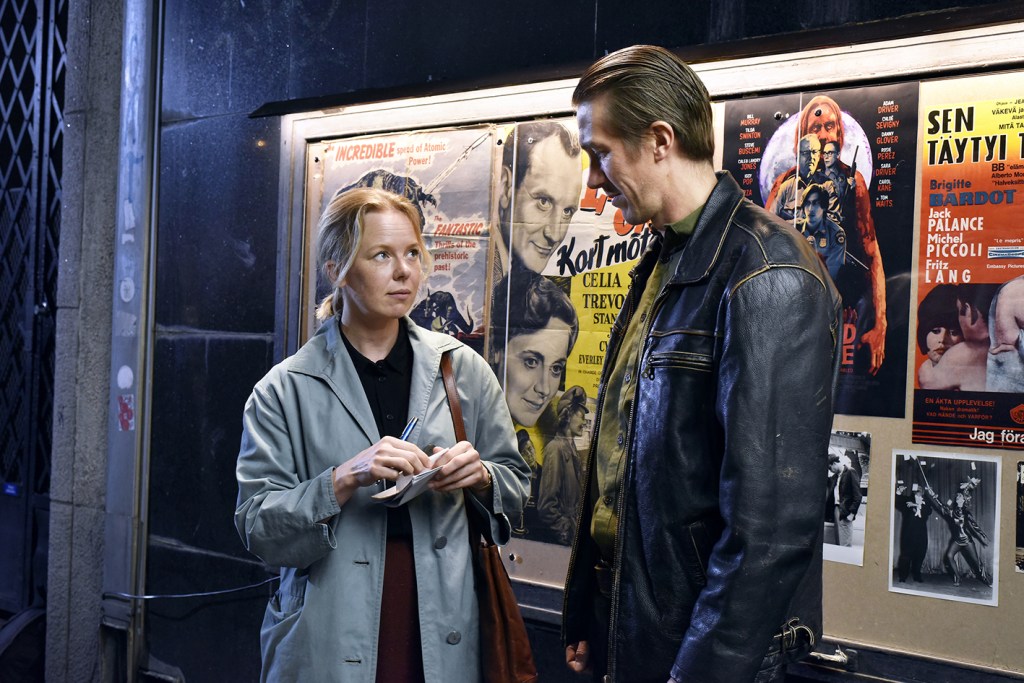
Aki Kaurismäki’s Finnish romantic comedy is the tale of two working-class single people— Ansa (Alma Pöysti), a supermarket stock worker, and Holappa (Jussi Vatanen, an alcoholic— who fall for each other over a series of strange chance encounters. Fallen Leaves may be told with a deadpan sense of humor, but it never treats its characters or their emotions with irony. Told with a visual style that sets the story in some place out of time without ignoring contemporary politics (news bulletins in the background point to Russia’s 2022 invasion of Ukraine), Fallen Leaves is as aching and funny as its influences (which somehow include both Brief Encounter and The Dead Don’t Die). And it boasts some individually magnificent scenes; it’s hard not to miss when a movie contains a karaoke sequence as memorable as the one in Fallen Leaves.

13. GODS OF MEXICO
I saw Helmut Dosantos’ documentary Gods of Mexico at the True/False Film Festival in 2022 and was so immediately impressed with it I’ve intermittently looked for its release ever since then. Unfortunately, it only had an extremely limited theatrical run in the U.S. earlier this year, but now that it can be rented or purchased on demand, it’s extremely worth seeking out. Gods of Mexico is a sort of abstract visual essay that depicts the striking landscapes of rural Mexico and the people who live there. Divided into three segments, the first and last leg of Gods of Mexico are mediative observations of people at work, while the middle part consists of stunning black-and-white portraiture of the people and their customs. Sure, it’s all very intentionally composed, but it also grants time and tribute to a group of people who are frequently overlooked. It’s a gorgeous film that has lived in my mind ever since I watched it almost two years ago, and I’m excited for people to hopefully finally experience it for themselves.
14. SUZUME
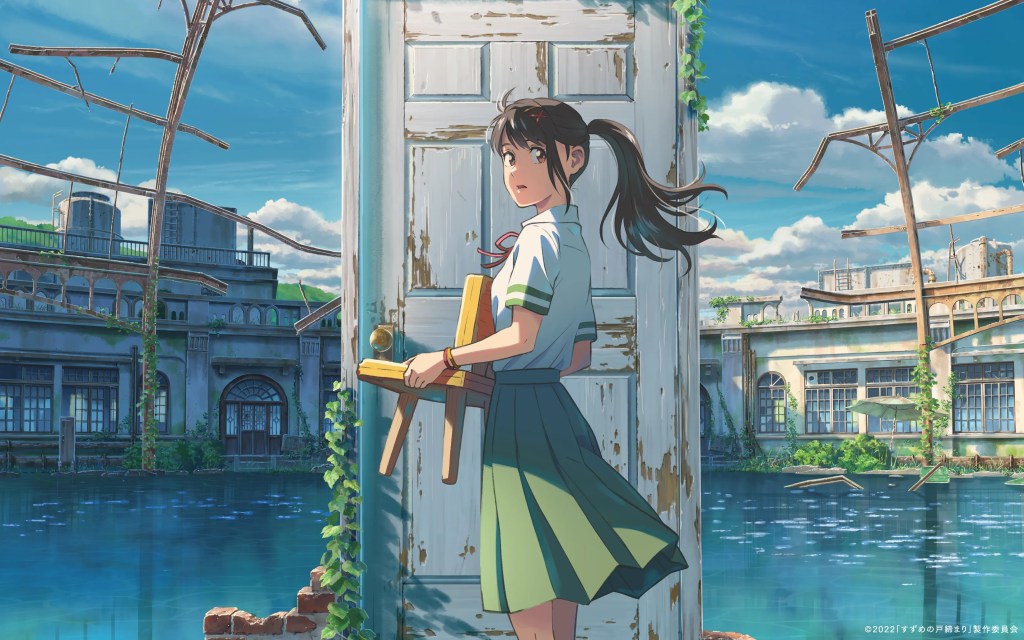
I’m a big fan of Makoto Shinkai’s previous two anime films, Your Name and Weathering with You, so I looked forward to his next work, and I wasn’t disappointed. Suzume is my favorite animated movie of the year, not only because its character designs, visual effects, and animation style are creative and lovely to look at, but because its whimsical and thrilling storytelling at its finest, the sort that all of Shinkai’s previous work has been driving toward. It’s also a story that takes delightful risks— the handsome leading man turns into a chair for the majority of the film’s runtime— and is incredibly moving (if the culmination of Suzume’s mourning for her mother doesn’t leave you sobbing then I really don’t know what to tell you).
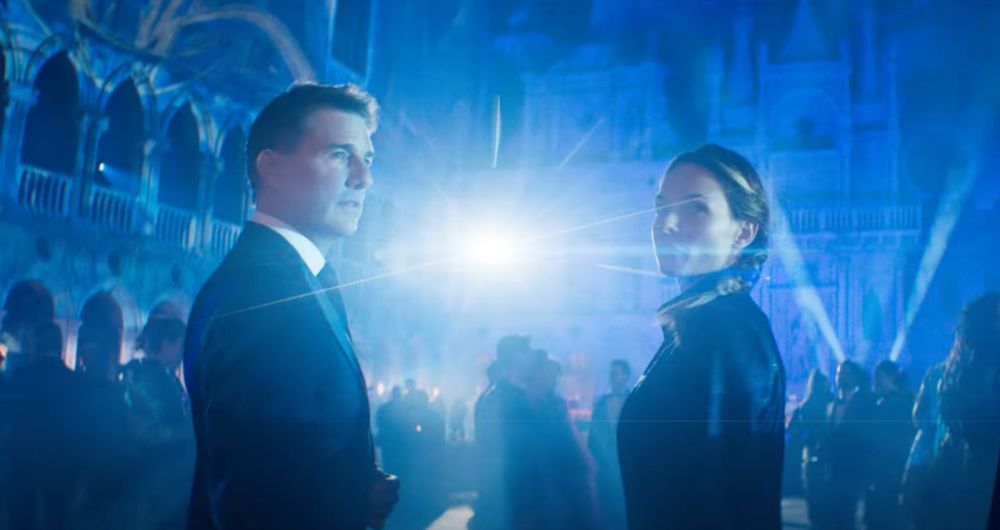
15. MISSION: IMPOSSIBLE— DEAD RECKONING PART ONE
I hate “part ones” in movies, so as consistently as I’ve enjoyed the Mission: Impossible franchise, I’ll admit to walking into the series’ seventh entry with my arms slightly crossed. As it turns out, Mission: Impossible— Dead Reckoning Part One is one of the best times I’ve had at the movies this year, and one of the best movies in the series so far. Christopher McQuarrie returns to the director’s chair for movie that pulls back slightly on the over-the-top stunts in lieu of the espionage antics that the very first movie (released all the way back in 1996) favored. But don’t worry— Tom Cruise still flies off a cliff on a motorcycle, while some of the other jaw-dropping action set-pieces include a humorous Fiat car chase through Rome and a Keaton-esque train car climax set aboard the literal Orient Express. Sure, the AI plot device is as silly as it is prescient, but Dead Reckoning Part One is so much fun to watch that not even the part one-ness of this already almost three-hour movie nagged at me. It’s an action movie made by people with historical knowledge of and love for the genre, and that’s reflected every second on screen.

16. FREMONT
I feel like I’ve been chasing Babak Jalali’s Fremont since it premiered at Sundance at the beginning of 2023, and while I didn’t get around to finally watching it until December, it immediately became a new favorite. Fremont is named for the Bay Area town where Donya (Anaita Wali Zada), an Afghan refugee, resides. Twenty-something and alone, Donya moves between her job at a fortune cookie factory and unhelpful sessions with her therapist (Gregg Turkington), searching for connection while mourning those she left behind in Kabul. Shot in luminous black-and-white, Fremont’s dry humor hits as hard as its tangible sense of loneliness, viewed both from the perspective of an immigrant and of a single person, conveyed so lucidly in the cracks that occasional emerge in Zada’s otherwise stoic face. A third act turn featuring a surprise Jeremy Allen White is one of my favorite stretches of any movie this year for the truth rooted in its melancholic sweetness.

17. OPPENHEIMER
I count The Dark Knight among my favorite movies, but I wouldn’t otherwise call myself a Christopher Nolan girlie (his last few films particularly haven’t hit for me). But while the director’s flaws are still on display in his adaptation of American Prometheus, Jai Bird and Martin J. Sherwin’s biography of “father of the atomic bomb” J. Robert Oppenheimer (particularly his writing of female characters), I was surprisingly moved by this tale of the power and folly of human ambition. A regular supporting player in Nolan’s films since 2005, Cillian Murphy gets his long-awaited time in the spotlight as the titular character and knocks it out of the park in a performance that’s rife with guilt and regret. That’s not to mention the wide ensemble cast of A-list stars and “that guys” that round out Oppenheimer (Robert Downey Jr. is particularly memorable). The visuals are among the most impressive of the year as well. I’ve always sort of poked fun at the confusing number of formats Nolan likes to release his films in, but watching Oppenheimer in IMAX 70 mm from the front row— particularly the scene where the atomic bomb is tested, a feat of sight and sound— I really have to hand it to him. No other theatrical experience is quite like it.
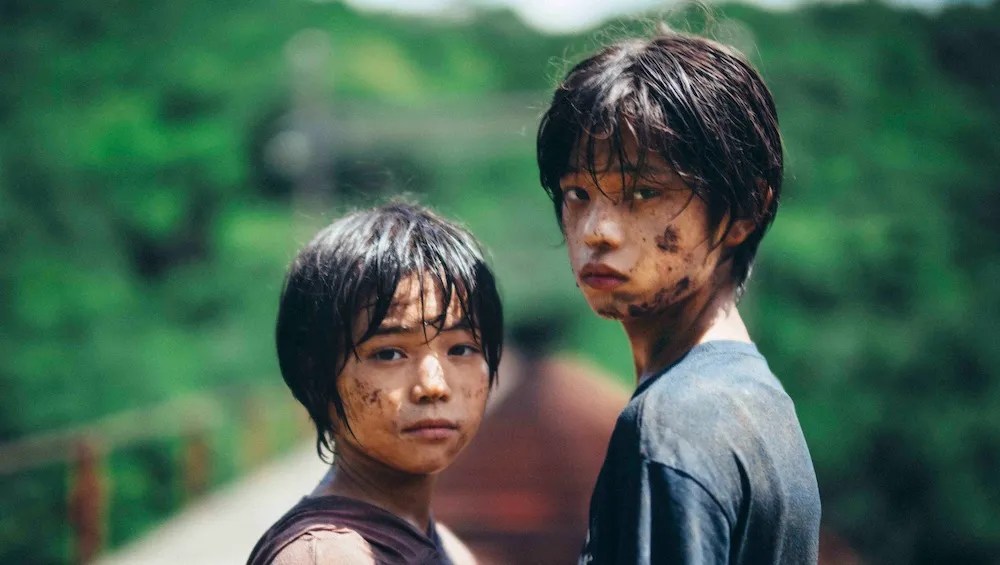
18. MONSTER
Monster marks a few shifts for director Hirokazu Kore-ada. It’s the first film shot in his native Japan since 2018’s Shoplifters, and the first film he hasn’t written himself since his feature debut (Yuji Sakamoto pens the screenplay here). It also feels like a return to form for the celebrated filmmaker. Monster is a gently surprising film that I saw less than 24 hours ago, but haven’t stopped thinking of since. It’s initial premise concerns a mother (Sakura Andō) who believes that her son Minato’s (Sōya Kurokawa) teacher Mr. Hori (Eita Nagayama) has abused him. Monster’s layered narrative has prompted many comparisons to Kurosawa’s classic Rashomon, but structurally this is doing something rather different, delicately shifting the story so that more information about the situation is gradually revealed, until it finally turns into something quite unexpected but no less moving. The child actors, Kurokawa and Hinata Hiiragi, who plays Minato’s friend Yori, are really remarkable, and the final scene is truly a gut punch.
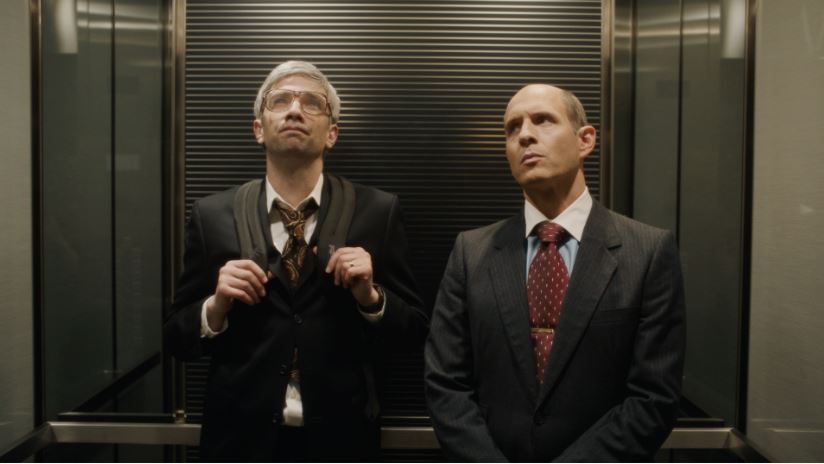
19. BLACKBERRY
2023 has seen no shortage of product-based movies— Tetris, The Beanie Bubble, Flamin’ Hot, Barbie— but none of them are as piercing as Blackberry, a movie that obliterated by expectations (expectations based on the faults of such previous similar movies). Matt Johnson’s film, loosely based on the book Losing the Signal: The Untold Story Behind the Extraordinary Rise and Spectacular Fall of BlackBerry, is very smart, very funny, and very sad. Johnson and Jay Baruchel are delights as the nerds who invented the titular mobile phone, but Glenn Howerton runs away with one of the best performances of the year as Jim Balsillie, the sharp and short-tempered businessman whose recklessness effectively tanks the company. Blackberry is— not unlike Oppenheimer, interestingly enough— an exceptionally-crafted late-90s/early-00s time capsule and tribute to the spirit of human ingenuity and a cautionary tale of what happens when success is taken too far, but Johnson keeps everything to a much smaller-scale, allowing the tension and the stories of the men behind the machine to really soar.
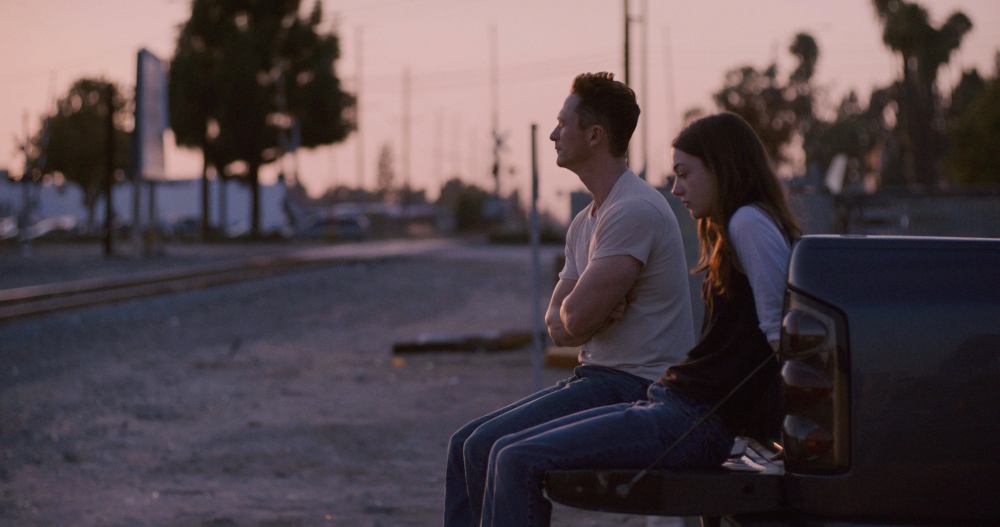
20. PALM TREES AND POWER LINES
Jamie Dack’s feature directorial debut based on her 2018 short of the same name concerns Lea (Lily McInerny), a disconnected 17-year-old on summer break in the Southern California suburbs who falls into a relationship with a man twice her age (Tom, played by Jonathan Tucker). This sort of uncomfortable material is always tricky to navigate, yet Dack— who based on the story somewhat on personal experience— steers it expertly. As a viewer, we understand that this is an inappropriate relationship. We also understand how and why a young girl like Lea would get involved with a man like Tom (Tucker lays the charm on thick, just masking the grooming behavior that he as Tom is inflicting on Lea). The film’s final act is horrifying without being exploitative. I can’t say I’m eager to rewatch Palm Trees and Power Lines anytime soon, but I also haven’t stopped thinking about it since I watched it at the beginning of the year.

More movies I enjoyed in 2023:
PAST LIVES
PASSAGES
THE TEACHER’S LOUNGE
AFIRE
THE DELINQUENTS
SPIDER-MAN: ACROSS THE SPIDER-VERSE
ROBOT DREAMS
FOUR DAUGHTERS
KOKOMO CITY
POOR THINGS
WAITRESS: THE MUSICAL (which would crack my top 20 if we are counting Broadway pro-shots as movies— this is an exceptional one)

 Katie at the Movies