You’ll rarely see a man fall so hard so fast as the lead in a classic film noir, and insurance investigator Joe Peters (Charles McGraw) in Roadblock is no exception. A taut, 73-minute noir from RKO released in 1951, Roadblock may be helmed by a relatively unknown director (Harold Daniels), but it has a ton of heavy-hitting talent behind it, from contributions by regular noir writers such as Daniel Mainwaring, Richard H. Landau, George Bricker, and Steve Fisher, and cinematography by the great Nicholas Musuraca, whose credits include such noir classics as Out of the Past and Val Lewton-produced thrillers like Cat People and The Seventh Victim.

Even leading man McGraw was no stranger to noir, appearing in both supporting and lead roles in A and B pictures, his rough voice and features well-suited to portraying anti-heroes. In Roadblock, his character Joe and his partner Harry (Louis Jean Heydt) have just closed a lucrative case and are preparing to fly back home to Los Angeles. At the airport, Joe has a sort of meet-cute with a beautiful woman called Diane (Joan Dixon), who pretends to be Joe’s wife so she can purchase a plane ticket at half-fare. Later, when bad weather forces their plane to make an emergency landing in Kansas, a shortage of hotel rooms prompts Joe and Diane to spend the night together. They have immediate chemistry, but Diane’s expensive tastes holds her back from pursuing a serious relationship with Joe on his supposedly meager middle class salary. Take this exchange:
Diane: “Someday you’ll want something nice and expensive you can’t afford.
Joe: “Like what?”
Diane: “Like me.”
The pair end up reconnecting in LA, where Joe discovers that Diane has a sugar daddy, Kendall Webb (Lowell Gilmore), a man who Joe and Harry have been assigned to investigate as the prime suspect in a series of fur robberies. And that’s when Joe, who Diane has nicknamed “Honest Joe,” comes up with a plan, providing inside information to set up a mail car robbery for Webb, with Joe receiving a percentage of the take— enough money to lure Diane to him.
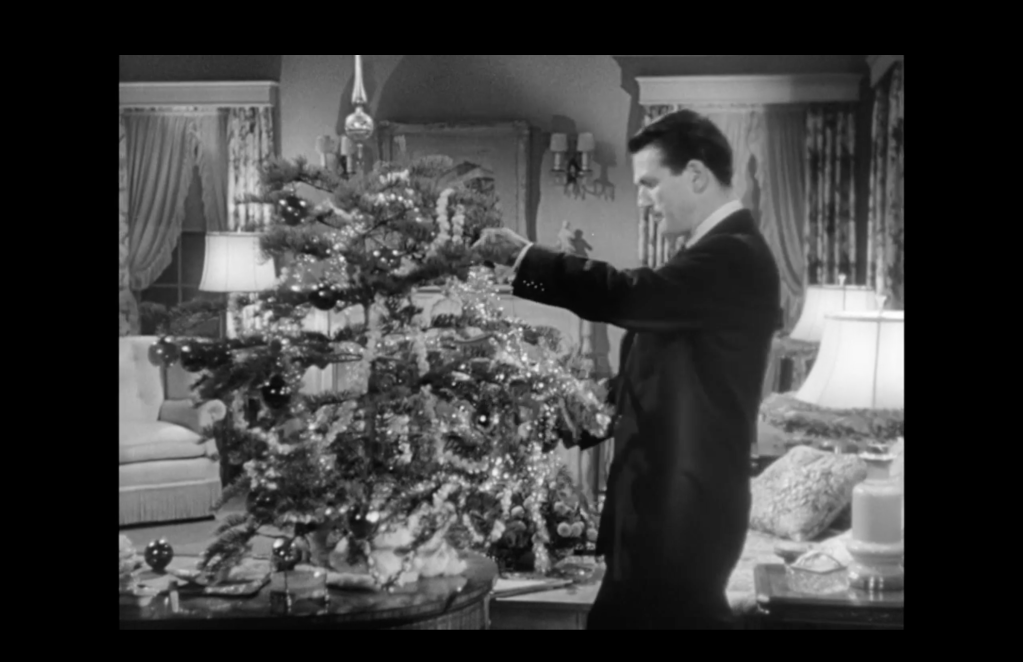
The first half of Roadblock, during which Joe and Diane’s relationship is very much in will they/won’t they status, is set over Christmas, which once again proves to be a good time of year for changing your ways. In fact, it’s spending the holidays alone (Webb abandons her at a club to spend Christmas with his own family instead) that prompts Diane to realize that she really does want to be with Joe, who snuck into her apartment to bring her a Christmas tree and— in one overtly romantic moment— tells Diane, “I want you so bad I can’t think straight. You’re what I want for Christmas, the day after, the fourth of July, Saturday nights, all the days there are.”
Dixon, with her saucy line readings, makes for a great femme fatale, but the tragedy of Roadblock is that by the time Diane realizes that she wants Joe for himself, money or not, it’s too late for Joe to back out of the robbery. Roadblock’s third act is a real thrill that includes explosions and car chases, the latter culminating in a riveting final showdown shot on location in the dried-out Los Angeles river bed, just one of several touches that help the film transcend its B movie trappings— a bit of an unusual filming location at the time, but an effective one that has since been used in movies often.
Roadblock is currently streaming on the Criterion Channel. Runtime: 73 minutes.

 Katie at the Movies