If you like your holiday movies bleak and uncompromising, look no farther than 1929’s Hell’s Heroes. The early talking picture is a western based on the 1931 novel The Three Godfathers by Peter B. Kyne, but it’s actually one of several screen adaptations of the story, whose Christmas setting, religious imagery (look no further than the cactus standing in for a cross), and themes of redemption and sacrifice make it well suited to the season.
The story is set in the dusty western town of New Jerusalem, where a handful of criminals rob the bank, resulting in the death of one of the crooks and the bank teller. A trio of the robbers— Bob (Charles Bickford), Tom (Raymond Hatton), and Wild Bill (Fred Kohler)— flee into the desert and are caught in a sandstorm. Low on water, missing their horses, they soon stumble upon a lone woman, (Fritzi Ridgeway). She’s pregnant, and— realizing she’s about to go into labor— the men help her deliver her baby. Not knowing the nature of these men, as she dies, the woman bestow the title of godfather upon them, and makes them promise her they will bring her child safely back to its father— coincidentally, the teller they killed back in New Jerusalem.
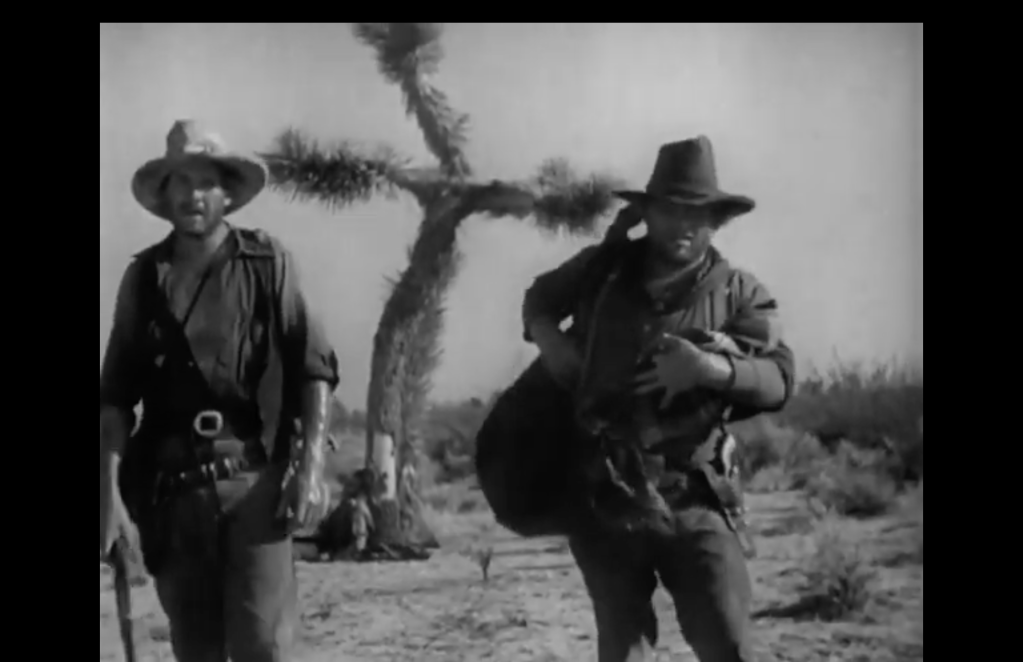
The Three Godfathers story was filmed by Universal twice before Hell’s Heroes: in 1916 and 1920 as Marked Men, an early movie by director John Ford. Unfortunately, both of those silent adaptations are now considered lost films (only a three minute fragment of Marked Men survives), although Ford went on direct a Technicolor remake in 1948 starring his regular leading man John Wayne, and before that, a 1936 film titled Three Godfathers was produced by MGM. But Hell’s Heroes— clocking in at a lean 68 minutes— is certainly the best version of this Three Wise Men-adjacent tale, deftly balancing the tone of its story so it neither ventures too far into sentiment nor cynicism. It marked a turning point in the career of director William Wyler, who would go on to helm such Hollywood masterpieces as The Best Years of Our Lives and The Heiress. Prior to making Hell’s Heroes, Wyler (a cousin of Universal Studios head Carl Laemmle) cut his teeth primarily cranking out one and two reel westerns. The creation of Hell’s Heroes was quite intense. It was filmed on location in the Mojave Desert, Panamint Valley, and Bodie (the real-life ghost town that stood in for New Jerusalem), lending the film both some grit and majesty that can’t quite be duplicated on a sound stage. But Hell’s Heroes was also one of the first sound films (so early, in fact, that a silent version was also produced for theaters not yet equipped for sound), and adding that to location filming resulted in a fresh set of challenges. Microphones had to be hidden in bushes and cacti, and the camera had to be kept in a soundproof box; the hot desert temperatures, which frequently reached well over 100 degrees Fahrenheit, resulted in the cameraman passing out inside the box.
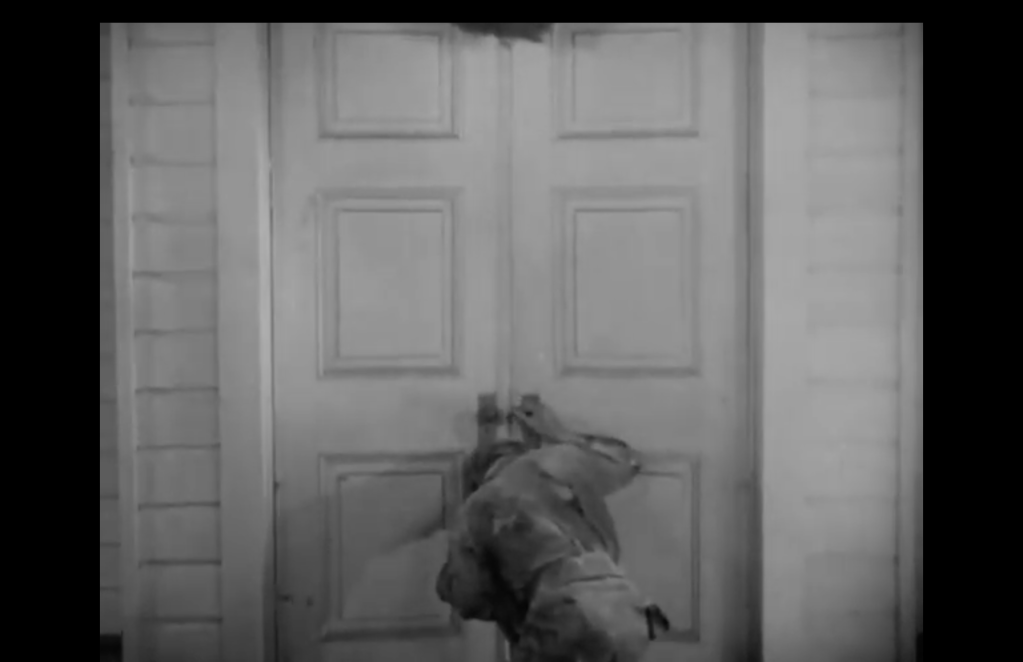
Hatton and Kohler (who play the two crooks ready and willing to help the woman and her baby) were both western regulars by this point, but Bickford— whose long and fruitful career would result in several Oscar nominations— was a notable stage actor who had just been brought to Hollywood, and he clashed with the up-and-coming director as to how certain scenes should be shot. But Wyler, a noted perfectionist (earning him the nickname “90-Take Wyler”), wasn’t prepared to compromise on his vision, and while he shot one scene the way Bickford wanted, he later redid it with a stand-in wearing Bickford’s character’s boots. The result is arguably the film’s most impressive scene in a movie that’s full of them: the camera tracking a weak and dehydrated Bob’s footsteps in the sand as they become increasingly erratic in time with his declining health, dropping his rifle and then his coins. Hell’s Heroes was a big commercial and critical hit, and it’s scenes like this that likely prompted producer Darryl Zanuck to eager show off “this new picture by this new director” to all the other filmmakers at the studio.
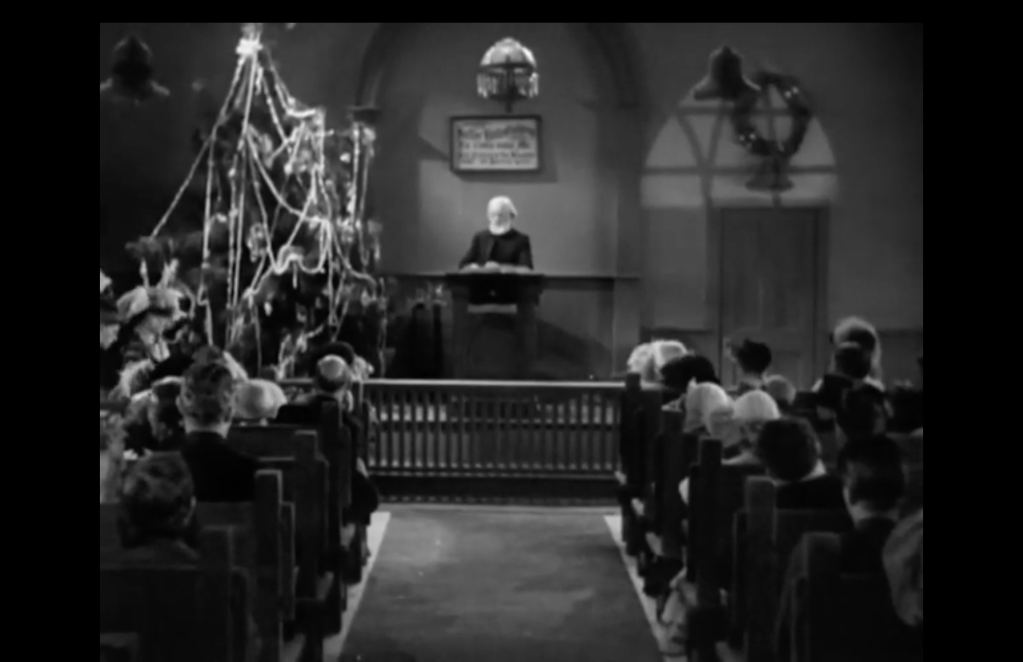
Hell’s Heroes is also a Pre-Code movie, and while Wyler was forced to compromise some on a slightly less cynical finale (one that ended at the gallows, not the church), the film gets away with a lot content-wise, from its provocative title to Bob’s rejection of the baby to the heavy implication that the crooks plan to rape the woman before realizing she’s pregnant to the gun-toting priest who attempts to thwart the robbery. It all culminates in a bittersweet final scene set in New Jerusalem’s church on Christmas Eve where that same priest is praising their Christmas tree as the townsfolk sing “Silent Night.” Bleak though Hell’s Heroes may be, it’s such an exceptional example of early sound filmmaking that holds up so well almost a century after its release (quite the shift from the creaky dramas and awkward musicals that often dominated this period in Hollywood), and it’s so incredibly moving (and did I mention enough times that it packs all this into little over an hour?), that it’s a rich watch at any time of the year.
You can purchase Hell’s Heroes on DVD from the Warner Archive on a two-disc set along with the 1936 Three Godfathers, but it also airs on TCM frequently during the holidays. You can also find the film in its entirety on YouTube (admittedly, it’s a rather rough print, but watchable). Runtime: 68 minutes.
Source:

 Katie at the Movies