Does anyone watch the evening news live on cable television anymore? The media landscape has altered so drastically over just the last decade alone that between streaming services, cutting the cord, and social media (how many young people especially receive their news in bite-sized chunks from scrolling Twitter or TikTok, regardless of the trustworthiness of their sources?), it’s almost mind-blowing to fathom that in the heyday of the anchorman, upwards of 45 million people in the United States tuned in every night to watch the Big Three: Tom Brokaw, Peter Jennings, and Dan Rather.
Rather, who joined CBS at the dawn of the 1960s and remained a fixture at that network until 2006, is the subject of director Frank Marshall’s new documentary Rather. The film concludes with some discussion of how, over the last several years, Rather has become a popular Twitter personality, his sharp wit shining through in his tweets commenting on the current political landscape and capturing the attention of a younger generation who likely don’t know that he anchored the CBS Evening News for decades. But the Texas-born Rather, who began his journalism career in 1950 as a reporter for the Associated Press, was at the forefront of covering some of the most notable events in recent American history, from the assassination of President John F. Kennedy to the Watergate scandal, the civil rights struggle to the Vietnam War. In 1975, he joined the Sunday night news program 60 Minutes, and in 1981 he succeeded Walter Cronkite as anchor of the CBS Evening News. Those interviewed throughout Rather, who include colleagues (Susan Zirinsky, Howard Stringer), the next generation of journalists and hosts (Ronan Farrow, Andy Cohen), and—most prominently featured—his daughter Robin Rather, note how Rather’s religious conviction and love for people and for the truth contributed to his rise to prominence. In 1961, he created the first weather radar map on the fly by laying a map over a radar image of Hurricane Carla, the visualization of the storm’s scope being credited for so many people evacuating the area, potentially saving thousands of lives. He wasn’t afraid to travel where the story was, even at the risk of his own life; during the Soviet-Afghan War, for instance, he donned traditional garb and ventured to the front lines.
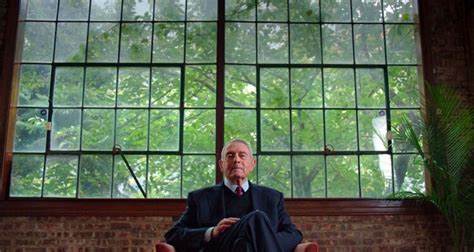
Marshall presents Rather’s career in a slickly-edited series of archival clips cut between the talking head interviews, and they give those who might not be as familiar with Rather— or those whose memories are a little fuzzy— a well-rounded sense of what made him such a popular and occasionally polarizing journalist. In one clip, we see him being pushed by security guards on the floor of the 1968 Democratic National Convention. Another clip from a 1974 press conference encompasses Rather’s quick-thinking and frequent butting-of-heads with President Nixon; when Rather announces himself to a loud reaction from the crowd, Nixon asks him, “Are you running for something?” “No, Mr. President,” Rather responds. “Are you?”
But as imminently watchable as Rather is, its content is akin to scanning Rather’s Wikipedia page. Rather’s life and career is simply too full for a 96 minute documentary to dig in to with much nuance, and while it’s a solid introduction for those who aren’t familiar with the subject, there’s little here that those who lived through these events won’t already know. Rather is most perceptive when it finds the roots of the blatant antipathy toward the media we’ve witnessed become stronger since Donald Trump won the Presidency in 2016 in some of Rather’s experiences. An Oval Office tape revealed Nixon saying of Rather, “he’s a son of a bitch, isn’t he?” and Rather’s home was burgled, reportedly due to his tough coverage of the Watergate scandal. Later in the 1980s, a combative interview Rather conducted on air with Vice President George H.W. Bush was engineered by media consultant and future Fox News CEO Roger Ailes, who held up cue cards off-camera to help the politician appear as a stronger figure opposite Rather.
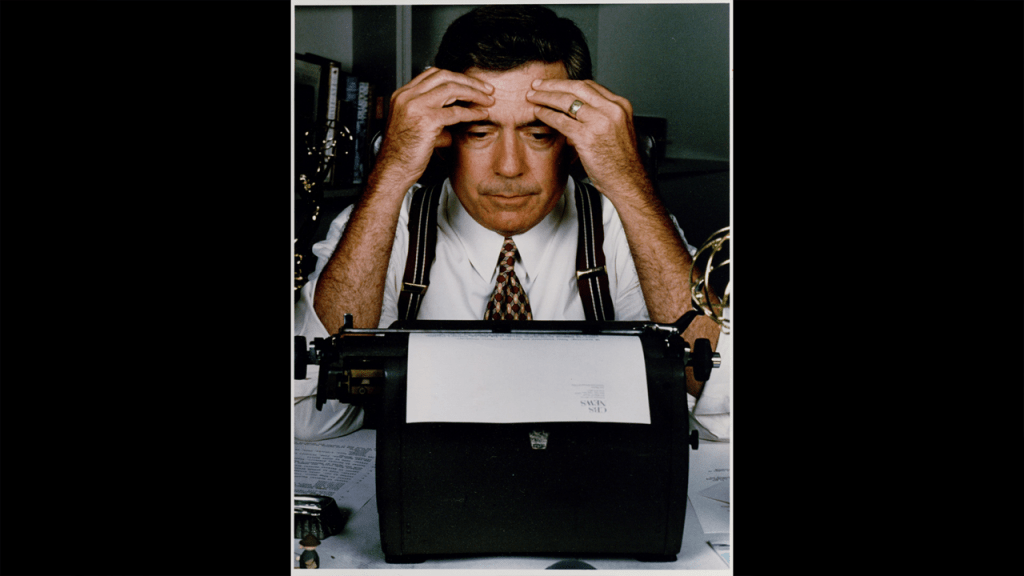
But Rather glosses over so much, especially the controversial bits, like the documents scandal in which he used unauthenticated documents in his reporting on President George W. Bush’s Vietnam War service. The film takes plenty of opportunities to emphasize that the story was true, the documents just weren’t verified, but otherwise skips through this troubling period in favor of safer— and more favorable— waters. Rather could have benefited a lot from more participation from Rather himself. He was interviewed for the film, but he only pops up to drop a little nugget here and there; he doesn’t offer up the sort of personal insight or perspective looking back over the decades that only he could. Most of that is left to Robin and the other interviewees. The reason for that isn’t entirely clear (Rather is 91 years old, after all) but it feels like a missed opportunity to grant a personal twist to a film that so dearly needs it. I can’t help but consider Rather in conjunction with another journalism documentary that premiered at the Tribeca Film Festival this week, Breaking the News, which looks at how the independent news organization The 19th* seeks to provide some diverse perspectives in a media landscape that has been and still largely is dominated by straight white men. As crucial a figure as Dan Rather is in the history of American journalism, Rather (which perhaps could be read as a reflection of Marshall’s own bias living through the events depicted in his film) just retreads over the stories we’ve heard and seen again and again.
Rather had its world premiere at the 2023 Tribeca Film Festival on June 9. Runtime: 96 minutes.

 Katie at the Movies